Who is this choice relevant to?

If you’re serving the rusks as part of the table setting

If you’re serving generous sweet or savoury toppings, you’ll want to know how large the rusks are and whether they’ll be easy to serve with your chosen toppings. Large multiseed or spelt varieties make a different impression from a classic pack, but size alone doesn’t tell you how much weight they can support.

If you want to consider grain type and fibre

Wholemeal and multiseed rusks have different ingredients and nutritional values from plain varieties. Compare the labels on a like-for-like basis, and take the size of the rusk you’re serving into account.

If you need to consider guests’ allergens

When you’re serving several guests, checking the ingredients may determine your choice. Check each pack for ingredients such as wheat, cereals containing gluten, egg and sesame, and read any warnings about traces of allergens.

What should you look for in rusks for a family dinner?

First, decide what matters most for this dinner: how the toppings will look, the choice of grain and fibre, or your guests’ allergens. Then compare the packaging of the varieties that suit your needs.

What to consider What to look for Who it matters to
How they look with toppings Check the size and whether they contain seeds. Separately consider whether the rusks seem suitable for the toppings you want to serve. If rusks are a visible part of the dinner table, I want enough room for my chosen toppings without judging on appearance alone. For around 42% of consumers, presentation is the top priority.
Fibre and grain type Read the grain type and compare fibre per 100 g; then check the amount per rusk. When grain and fibre determine my choice, I want to compare products of different sizes fairly. Around 33% of consumers give this the highest priority.
Allergens Check the current label for ingredients, allergens and any warnings about traces of allergens. If a guest needs to avoid certain ingredients, I only choose rusks after checking the relevant pack. For around 25% of consumers, this check comes first.

Common mistakes

  • Assuming a premium variety is suitable for every guest

    Seeded or spelt rusks and classic baker’s rusks may contain allergens such as wheat, egg or sesame. A product’s appearance says nothing about whether it’s suitable for a guest with an allergy.

    Before you buy, ask which ingredients your guests need to avoid and check the current packaging again before serving.

  • Assuming all rusks contain iodine

    According to the Netherlands Food and Consumer Product Safety Authority, iodine compounds may be present in bakery products through baker’s salt. The Netherlands Nutrition Centre says that bakers are not required to use baker’s salt. So, seeing salt in the ingredients list does not confirm that it is iodised baker’s salt.

    If this ingredient matters to your choice, check the packaging or ask the manufacturer.

  • Comparing fibre values in different units

    A value per rusk cannot be compared directly with a value per 100 g if the rusks are different sizes. For example, the Netherlands Nutrition Centre gives 0.8 g of fibre per 10 g wholemeal rusk.

    First compare the nutritional information per 100 g, then check what the stated portion means for the rusk you’re serving.

  • Assuming a product page guarantees availability

    Whether a particular type of rusk is available may depend on the shop or delivery location you choose. A product page alone doesn’t confirm that you can order it for your dinner.

    Check availability in your area before finalising the menu, and have another suitable variety ready as a back-up if needed.

Brands to consider

Bolletje

Bolletje offers classic baker’s rusks and a multiseed variety. The right choice depends on the look you’re after and the ingredients.

  • Bolletje describes its Bakkers Beschuit Origineel as crisp and light, thanks to the use of egg.
  • Check the allergens on the packaging of both the classic and multiseed varieties.

Albert Heijn

The own-brand range includes plain, wholemeal and multiseed rusks.

  • These varieties let you compare grain types and ingredients side by side.
  • Albert Heijn notes that product information can change, so read the current label before buying.

Jumbo

Jumbo Beschuit Naturel is a classic own-brand option if you’re looking for a plain rusk.

  • The pack described contains 13 rusks.
  • Jumbo lists wheat and egg among the allergens in this variety. Check the packaging for the guests you’re serving.

Lidl

Lidl lists an artisan multigrain rusk for anyone looking to try a different grain variety.

  • The pack described is 230 g.
  • Check the ingredients and allergens on the current packaging before serving this variety to guests.

Goud Gebakken (ALDI)

Goud Gebakken offers plain and wholemeal rusks, both described as packs of 13.

  • The two varieties give you a choice between plain and wholemeal.
  • Don’t let descriptions such as light or crisp replace checking the ingredients and nutritional information.

PLUS

PLUS offers luxury plain rusks with seeds, as well as spelt rusks with seeds and kernels.

  • PLUS describes these varieties as large and crisp, which may matter if the rusks will be on show at the table.
  • Check the allergens for each variety, including wheat, egg and sesame, and see whether your chosen shop stocks the product.

Rusks on Joybuy for different table preferences

These Bolletje varieties give you a choice of seeded, wholemeal or classic rusks. First decide which type you want to serve, then check the packaging for ingredients, nutritional information and allergens.

Bolletje multiseed rusks, 10 pieces

Bolletje multiseed rusks, 10 pieces

An option if you’d like to serve seeded rusks; check the size separately if generous toppings are important.

Pack of 10. Check the current ingredients and allergen information for all your guests.

View on Joybuy

Bolletje dark wholemeal rusks, 10 pieces

Bolletje dark wholemeal rusks, 10 pieces

An option if you’d like to serve a dark wholemeal variety at dinner and take the grain type into account.

Pack of 10. Compare the nutritional information per 100 g and check the allergens on the label.

View on Joybuy
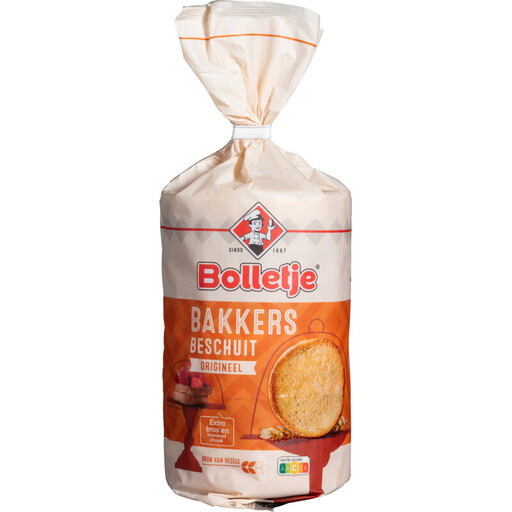
Bolletje Original rusks, 10 pieces

Bolletje Original rusks, 10 pieces

A classic rusk if you want the toppings to take centre stage. If you’re serving generous toppings, don’t rely on a description of the texture alone.

Pack of 10. Check the current ingredients and allergens before serving.

View on Joybuy

Bolletje wholemeal rusks, 13 pieces

Bolletje wholemeal rusks, 13 pieces

A wholemeal option if grain type matters more to you than having visible seeds on your rusk.

Pack of 13. To compare fibre, use nutritional values in the same units and check the allergens.

View on Joybuy
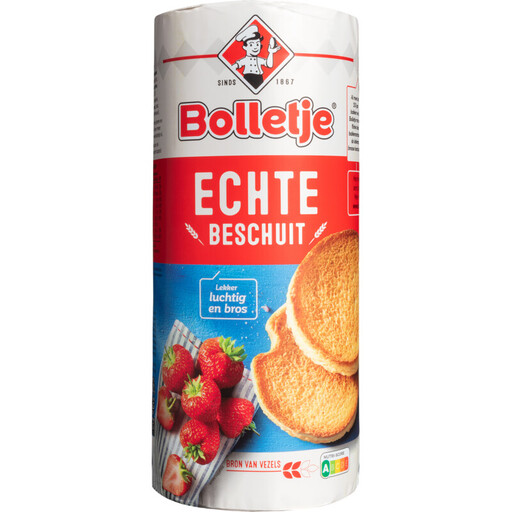
Bolletje Real rusks, 13 pieces

Bolletje Real rusks, 13 pieces

A classic variety to compare with Original if you’re looking for rusks to serve with a range of toppings.

Pack of 13. Compare the ingredients and nutritional information of the two varieties, and check the label for all your guests.

View on Joybuy

Frequently asked questions

Do rusks in the Netherlands have to contain iodised baker’s salt?

No. According to the Netherlands Nutrition Centre, using baker’s salt is not compulsory. The Netherlands Food and Consumer Product Safety Authority says iodine compounds may be present in bakery products through baker’s salt. If this ingredient matters to your choice, check the packaging or ask the manufacturer.

Which allergens should you pay extra attention to in seeded rusks?

Be sure to check for wheat and other cereals containing gluten, egg and sesame, but don’t limit yourself to this list. Ingredients and warnings can vary between varieties, so read the packaging of the product you’re actually serving.

How should I store rusks until the family dinner?

Store rusks in a cool, dry, dark place and seal an opened pack tightly. Also follow the storage instructions on the packaging of the variety you’ve chosen.

How do I compare the fibre in wholemeal and multiseed rusks?

First compare the values per 100 g, then check the weight of one rusk. The Netherlands Nutrition Centre gives 0.8 g of fibre per 10 g wholemeal rusk. You can only compare this directly with another value per rusk if you also know the portion size.
