For a fakeaway night with fussy eaters, serve plain rusks alongside a clearly labelled wholemeal option if you want to offer both a familiar choice and wholemeal. Choose rusks with seeds or bran only if your guests enjoy a more pronounced texture. To decide which ones to buy, compare the ingredients, allergens and fibre listed on the packaging.
Which rusk is right for whom?
Hosts catering for fussy eaters
If a familiar, light option is your priority, start with plain rusks and offer wholemeal rusks as an alternative. Bolletje describes its Echte Beschuit as light and crisp, but that doesn’t mean every guest will like it.
Shoppers who want to offer wholemeal
If the grain base matters, look specifically for ‘wholemeal’ on the packaging. Compare the fibre content of the rusks you’re considering per 100 g or per portion.
Fans of grains and seeds
If your guests enjoy a firmer texture with their toppings, a variety with seeds or bran could be a good fit. Offer a plainer rusk too, in case not everyone likes that texture.
What should you look for when choosing?
Before your fakeaway night, think about which rusks your guests are most likely to try. Then compare the packaging for wholemeal claims, fibre and allergen information.
| What to consider |
What to check when buying |
Who should consider this? |
| Familiar texture |
Consider whether you’d like to serve plain or classic rusks alongside the wholemeal option. If anyone has an allergy, check the latest packaging. |
If fussy eaters want to try a simple option first, there’s no need for the whole platter to consist of a more distinctive variety. This familiar first choice is the top priority for around 46% of consumers. |
| Wholemeal and fibre |
Look for the wholemeal label and compare the fibre per 100 g or per portion on the packaging. |
If you mainly want to offer rusks made from the whole grain, a clear wholemeal label is more useful than a dark colour. This is the most important consideration for around 36% of consumers. |
| Grains and seeds |
Check which grains, seeds or bran are in the variety you’ve chosen, and read the allergen information. |
A coarser rusk can work well with hearty toppings, provided your guests enjoy that texture. Around 18% of consumers give this kind of variety top priority. |
Common mistakes
-
Assuming dark-coloured or seed-covered means wholemeal
According to the Voedingscentrum, ‘wholemeal’ refers to the whole grain. Colour and visible seeds alone don’t tell you whether the rusk is made with wholemeal grains.
Look for ‘wholemeal’ on the packaging, then read the ingredients list and nutritional information.
-
Serving only a hearty, seed-covered variety
Rusks with seeds or bran have a different texture from simple plain rusks. If someone is looking for a familiar option, they may not enjoy a coarser variety.
Consider serving a mixed platter with plain rusks and a clearly labelled wholemeal or seed-rich alternative.
-
Treating average nutritional values as a product label
The Voedingscentrum provides average nutritional values for rusks and notes that these can vary by brand.
Compare the nutritional information on the packaging of the rusks you want to buy, using the same quantity for each.
-
Assuming what’s in a product based on a rule about bakers’ salt
The Netherlands Food and Consumer Product Safety Authority sets out requirements for iodine compounds in bakers’ salt used in bakery products. A general rule like this doesn’t tell you whether a particular rusk contains iodised bakers’ salt.
If you need product-specific information, check the packaging or ask the manufacturer.
Brands to compare
Bolletje
Bolletje offers a classic variety, a wholemeal variety and an option with a more pronounced grain texture, among others. Compare individual products rather than looking at the brand alone.
- Bolletje says its Volkoren Beschuit contains 100% wholemeal grains; the brand describes Echte Beschuit as light and crisp.
- Ingredients vary between varieties. Check the grains and allergens on the packaging of the product you choose.
Albert Heijn
Albert Heijn’s range includes AH Plain Rusks and AH Wholemeal Rusks as two separate own-label options.
- The product names make it easy to compare a plain option with a wholemeal one.
- Albert Heijn says that ingredients, nutritional values and allergy information may change, so check the latest packaging.
Jumbo
Jumbo lists rusks in plain and wholemeal varieties, as well as options with grains or seeds.
- These different types give you a useful starting point for comparing texture and grain content.
- The range shown doesn’t tell you which varieties will be available at your local store when you shop.
Rusks for a mixed platter at Joybuy
These rusks include a wholemeal option, a dark wholemeal option and a plain option. The right combination depends on the texture you’re after and the information on the packaging.
 No image available
Bolletje Wholemeal Rusks, 13 pieces
A wholemeal option for your platter, if you’d like to offer rusks made with wholemeal grains alongside a familiar choice.
Check the latest packaging for allergens and compare the fibre content using the same quantity as for the other rusks.
View at Joybuy
 No image available
Bolletje Dark Wholemeal Rusks, 10 pieces
A dark wholemeal option for anyone who’d rather try a more distinctive rusk than a simple plain variety.
Check the latest packaging to see which grains and seeds it contains and which allergens are listed.
View at Joybuy
 No image available
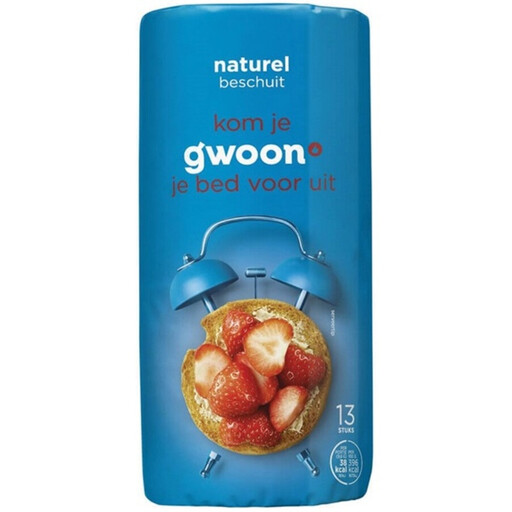
g'woon Plain Rusks, 125 g
A plain option to serve for anyone who doesn’t want a more pronounced wholemeal texture.
Don’t assume that plain means wholemeal. Before serving, check the latest ingredients and allergen information, especially if any guests have an allergy.
View at Joybuy
Frequently asked questions
Should I choose plain or wholemeal rusks for fussy eaters?
You don’t need to choose the same rusk for everyone. Serve plain rusks alongside a clearly labelled wholemeal variety if some guests prefer a familiar option while others want a wholemeal grain base.
Are dark rusks always wholemeal?
No, colour alone doesn’t confirm that. Look for the wholemeal label and check the ingredients of the specific rusk. According to the Voedingscentrum, ‘wholemeal’ means the whole grain is used.
Which allergens should I check in classic rusks?
Check the allergen information for each product and variety on the latest packaging. Bolletje lists wheat, rye and egg, among other things, for its Echte Beschuit. You shouldn’t assume that other rusks have the same ingredients.
Does a rule about bakers’ salt mean that every rusk contains iodine?
No, you can’t use a general rule to work out the ingredients of an individual rusk. If it matters to you whether it contains iodised bakers’ salt, check the product information or ask the manufacturer.


