Choose plain rusks if you mainly want a neutral, crunchy base for toppings in the evening. If you prefer wholegrain and more fibre, compare wholegrain options; seeded rusks are another choice if you enjoy their flavour and texture. Whichever you choose, check the portion size, toppings, nutritional information and allergens on the packaging.
Which option is right for you?
Fussy eaters looking to try wholegrain
If plain rusks are a familiar favourite but you’d also like to try a wholegrain option, compare the two side by side. Check the wording on the packaging and compare the fibre per 100 g. You can’t tell whether a rusk is wholegrain just by its colour.
Snackers looking for more texture
If plain rusks seem a little too simple, compare seeded varieties for flavour, protein, fibre and portion size. Check the energy, fat, salt and allergens too; seeds don’t automatically make a rusk a lighter choice.
Fans of a simple evening snack
If you want something small and crunchy to use as a base for toppings, plain rusks may suit your taste. The toppings and the number of rusks you eat also affect what you end up having.
What should you look for when choosing?
First decide whether flavour, a wholegrain base or the texture of seeds matters most to you. Then compare the nutritional information on a like-for-like basis, ideally per 100 g and per rusk if both figures are shown on the packaging.
| What to consider |
What to check |
Who is it important to? |
| Wholegrain and fibre |
Look for the wholegrain label and compare fibre per 100 g and, if shown, per rusk. |
I want to try wholegrain without judging by a dark colour alone. For around 40% of consumers, this combination of wholegrain and fibre is the top priority. |
| Seeds and nutritional value |
Compare protein, fibre, energy, fat and salt per 100 g; also consider how many rusks you’ll have. |
For a late-night snack, I’m looking for the flavour and texture of seeds, but I want to take the full nutrition table into account. Around 30% of consumers say this is their top priority. |
| Familiar flavour and portion size |
Compare plain and wholegrain options based on your taste preferences and fibre content; decide how many rusks and how much topping you want. |
I mainly want a small, crunchy base for simple toppings. That’s the most important thing for around 30% of consumers. |
Common mistakes
-
Assuming dark rusks are wholegrain
A dark colour doesn’t tell you whether the grain ingredient is wholegrain. According to the Voedingscentrum, the grain ingredient must consist entirely of wholemeal flour for a product to be called wholegrain.
Check the wholegrain wording on the packaging and compare fibre per 100 g if that difference matters to you.
-
Looking only at seeds or protein
Albert Heijn’s product page lists 20 g of protein and 11 g of fibre per 100 g for TastyBasics Multiseed Rusks, as well as 404 kcal, 15 g of fat and 0.59 g of salt per 100 g. These figures apply to this specific product.
Read the full nutrition table for the variety you’re buying, and take your toppings into account too.
-
Checking allergens only after buying
The plain and wholegrain products reviewed contain ingredients including wheat and egg; sesame, spelt and barley are also listed for the multiseed variety reviewed. This won’t necessarily apply to every type of rusk.
Read the current label for the specific product before buying, even if you’re already familiar with the brand.
-
Not taking the toppings into account
Rusks are only one part of an evening snack. The amount and type of sweet or savoury toppings change the nutritional value of what you eat.
Choose your rusks and toppings together, and check the salt content of savoury toppings too.
Brands compared
Bolletje
Bolletje offers plain and wholegrain rusks, among other varieties. This makes it a useful brand to consider if you want to compare different flavours and grain bases.
- Albert Heijn’s product page lists 11 g of fibre and 15 g of protein per 100 g for the Bolletje Wholegrain Rusks reviewed.
- These figures apply to the variety reviewed, not every Bolletje rusk. Check the allergens on each pack too.
AH
AH’s own-brand range includes both plain and wholegrain rusks, making it easy to compare the two directly.
- According to Albert Heijn’s product pages, AH Wholegrain Rusks contain 9 g of fibre per 100 g, while AH Plain Rusks contain 4.2 g per 100 g.
- According to those pages, both varieties reviewed contain ingredients including wheat and egg. Check the current label on the pack you choose.
TastyBasics
TastyBasics is worth considering if you want to compare seeded rusks with plain or wholegrain rusks.
- Albert Heijn’s product page lists 20 g of protein and 11 g of fibre per 100 g for the TastyBasics Multiseed Rusks reviewed.
- The same variety lists 404 kcal, 15 g of fat and 0.59 g of salt per 100 g, and contains ingredients including wheat, egg and sesame. Check the nutritional values and ingredients for the variety you choose.
Wholegrain and seeded rusks at Joybuy
These rusks suit those looking for wholegrain or the flavour and texture of seeds in an evening snack. If you’d prefer a simple plain variety, use the points above to compare your options separately.
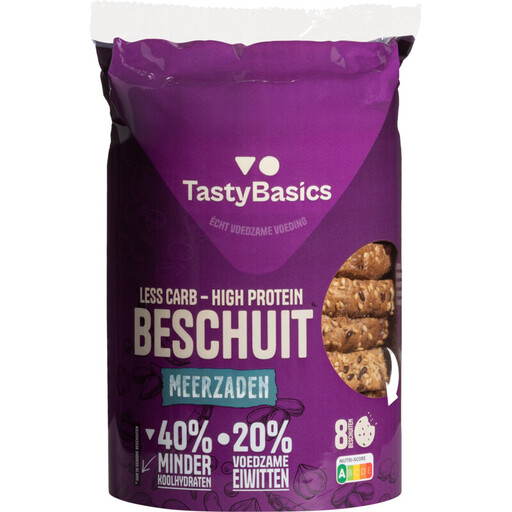 Image unavailable
TastyBasics Multiseed Rusks, 184 g
For anyone who prefers seeded rusks to plain ones as an evening snack. The pack contains 184 g; check the nutritional information on the packaging for your portion size, and check the allergens.
View at Joybuy
 Image unavailable
Bolletje Dark Wholegrain Rusks, 10 pieces
A wholegrain option if you’d like to compare the flavour of plain rusks with that of a darker variety. The pack contains 10 pieces; check the ingredients and nutritional information per portion on the label.
View at Joybuy
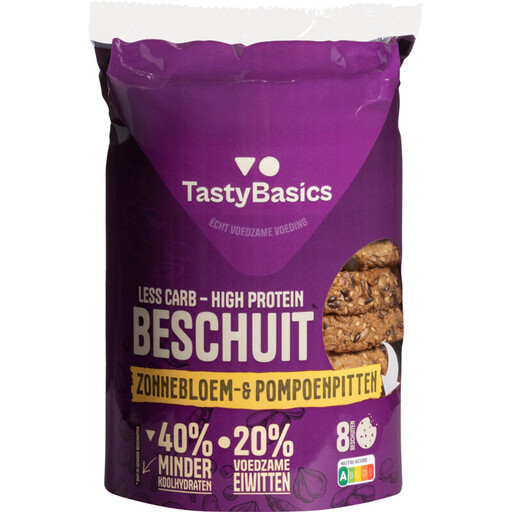 Image unavailable
TastyBasics Rusks with Sunflower Seeds, 8 pieces
For anyone looking for the flavour and texture of sunflower seeds rather than a plain rusk. The pack contains 8 pieces; check the allergens and compare nutritional values on a like-for-like basis before choosing a variety.
View at Joybuy
 Image unavailable
Bolletje Wholegrain Rusks, 13 pieces
A wholegrain option if you want a crunchy base for a small evening snack. The pack contains 13 pieces; compare the fibre per 100 g and per rusk on the label, and check the allergens.
View at Joybuy
Frequently asked questions
Are brown rusks always wholegrain?
No. Colour alone doesn’t tell you whether a rusk is wholegrain. According to the Voedingscentrum, the grain ingredient must consist entirely of wholemeal flour for a product to be called wholegrain, so check the wording on the packaging.
Does every rusk product contain iodised baker’s salt?
You can’t tell from the product type alone. The 2008 agreement published by the Ministry of Health, Welfare and Sport defines baker’s salt as iodised table salt for bakery products, but that doesn’t confirm which salt has been used in an individual rusk product. Check the product label or ask the manufacturer.
Which allergens should I check in rusks?
Read the allergen information on the specific pack. The plain and wholegrain varieties reviewed contain ingredients including wheat and egg; sesame, spelt and barley are also listed for the multiseed variety reviewed. Ingredients can vary from product to product.
How should I store an opened pack of rusks?
Store rusks in a dry place in a tightly sealed container. This is the storage advice on the Albert Heijn product pages reviewed; follow the label if your pack gives different instructions.
Do toppings count when comparing evening snacks?
Yes, toppings change the nutritional value of the whole snack. Compare rusks using their own nutritional information, but take the amount and type of sweet or savoury toppings into account when deciding what to eat.


