
Fan of classic toppings
You want a rusk with a mild flavour that works with a range of sweet or savoury toppings. Plain rusks are a natural starting point; if texture is your main consideration, you could also look at baker’s-style rusks.


Choose plain rusks if you want a neutral base for a range of toppings at coffee time. A baker’s-style variety is a better fit if a light, crisp texture is your priority. If you’re specifically looking for wholemeal flour, fibre or seeds, compare the ingredients and nutrition information for each product, and check the allergens on the packaging. Don’t use ‘medium sliced’ as a measure or quality indicator for rusks.
You want a rusk with a mild flavour that works with a range of sweet or savoury toppings. Plain rusks are a natural starting point; if texture is your main consideration, you could also look at baker’s-style rusks.
Look at the type of flour used, the fibre content per 100 g and whether the ingredients include seeds, rather than relying on the front of the pack alone.
You’ll need the ingredients list and allergen information for the exact pack. According to the Netherlands Nutrition Centre, label information is important if you have a food allergy; the product name alone doesn’t tell you enough.
First decide whether you want a neutral base, a crisp baker’s-style variety, or wholemeal rusks with seeds. Then compare the packaging and, if you have allergy requirements, always check the label on the product you choose.
| What to consider | What to check when buying | Who it matters to |
|---|---|---|
| Flavour and crispness | Compare plain and baker’s-style rusks by their ingredients and the texture described by the brand. | If I often change my toppings, I want the rusk’s flavour not to dictate what I put on it. For around 33% of consumers, flavour and texture are the top priorities. |
| Wholemeal, fibre and seeds | Check the flour used, the fibre per 100 g and which seeds are listed in the ingredients. | If you’re specifically looking for wholemeal or seeded rusks, you’ll want to compare these features on the label. Around 27% of consumers give this the highest priority. |
| Pack contents | Compare the number of rusks and the pack size with how often you eat them. | For my cupboard, I want a pack that suits the number of coffee breaks at home. For around 27% of consumers, this practical consideration matters most. |
| Ingredients and allergens | Read the allergen information, full ingredients list and any warnings on the exact pack. | If an ingredient is one I need to avoid, I can’t rely on the product name. Checking the label is the first concern for around 13% of consumers. |
Jumbo describes a rusk as a sliced rusk roll whose halves are baked again. The English term doesn’t give you a useful thickness or size for comparing these varieties.
Instead, look for plain, wholemeal or seeded rusks, and check the number of pieces and the ingredients.
A seeded variety has different ingredients from plain rusks. The varieties described by PLUS also differ in fibre and salt per 100 g; sesame may also be relevant if you have an allergy.
Compare the nutrition information per 100 g and read the allergen information, rather than relying on the words ‘with seeds’ alone.
If you need to avoid certain ingredients, the name of a familiar rusk variety is no substitute for the information on the pack you receive.
Before eating, check the ingredients and allergen warnings on that pack again.
If you’re keeping rusks for several coffee breaks, protecting them from moisture helps preserve their crisp texture.
Seal the packaging or storage tin properly after use, and follow the storage advice on the pack.
Bolletje offers Echte Beschuit, Bakkers Beschuit and a multiseed variety, among others. This gives you the chance to compare a classic rusk with options that focus more on texture or seeds.
The own-brand range includes both plain rusks and a spelt variety with seeds.
Jumbo offers a plain variety and rusks made with other types of grain, including wholemeal and multigrain.
PLUS offers plain rusks and a larger variety with seeds. They’re worth comparing if you want to check the ingredients and nutrition information.
ALDI sells both plain and wholemeal rusks under the Goud Gebakken name.
These Joybuy products offer options for classic rusks to enjoy with toppings, as well as varieties for anyone specifically looking for wholemeal or seeded rusks. Compare the type and pack size before choosing.
 Image unavailable
An option if you’re specifically looking for wholemeal rusks to enjoy at coffee time. The pack contains 13 pieces; if you have allergy requirements, check the information on the pack you receive.
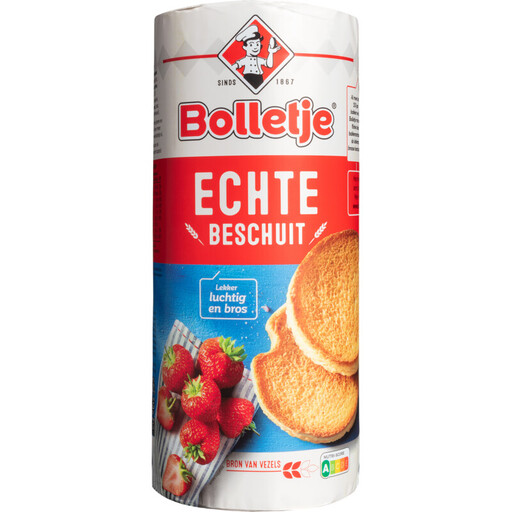 Image unavailable
A classic rusk to enjoy with a range of toppings. The pack contains 13 pieces; check the label on the pack you receive for ingredients and allergens.
 Image unavailable
For coffee breaks when you’d rather have a seeded rusk than a classic variety. The pack contains 10 pieces; check the ingredients, including any allergens, on the pack.
 Image unavailable
Another wholemeal option if you’d like to compare a classic variety with dark rusks. The pack contains 10 pieces; check the label for the exact ingredients and allergens.
Don’t use ‘medium sliced’ as a measure when choosing rusks. Jumbo describes how a rusk roll is sliced and baked again; when comparing products, the type of rusk, the number of pieces and the ingredients on the packaging are more useful.
Check the allergen information for the exact variety, paying particular attention to cereals containing gluten and, depending on the product, egg or sesame. These ingredients are found in the classic, baker’s-style and multiseed varieties described here; don’t assume they’re the same as those in another pack.
Seal the pack properly after use and protect the rusks from moisture and heat. Also follow the storage advice on the packaging, especially if you’re using one pack over several coffee breaks.