If you’re buying for a coffee morning on a limited budget, plain rusks are a good starting point: their neutral flavour works with a range of toppings. If fibre or seeds are more important to you, compare the ingredients and nutritional values of wholemeal and seeded options. When serving guests, always check the allergen information on the pack you choose.
Which option is right for you?
Buying for a coffee morning
You’re looking for rusks that go with a range of toppings, and want to know how many pieces and what net weight you get in each pack. Plain rusks are a sensible starting point if the toppings are meant to provide the flavour.
Choosing with fibre in mind
You want to choose wholemeal rusks or an option with a particular fibre content. Compare the nutritional information per 100 g and read the ingredients, rather than relying on the front of the pack alone.
Hosting guests and checking allergens
You’re serving rusks to people with different dietary needs. Check the exact product for ingredients such as wheat, cereals containing gluten, egg and sesame, and keep the packaging handy in case your guests have questions.
What should you look for when choosing?
First decide whether you’re prioritising a simple base, wholemeal ingredients and fibre, or suitability for your guests. Then compare the packaging and labels of the options that fit your needs.
| What to consider |
What to check |
Who it matters to |
| Staying within budget |
Check the net weight and number of pieces per pack before choosing several packs. |
When I’m serving rusks to several guests, I want a simple option without buying lots of different varieties I don’t need. For around 42% of consumers, budget is the main priority. |
| Wholemeal and fibre |
Read the ingredients and compare fibre on a like-for-like basis, such as per 100 g. |
At coffee time, I want to choose wholemeal rusks with care and know how much fibre the option contains. Around 33% of consumers give the ingredients and nutritional composition top priority. |
| Suitable for guests |
Check the allergen declaration for the exact product, including seeded rusks. |
When I’m serving guests, I want to know what ingredients and allergens the rusks contain before putting them out. For around 25% of consumers, this is the first thing they consider. |
Common mistakes
-
‘Wholemeal’ in the name doesn’t tell you everything about the nutritional value
Fibre content and other nutritional values can vary between rusk varieties. A name or claim on the front of the pack is no substitute for the nutritional information per 100 g.
When comparing products, look at the ingredients lists and nutrition tables for the exact varieties side by side.
-
Overlooking allergens when serving guests
Ingredients vary between plain, wholemeal and seeded rusks. The product information for the varieties reviewed lists ingredients including wheat, egg and sesame.
Read the latest allergen declaration before buying, and keep the packaging if you’re serving the rusks to guests.
-
Assuming all rusks contain iodised baker’s salt
The Netherlands Nutrition Centre says that bakers are not required to use baker’s salt. So the product category alone won’t tell you which type of salt a particular rusk contains.
If the type of salt matters to you, check the product’s ingredients or ask the manufacturer.
Brands to consider
Bolletje
Bolletje’s product ranges include plain, wholemeal and multiseed rusks. That means you can compare different options from the same brand.
- According to the product information, the Bolletje Wholemeal Rusk listed by Joybuy contains 11 g of fibre per 100 g.
- Check the ingredients and allergens for each variety; wheat and egg are listed for Bolletje Wholemeal Rusk.
Albert Heijn (AH)
The AH range includes both Plain Rusks and Wholemeal Rusks, giving you a choice between a simple option and a wholemeal one.
- The packs shown have different net weights: 125 g for plain and 140 g for wholemeal.
- Check the ingredients and allergens for your chosen variety on the product page or packaging.
Jumbo
Jumbo offers both Plain Rusks and Robust Multigrain Rusks. They’re different options if you’re looking for a neutral base or something made with several grains.
- According to the product listing, Jumbo Plain Rusks contains 13 pieces in a 125 g pack.
- The Jumbo Robust Multigrain Rusks listing includes ingredients such as egg and sesame. If your guests have allergies, check the exact pack.
PLUS
PLUS offers a 125 g pack of plain rusks and a 230 g pack of wholemeal rusks with seeds. Compare the options by pack size, ingredients and nutritional information.
- PLUS lists 10.6 g of fibre per 100 g and over 25% seeds and kernels for its wholemeal rusks with seeds.
- The seeded variety lists ingredients including cereals containing gluten, egg and sesame; check the latest allergen declaration.
Goud Gebakken (ALDI)
The Goud Gebakken option shown is wholemeal rusks, with 13 pieces per pack.
- ALDI describes this variety as rusks made with wholemeal grains.
- Before serving, check the nutritional information, ingredients and allergens on the packaging itself.
Rusks on Joybuy
These products offer two types of rusks for a coffee morning: wholemeal options if you want to compare ingredients, and plain rusks as a simple base for toppings. Check each pack to see which variety suits your guests.
 Image unavailable
Bolletje Wholemeal rusks, 13 pieces
An option to consider if you’d like to serve wholemeal rusks at your coffee morning. The nutritional information listed by Joybuy gives 11 g of fibre per 100 g; if you’re serving guests, check the allergens on the pack too.
View on Joybuy
 Image unavailable
Bolletje Dark Whole Wheat Rusk, 10 pieces
A wholemeal option if you’d like to offer a different type of rusk at your coffee morning. The product name states that the pack contains 10 pieces; to compare fibre and allergens, read the nutritional information and ingredients for this variety.
View on Joybuy
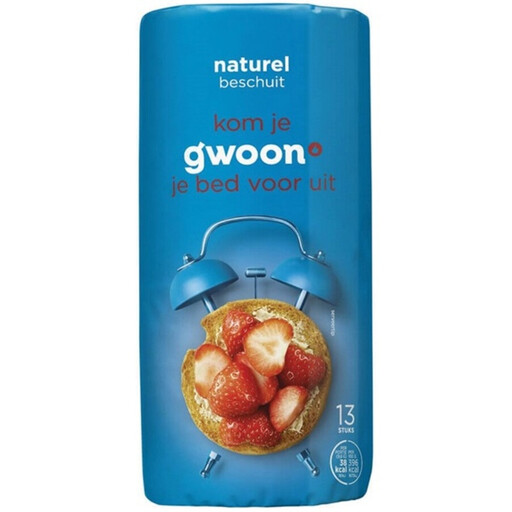 Image unavailable
g'woon Plain rusks, 125 g
Plain rusks for anyone looking for a simple base for a range of toppings. The pack contains 125 g; before serving, check the latest allergen information on the packaging, especially if a guest has a milk allergy.
View on Joybuy
Frequently asked questions
What does ‘wholemeal’ mean on a pack of rusks?
According to the Netherlands Food and Consumer Product Safety Authority, a product can only be called wholemeal if all the grain ingredient is wholemeal flour. You should also read the nutritional information and other ingredients for the rusk variety you choose.
How should I store rusks for a coffee morning?
Keep rusks in a dry place and seal the pack well after opening. PLUS advises keeping its plain rusks away from moisture and heat; Jumbo recommends storing its plain rusks in a cool, dry and dark place.
Do all rusks contain iodine from baker’s salt?
No. You can’t tell from the product category alone: the Netherlands Nutrition Centre says that bakers are not required to use baker’s salt. Check the ingredients for the specific rusk variety or ask the manufacturer which salt has been used.


