
Snack makers looking for a larger base
You want room for sweet or savoury toppings on a single rusk. A variety described as extra-large is a useful guide to its size, but not to its thickness or strength.


For a topped Christmas market snack, choose a rusk explicitly described as extra-large if you’re mainly looking for more room for toppings. Bolletje Bakkers Beschuit Origineel is a classic option; multiseed and dark wholemeal rusks are a better fit if seeds, fibre or wholegrains matter more to you. However, extra-large says nothing about thickness or how much weight a rusk can support. Check the packaging and test heavier or moist toppings before making a large batch of snacks.
You want room for sweet or savoury toppings on a single rusk. A variety described as extra-large is a useful guide to its size, but not to its thickness or strength.
You also choose based on ingredients and nutritional information. Check the label on multiseed and wholemeal varieties, particularly if wheat, sesame, oats or barley are relevant to your guests.
You want plain or wholemeal rusks for a range of snacks and assess separately whether the size suits your toppings. A standard variety isn’t automatically extra-large or thicker.
First, decide how much room your toppings need, then compare the ingredients and packaging of the exact variety. A larger surface and a sturdier rusk are two different things.
| What to consider | What to check when buying | Who is this important to? |
|---|---|---|
| Room for toppings | Look for an explicit mention of extra-large and check the size on the packaging. Don’t assume a particular thickness or weight-bearing capacity. | If I want to add several ingredients to one Christmas market snack, I’m mainly looking for enough room without assuming the rusk will also be sturdier. Around 46% of consumers prioritise a larger base. |
| Grains and seeds | Compare the ingredients, fibre per 100 g and allergens on the label of the variety you choose. | For a snack made with multiseed or wholemeal rusks, I let the ingredients guide my choice and consider what my guests can eat. This is the first consideration for around 36% of consumers. |
| Simple base | Check the number of rusks in the pack and separately decide whether the size suits the toppings you have in mind. | When I want to make lots of simple snacks, I look for a plain or wholemeal base that suits my plans. Around 18% of consumers prioritise this choice. |
A mention of extra-large refers to the size, not a measured thickness or how much topping a rusk can support. Heavy or moist toppings may still be difficult to use.
Check the size on the packaging and try your combination of rusk and toppings on a small scale first.
Wheat and sesame are among the ingredients to consider in the Bolletje varieties described here. The dark wholemeal variety also contains oats and barley.
Read the label on the pack you buy. If your guests have allergies, only choose a snack with ingredients that are suitable for them.
According to the Netherlands Nutrition Centre, bakers aren’t required to use baker’s salt. So the product category alone won’t tell you whether iodised baker’s salt has been used.
Check the ingredients on the packaging or ask the manufacturer which salt has been used if this affects your choice.
Toppings can also add salt to the snack overall. The nutritional information per 100 g of rusks doesn’t describe the nutritional value of the topped snack.
Compare the nutritional information for both the rusks and the toppings, and consider how much of each you use.
Bolletje offers Bakkers Beschuit Origineel, as well as multiseed and dark wholemeal varieties described as extra-large. Ingredients vary by variety.
ALDI’s own-brand range includes plain and wholemeal rusks, both listed as packs of 13.
Lidl lists these plain rusks as a 125 g pack available in store.
These rusks offer a multiseed, dark wholemeal or classic base for topped Christmas market snacks. Choose according to the ingredients and size you want. If you’re using heavy or moist toppings, test first to see whether the snack holds together.
 Image unavailable
A good choice for topped snacks if you’re looking for a base with seeds. Check the label for allergens and test moist toppings beforehand.
 Image unavailable
A wholemeal base for topped snacks if that’s the type of grain you’re looking for. Check the label for your guests, including for wheat, oats, barley and sesame; the name doesn’t tell you how much weight the rusk can support.
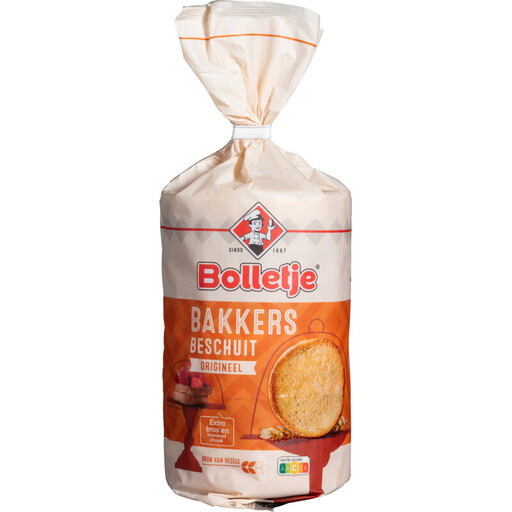 Image unavailable
A classic base if you want to choose your own sweet or savoury toppings. Check the label for wheat, egg and possible traces of sesame. Test heavy toppings before making several snacks.
No, you can’t tell from the product category alone. According to the Netherlands Nutrition Centre, bakers aren’t required to use baker’s salt. Check the label on the exact rusk you’re buying or ask the manufacturer which salt has been used.
Always check the label of the variety you choose. Bakkers Beschuit Origineel contains wheat and egg, and may contain sesame. Wheat and sesame are among the ingredients to consider in the multiseed and dark wholemeal varieties described here. The dark wholemeal variety also contains oats and barley.
Keep opened rusks dry and in a well-sealed container. Also follow the storage instructions on the packaging of the variety you’re using, and only add moist toppings when you’re ready to serve or prepare the snacks.
Yes. Consider the salt in the rusks alongside the salt in the toppings. Jumbo lists 0.61 g of salt per 100 g for Bolletje Bakkers Beschuit Origineel; PLUS lists 0.52 g per 100 g for the Bolletje multiseed and dark wholemeal varieties described here. Also consider how much of each you actually use.