What should you look for when choosing?
First decide how many rusks you need, then compare plain, wholemeal and seeded varieties by their ingredients. Albert Heijn and PLUS list 125 g packs, while PLUS also shows seeded varieties weighing 230 g. So even the same type of rusk doesn’t always come in the same pack size.
| What to consider |
What should you check? |
Who is it important to? |
| Quantity and leftovers |
Compare the number of rusks and the net weight per pack with the occasions when you plan to serve them. |
If I’m only having rusks a few times, I don’t want to buy a larger pack than I’m likely to use. Getting the quantity right is the top priority for roughly 40% of consumers. |
| Wholemeal and ingredients |
Read the ingredients list and compare the fibre value per 100 g on the packaging. |
I want to know which grains are in my rusks and how the nutritional values differ between varieties. For around 30% of consumers, the ingredients are their main concern. |
| Serving with toppings and allergens |
Check the pack size and ingredients; for seeded varieties, check the allergen information for everyone who’ll be eating. |
When serving rusks with toppings, I want to choose a suitable variety without overlooking what others can eat. Around 30% of consumers prioritise this occasion. |
Rusks for different occasions
These Bolletje packs offer options for a few occasions when you’re serving rusks with toppings, as well as for anyone looking specifically for wholemeal or seeded rusks. If you want to match the quantity closely to your household, compare the net weight on the pack as well as the number of rusks.
 Image unavailable
Bolletje multiseed rusks, 10 pieces
A seeded variety to consider if you’re serving rusks with toppings. The pack contains 10 rusks; check the net weight on the pack for the total quantity, and read the allergen information if others will be eating them too.
View at Joybuy
 Image unavailable
Bolletje wholemeal rusks, 13 pieces
An option if you’re looking for wholemeal rusks for breakfast or to serve with toppings. The pack contains 13 rusks; compare the ingredients and fibre value on the label, and check the net weight to assess the pack size.
View at Joybuy
 Image unavailable
Bolletje dark wholemeal rusks, 10 pieces
A variety to consider if you want to serve wholemeal rusks with seeds. The pack contains 10 rusks; if you want smaller portions or less food in the cupboard, also check the size of the rusks and the net weight.
View at Joybuy
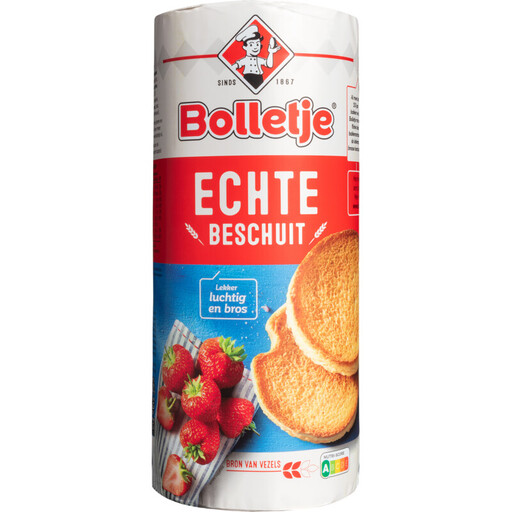 Image unavailable
Bolletje Original Rusks, 13 pieces
A classic rusk for breakfast or a simple snack with toppings. The pack contains 13 rusks; check the net weight and read the label if the ingredients or allergens affect your choice.
View at Joybuy
Frequently asked questions
Do all rusks in the Netherlands contain iodised bakers’ salt?
No, you can’t tell from the product category alone. The Netherlands Nutrition Centre says bakers aren’t required to use bakers’ salt. The Netherlands Food and Consumer Product Safety Authority explains that iodine compounds may be present in bread, bread substitutes and other bakery products through the use of bakers’ salt, with a maximum of 65 mg of iodine per kg of salt. Check the packaging or ask the manufacturer about the specific product.
Can I rely on the word ‘wholemeal’ when choosing rusks?
Use the claim as a starting point, and read the ingredients list on the pack too. On 16 July 2024, the Netherlands Food and Consumer Product Safety Authority reported that 51 of the 190 products it examined across seven supermarket chains, labelled as wholemeal, should not have carried that name. The findings apply to the products examined, not to every wholemeal rusk.
What should I look for in the allergen information for multiseed rusks?
Check the allergen information for the exact variety you’re buying, even if you know another product from the same brand. For seeded rusks, the ingredients and possible presence of allergens such as cereals containing gluten, egg or sesame vary by product. The current packaging is therefore the best guide when making your choice.
How should I store rusks after opening?
Seal the pack well and store the rusks in a dry place, following the instructions on the packaging. PLUS recommends protecting its rusks from moisture and heat; for Bolletje multiseed rusks, the storage instructions say to keep them in a dark, dry and sealed place after opening.
Will a variety of rusks shown online also be available at my local shop?
Not necessarily: check availability at the shop where you plan to do your shopping. Lidl marks its listed 140 g wholemeal rusks as available in store only, while availability at a particular PLUS shop may vary by variety.


