
If you like to stock up
If you eat rusks regularly, it’s useful to compare the number of rusks, pack size and storage instructions.


Choose plain rusks if you’re looking for a simple base for toppings. Choose wholemeal if the type of grain and fibre content matter more to you. For seeded varieties, check the size, ingredients and allergens on the pack too.
If you eat rusks regularly, it’s useful to compare the number of rusks, pack size and storage instructions.
You’ll want to check which grains are used in the ingredients list and compare the fibre content per 100 g across varieties.
Check the ingredients and allergen information on the label of the variety you choose, including for wheat, egg or sesame.
Start with the type of rusk you want, then compare the information on the packs you’re considering.
| What to consider | What should you check? | Who should consider this? |
|---|---|---|
| Wholegrains and fibre | Read the ingredients list and compare the fibre content per 100 g. | If you’re mainly choosing based on wholegrains and fibre, you’ll need to compare the nutritional values per 100 g. This is the top priority for around 37% of consumers. |
| Pack size and storage | Compare the number of rusks and the pack weight; follow the storage instructions on the packaging. | If rusks are a regular feature at your table, you’ll want to know how many each pack contains and how to store an opened roll. Around 36% of consumers give this the highest priority. |
| Ingredients and texture | Check the allergen information and see which grains or seeds the variety contains. | If you need to avoid an ingredient, or have a clear preference for plain or seeded rusks, the ingredients will determine which option is right for you. This matters most to around 27% of consumers. |
A description of bread slice thickness won’t help you distinguish between plain, wholemeal and seeded rusks. According to Jumbo, a rusk roll is cut in half after baking, and the halves are baked again.
Search by type of rusk, then compare the ingredients, nutritional information and pack size.
Rusk varieties with a similar appearance can differ in fibre, salt and size. As a result, the nutritional value per rusk may give you a different picture from the value per 100 g.
Compare products on the same 100 g basis, and check the portion size when comparing different sizes.
Ingredients vary between varieties. The products reviewed from brands including Bolletje and PLUS list ingredients such as egg or sesame, as well as grains.
If you have an allergy, read the allergen information on the pack you’re buying, including any warnings about possible traces.
Bolletje offers regular, wholemeal and multiseed rusks, among other varieties.
Jumbo’s own-label range includes plain rusks and robust multigrain rusks.
PLUS offers a roll of wholemeal rusks and a seeded wholemeal variety.
Goud Gebakken is an ALDI own-label brand offering plain and wholemeal rusks.
These products include a plain variety and two wholemeal varieties, one of which is a dark wholemeal rusk. Compare the pack sizes and check the current label if you’re looking for specific ingredients.
 Image unavailable
A good choice if you’re looking for dark wholemeal rusks. The pack contains 10 pieces; if ingredients or allergens influence your choice, check the label.
 Image unavailable
A good option if you want to compare wholemeal varieties. The pack contains 13 pieces; according to Joybuy’s product information, this variety contains 11 g of fibre per 100 g. If you have an allergy, check the current label.
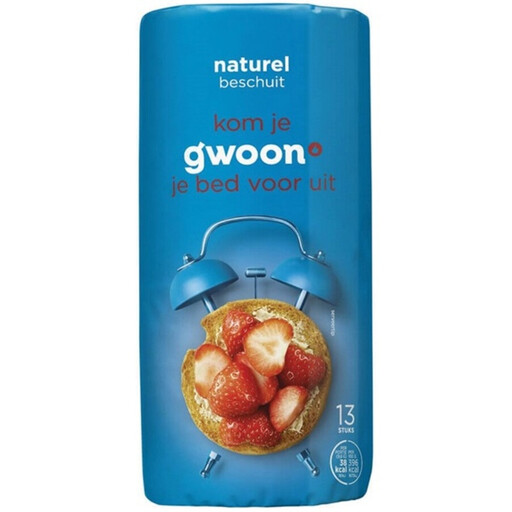 Image unavailable
A plain variety if you’re looking for a simple base for toppings. The pack weighs 125 g; check the packaging for the number of pieces and allergen information.
No, it’s better to compare rusks by type, ingredients and pack size. Jumbo explains that a rusk roll is cut in half and the halves are then baked again; a description of bread slice thickness doesn’t distinguish between the usual types of rusk.
Check the ingredients list and compare the fibre content per 100 g. The ingredients can vary even between wholemeal products: PLUS lists 7.7 g of fibre per 100 g for the wholemeal roll reviewed, while the seeded variety has different ingredients and a different portion size.
No, check the allergen information for the exact variety you’re buying. The products reviewed contain different ingredients; varieties with seeds or several grains may also list sesame or other grains, for example.
Follow the storage advice on the packaging and seal an opened roll well. The products reviewed recommend storing them in a cool, dry place; check the best-before date on your own pack too.