
Families planning their breakfast supplies
They want to choose a pack of chocolate sprinkles that suits how much the household uses, and buy rusks separately for Sunday breakfast.


Start with the rusk: choose wholemeal if fibre is a priority, or plain if you want a neutral, crunchy base. Then choose your chocolate sprinkles based on flavour, ingredients and a suitable pack size. Check the allergen information on both packs.
They want to choose a pack of chocolate sprinkles that suits how much the household uses, and buy rusks separately for Sunday breakfast.
They compare plain and wholemeal rusks using the nutritional information per 100 g, and check the ingredients in the topping too.
They read the labels on both the rusks and the chocolate sprinkles: the two products may contain different allergens.
First choose between plain and wholemeal rusks, then decide which flavour and pack size of chocolate sprinkles will suit your breakfast. Check the labels on both products before buying.
| What to consider | What should you check? | Who is this important to? |
|---|---|---|
| Rusks and fibre | Compare the ingredients and fibre per 100 g in plain and wholemeal rusks. Albert Heijn lists 9 g of fibre per 100 g for its wholemeal rusks and 4,2 g per 100 g for its plain rusks. | If fibre is the deciding factor for me, I want to know which rusk to put under the chocolate sprinkles. Around 33% of consumers prioritise their choice of rusk base. |
| Pack size and stocking up | Check the net weight, best-before date and how much chocolate sprinkles your household typically uses. | When stocking up for breakfast, I want a pack we can use before its best-before date becomes an issue. This is a priority for around 25% of consumers. |
| Flavour | Check whether it is dark or milk chocolate sprinkles, a flavour mix or flakes; the product name alone does not always tell you exactly what is in it. | I want a familiar flavour on my rusks, so I start by choosing the variety that suits our breakfast. For around 25% of consumers, flavour is the main consideration. |
| Ingredients and allergens | Read the latest labels on both products. The plain rusks described by Albert Heijn contain wheat and egg; Venz Hagelslag Puur lists milk and soya. | If I need to avoid certain ingredients, the whole combination needs to be suitable, not just the topping. Around 17% of consumers give this check the highest priority. |
‘Medium sliced’ does not describe a useful slice thickness for rusks. Jumbo describes its plain rusks as a crunchy product that is baked twice.
For this breakfast, look at the type of rusk, its ingredients and nutritional information rather than a description intended for sliced bread.
According to the Netherlands Nutrition Centre, bakers are not required to use baker’s salt. So you cannot tell whether it has been used just from the type of product.
If you want to know whether a particular bread or rusk product contains baker’s salt, check the packaging or ask the baker.
Rusks may also contain relevant ingredients: the plain rusks described by Albert Heijn contain wheat and egg, while Venz Hagelslag Puur lists milk and soya.
Read the ingredients and allergen information on both packs, even if you have bought one of the products before.
Makes various types of chocolate sprinkles and flakes, including dark and milk chocolate varieties.
A chocolate sprinkles brand with dark, milk and mixed-flavour varieties, among others.
Offers own-brand rusks, including plain and wholemeal varieties.
Offers own-brand rusks and chocolate sprinkles, alongside sprinkles from other brands.
Offers, among other products, a 600 g pack of milk chocolate sprinkles.
Offers milk and dark chocolate sprinkles, as well as products from the Kiekeboe range.
These products are chocolate sprinkles or flakes to put on rusks. Choose your rusks separately; when selecting a topping, focus on the flavour you want and read the ingredients on the pack you choose.
 Image unavailable
For anyone who likes dark chocolate sprinkles on their rusks. If ingredients or allergens are important to your choice, check the label on the pack.
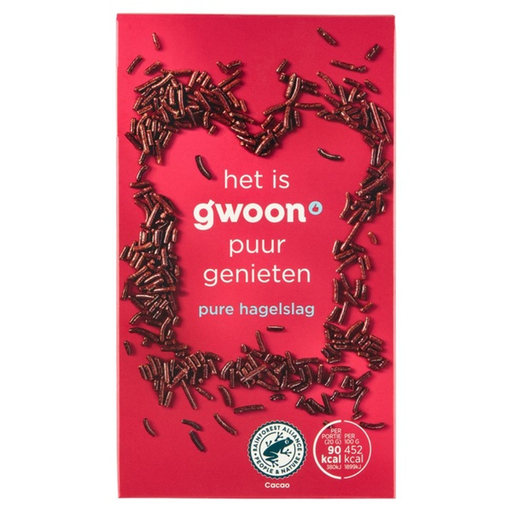 Image unavailable
For anyone looking for a larger pack of dark chocolate sprinkles. Consider whether 400 g is right for how much your household uses, and read the label.
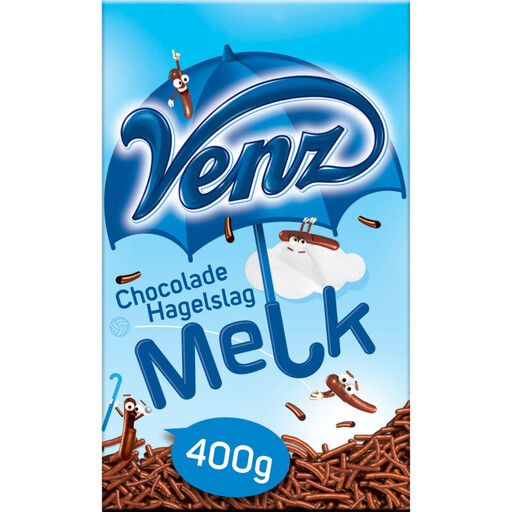 Image unavailable
For anyone who prefers a milk chocolate flavour to a dark variety. Check the ingredients on this pack and choose your rusks separately.
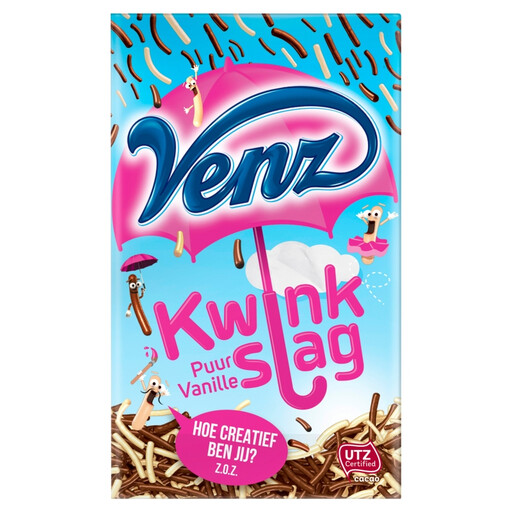 Image unavailable
For anyone who wants a mix of chocolate and vanilla flavours on their rusks instead of just one chocolate flavour. Check the pack for the ingredients.
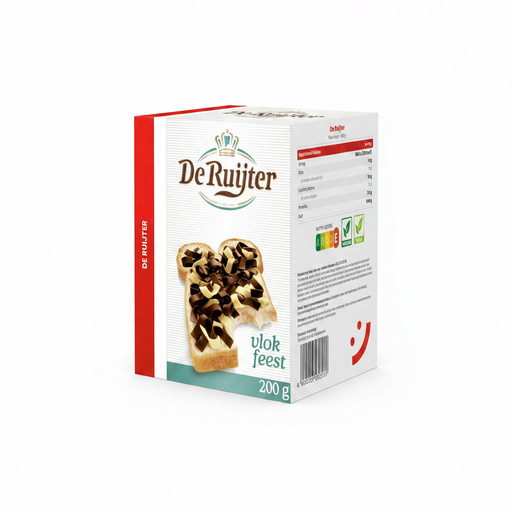 Image unavailable
For anyone who wants chocolate and vanilla-flavoured flakes as a topping instead of regular chocolate sprinkles. Choose your rusks separately and check the flakes’ label.
It depends on what you want from the rusk base: plain is a neutral choice, while wholemeal is an option if you’re looking at fibre. Albert Heijn lists 9 g of fibre per 100 g for its wholemeal rusks and 4,2 g per 100 g for its plain rusks; compare the topping separately too.
Read the labels on both products. The plain rusks described by Albert Heijn and Jumbo contain wheat and egg; Venz Hagelslag Puur lists milk and soya. Always check the exact varieties you buy.
No, you can’t assume that for every product: according to the Netherlands Nutrition Centre, bakers are not required to use baker’s salt. Check the packaging or ask the baker about a specific product.
Keep rusks dry and put them in an airtight tin after opening, as Albert Heijn advises for its rusks. Follow the storage instructions on the chocolate sprinkles’ own packaging.