
Hosts who want to serve seeds
You’re looking for rusks with visible seeds or kernels as a base for chocolate sprinkles at your neighbourhood get-together. Compare the rusk ingredients before choosing your topping.


Choose multiseed rusks if you want a rusk base with visible seeds for your neighbourhood get-together; choose wholegrain rusks if the wholegrain claim and nutritional value matter more to you. For both options, check the fibre per 100 g and read the allergen information on both the rusks and the chocolate sprinkles before serving them to guests.
You’re looking for rusks with visible seeds or kernels as a base for chocolate sprinkles at your neighbourhood get-together. Compare the rusk ingredients before choosing your topping.
You want to know whether the rusks are wholegrain and how much fibre they contain per 100 g. Assess the nutritional value of the chocolate sprinkles separately.
If your guests need to avoid allergens, check the current labels on both products. For the rusk and chocolate sprinkle varieties mentioned, allergens to look out for include cereals containing gluten, sesame, egg, milk and soya.
Start with the rusk base, then compare the chocolate sprinkles. For a neighbourhood get-together, the seeds you want, the nutritional information and how suitable the combination is for your guests all matter in their own way.
| What to consider | What to check when buying | Who it matters most to |
|---|---|---|
| Seeds and texture | Check which seeds or kernels are listed in the ingredients and whether the rusk size suits how you want to serve them. | I want to serve rusks with a visible seed mix under the chocolate sprinkles at my neighbourhood get-together. Around 40% of consumers prioritise this texture. |
| Wholegrain and fibre | Look for a wholegrain claim and compare the fibre on the same basis: per 100 g of rusks. | What matters most to me is knowing how much wholegrain cereal and fibre the rusk base contains. This nutritional information is the top priority for around 30% of consumers. |
| Allergens | Read the current allergen information for both the rusks and the chocolate sprinkles, including any relevant warnings about possible traces. | When I’m serving others, I first need to assess whether both products are suitable for them. Checking allergens is the main concern for around 20% of consumers. |
| Chocolate sprinkle flavour | Choose the chocolate variety you want and compare the nutritional information and allergens on the exact pack. | I choose the combination mainly based on the flavour of the chocolate sprinkles I want to serve. This is the most important factor for around 10% of consumers. |
Seeds and kernels alone don’t tell you whether the rusks are made from wholegrain cereal. Voedingscentrum defines wholegrain products by their use of the whole grain kernel.
Check the wholegrain claim separately from the seed mix, then compare the fibre per 100 g.
Chocolate sprinkles can also contain allergens. The product varieties mentioned include cereals containing gluten and sesame in the rusks, and milk and soya in the chocolate sprinkles.
Check both packs before serving the combination to guests.
A claim about one product doesn’t also describe rusks with chocolate sprinkles. Albert Heijn lists 43 g of sugars per 100 g for De Ruijter Specials Intens Puur; according to the brand, the carbohydrate comparison for TastyBasics applies to its rusks compared with ordinary rusks.
Compare the nutritional information for the rusks and chocolate sprinkles separately, using the per-100 g figures each time you compare products.
According to Voedingscentrum, bakers aren’t required to use baker’s salt. The word ‘salt’ on its own doesn’t tell you which type is used in a specific product.
If the type of salt matters to your choice, look for product-specific information or ask the manufacturer.
A rusk brand to look at if you’re after dark wholegrain rusks or rusks with seeds.
A multiseed rusk to compare when the nutritional value of the rusk base matters.
Its organic wholegrain multiseed rusks are a specific product you can compare for seeds and nutritional information.
The Specials Intens Puur variety reviewed is a chocolate sprinkle option for anyone weighing up a dark chocolate flavour against other toppings.
The XXL milk variety reviewed is a chocolate sprinkle option if milk chocolate flavour and larger pieces are key to your choice.
These products include multiseed and wholegrain rusks for chocolate sprinkles, plus a cracker as another crunchy base. A cracker isn’t a rusk, so assess it separately if you want to stick to the usual rusk presentation.
 Image unavailable
An option if you’re looking for dark wholegrain rusks as a base for chocolate sprinkles.
If you specifically want seeds, compare the ingredients on this pack. Also check the allergens in both the rusks and the topping for your guests.
 Image unavailable
A rusk option if you want a seed mix with your chocolate sprinkles.
Check which seeds are listed on the pack. If wholegrain rusks are a must for you, look for a separate wholegrain claim too; check the allergens in both products for your guests.
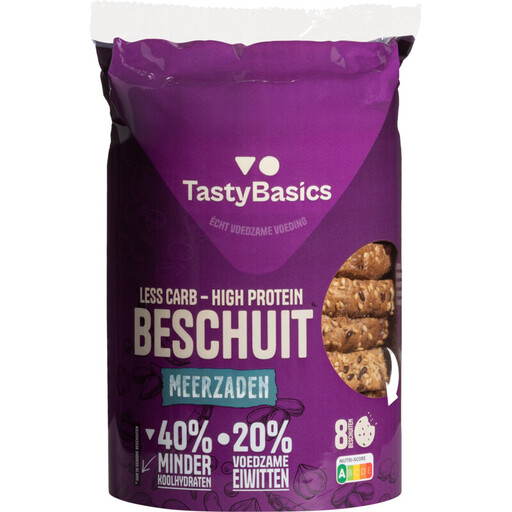 Image unavailable
Multiseed rusks for anyone wanting to compare both the seeds and the nutritional information of the rusk base.
For the TastyBasics multiseed variety reviewed, Albert Heijn lists 11 g of fibre and 20 g of protein per 100 g. When serving, check the current label for wheat, spelt, barley, egg and sesame, among other ingredients.
 Image unavailable
An alternative crunchy base to consider alongside rusks; these are crackers, not rusks.
Check whether the size suits the way you plan to serve them. Read the allergen information, including details of cereals containing gluten and sesame, and look for any mention of traces of milk.
 Image unavailable
A wholegrain rusk base if a seed mix isn’t your main selection criterion.
If seeds matter for your get-together, check whether they’re listed in the ingredients. Also check the allergens in both the rusks and chocolate sprinkles for your guests.
No. Seeds or kernels don’t confirm that a product is wholegrain. Check the wholegrain claim on the pack; according to Voedingscentrum, wholegrain products are made using the whole grain kernel.
Read the current label on both products before serving them to guests. Depending on the product, the multiseed rusks and chocolate sprinkle varieties mentioned may contain cereals containing gluten, sesame, egg, milk or soya; also check each pack for relevant warnings about possible traces.
Store rusks in a dry place and seal the pack tightly after opening. Also follow the storage instructions on the pack you’re using.
No, don’t assume this is the case for a specific pack. Voedingscentrum says bakers aren’t required to use baker’s salt, so check for product-specific information or ask the manufacturer which salt was used if it matters to your choice.