
Students looking for a simple combination
Want to prepare rusks with a topping quickly, and pay attention to pack size and how much chocolate sprinkles they use on each rusk.


Choose wholemeal rusks if you want a simple base for chocolate sprinkles; choose seeded rusks if the seeds and coarser texture matter to you. Chocolate sprinkles are still a sweet topping, so rusks on their own do not make a complete meal. Check the ingredients and allergen information for both products.
Want to prepare rusks with a topping quickly, and pay attention to pack size and how much chocolate sprinkles they use on each rusk.
Specifically want wholemeal rusks with grains or seeds, and compare the ingredients and fibre per 100 g. Albert Heijn and Bolletje list these features for specific rusk varieties.
Want to add chocolate sprinkles, but also check the portion size, sugars, saturated fat and allergens on the packaging.
When choosing rusks with chocolate sprinkles, start with the rusk base, then consider the topping and portion size. If you want to eat the combination as a meal, think about what else you’ll have with it too.
| What to consider | What should you check? | Who is this important for? |
|---|---|---|
| Packaging and portions | Check how many rusks are in the pack and how much topping you want to use on each one. | If I want to plan several eating occasions with just a few shopping items, what matters most is how many rusks and portions of topping I can get from the packs. For around 36% of consumers, this practical breakdown comes first. |
| Wholemeal, fibre and seeds | Look for the wholemeal description on the label and compare fibre per 100 g and the seeds listed. | I want a rusk base where seeds and fibre matter more to my choice than a plain rusk. This is the main priority for around 29% of consumers. |
| Chocolate sprinkles and portion size | Compare sugars and saturated fat per 100 g, and consider how much chocolate sprinkles you use. | For me, chocolate sprinkles should mainly add flavour, without me losing sight of how much I’m using. Around 21% of consumers put this balance first. |
| Allergens and baker’s salt | Read the allergen information for both products; check the rusk packaging for baker’s salt if it’s relevant to your diet. | When I need to watch what’s in my food, I don’t want to assume what a product contains based on the words ‘seeded’ or ‘wholemeal’. For around 14% of consumers, checking the label is their top priority when choosing. |
Seeds alone don’t tell you whether a rusk is wholemeal or how much fibre it contains. The organic seeded rusks from Albert Heijn examined here list 11 g of fibre per 100 g; that figure applies to this specific variety.
Check the wholemeal description, ingredients and nutritional information for the rusks you choose.
Chocolate sprinkles are a sweet topping. The Netherlands Nutrition Centre classifies chocolate sprinkles as outside the Wheel of Five, so you’ll need to decide separately what else to include in your meal.
Use the amount of chocolate sprinkles you want as a topping, and decide separately what else you’ll eat with your meal.
According to the Netherlands Nutrition Centre, bread is not always baked with baker’s salt. The words ‘organic’ and ‘wholemeal’ also don’t tell you whether baker’s salt has been used in a particular product.
Check the ingredients if baker’s salt is relevant to your choice.
Rusks and chocolate sprinkles each have their own ingredients and allergens. The organic seeded rusks from Albert Heijn examined here list egg, sesame and cereals containing gluten; the plain chocolate sprinkles from De Ruijter examined here list milk and soya.
Check the current allergen information on both packs before combining them.
Jumbo offers wholemeal rusks and other varieties in its rusk range.
Albert Heijn’s range includes organic wholemeal multiseed rusks, according to its product information.
Bolletje offers several types of rusk; the high-fibre farmhouse rusks examined here are a specific wholemeal variety with seeds.
De Ruijter offers plain chocolate sprinkles as a topping for a rusk you choose separately.
Venz is a chocolate sprinkles brand; one milk chocolate variety examined carried a comparative sugar claim.
These two seeded rusk products can be topped with chocolate sprinkles of your choice. Consider the rusks and topping separately; the products below don’t represent other types of rusk.
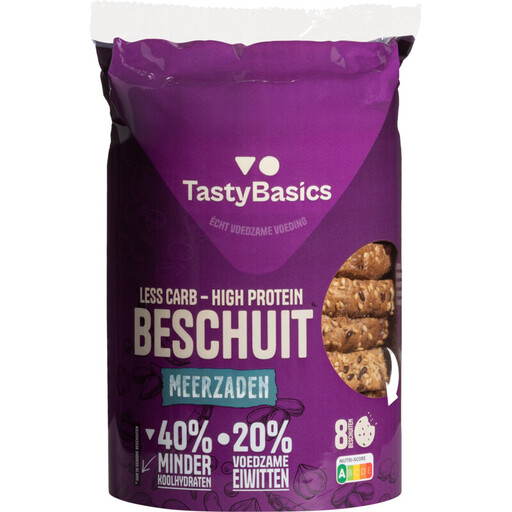 Image unavailable
Seeded rusks for anyone who wants to add their own chocolate sprinkles. Check the ingredients and allergens in both the rusks and the topping you choose.
 Image unavailable
Seeded rusks for anyone who wants to add chocolate sprinkles separately. If wholemeal rusks are a must for you, check the description on the pack; also read the allergen information for the rusks and topping.
No. ‘Multiseed’ tells you what additions to expect, not whether the rusks are wholemeal. Check the wholemeal description and ingredients for the variety you choose, and compare fibre per 100 g if you like.
Rusks with chocolate sprinkles alone don’t necessarily make a complete meal. Chocolate sprinkles are a sweet topping; the Netherlands Nutrition Centre classifies them as outside the Wheel of Five. So decide separately what else you’ll eat with your meal.
No, don’t assume this based on the product name. The Netherlands Nutrition Centre says that bread is not always baked with baker’s salt. Check the ingredients for the rusks you choose if baker’s salt is relevant to your diet.
Read both packs, as the rusks and chocolate sprinkles may list different allergens. The organic seeded rusks from Albert Heijn examined here list egg, sesame and cereals containing gluten; the plain chocolate sprinkles from De Ruijter examined here list milk and soya. Always check the current products you’re combining.