
Traveller looking to keep crumbs to a minimum
You want to keep your rusks whole and dry during a train journey, and make it easy to clear away the packaging after eating. NS asks passengers to put their rubbish in the bin.


Choose wholemeal rusks as a base if the person eating them is happy with the taste and texture, and you want to compare fibre content. If plain rusks are more familiar, you can try both types at different mealtimes. Choose your chocolate sprinkles by checking the label, and take the rusks and topping in separate sealed containers so you can clear away the crumbs and packaging after eating.
You want to keep your rusks whole and dry during a train journey, and make it easy to clear away the packaging after eating. NS asks passengers to put their rubbish in the bin.
You want to be able to alternate between plain and wholemeal rusks without relying on an unfamiliar taste or texture just before setting off. Albert Heijn’s product information shows that the fibre content differs between the two varieties.
You check the cocoa percentage, what a sugar claim means or the allergens in the exact variety, rather than relying on the brand name alone.
First, decide which rusks the person eating them would like to take and how you’ll protect them. Then compare the chocolate sprinkles on the points that matter to you.
| What to consider | What to check when buying | Who it matters to |
|---|---|---|
| Taking them along in one piece and without a mess | Choose a resealable pack that protects the rusks in transit. Keep the chocolate sprinkles separate until you’re ready to eat. | I don’t want broken rusks or loose chocolate sprinkles on the journey, and I want to be able to clear away my rubbish afterwards; around 40% of consumers put practical transport first. |
| Plain or wholemeal | Compare the fibre per 100 g for the exact rusk varieties, and try an unfamiliar texture before the journey. | If wholemeal is new to the person eating them, I want to know whether they’ll actually eat those rusks. Around 30% of consumers make acceptability their top priority. |
| Chocolate sprinkles label | Check the cocoa percentage, sugars per 100 g, the reference product used for any sugar claim and the allergens in the variety you’ve chosen. | When choosing chocolate sprinkles, I want to weigh up which taste and ingredients are right for me; for around 30% of consumers, the label is the deciding factor. |
The plain and wholemeal rusks in this comparison are separate varieties. Choosing one doesn’t automatically give you a mix.
If you’d like to offer both textures, compare two packs and try them at different mealtimes.
According to the Netherlands Nutrition Centre, using baker’s salt in bread is not compulsory. So don’t assume you know what type of salt a particular variety contains just from the word ‘rusks’.
Check the ingredients on the pack if the type of salt used matters to your choice.
Albert Heijn compares AH Hagelslag melk minder suiker with AH Melk hagelslag. The former variety itself lists 43 g of sugars per 100 g.
When you see a claim like this, check both the stated comparison product and the nutritional information for the variety you’re buying.
Chocolate sprinkles have their own ingredients and allergen information, too. The dark varieties from De Ruijter and Venz described by Albert Heijn list milk and soya.
Before setting off, check the current packaging for both the rusks and the chocolate sprinkles.
A useful option if you want to compare separate plain and wholemeal rusks, or chocolate sprinkles, by looking at the labels.
The Specials Intens Puur variety is a specific example to consider when comparing dark chocolate sprinkles.
Venz Hagelslag Puur offers another dark variety to compare by ingredients and nutritional value.
These products are separate items for anyone wanting to take rusks with chocolate sprinkles: dark chocolate sprinkles, wholemeal rusks and plain rusks. To put a combination together, choose your base and topping separately, and check how you’ll seal and protect them during the journey.
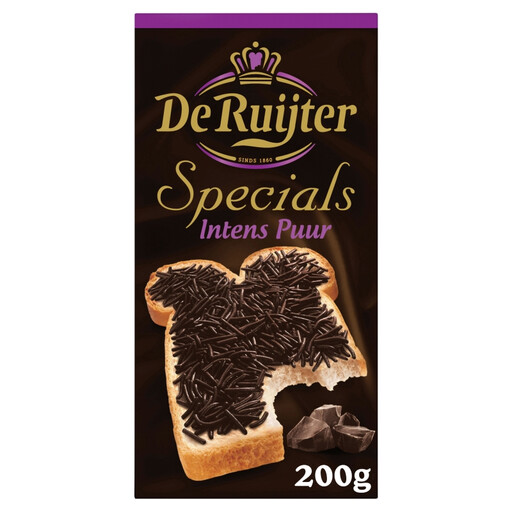 No image available
A separate chocolate sprinkle option if you’re considering dark chocolate sprinkles as a topping; choose your rusks separately.
200 g pack. Check the current ingredients and allergen information on the packaging.
 No image available
A wholemeal base if the person eating them would like to try the taste and texture; choose your chocolate sprinkles separately.
The pack contains 13 pieces. Protect the rusks from breaking when you take them with you.
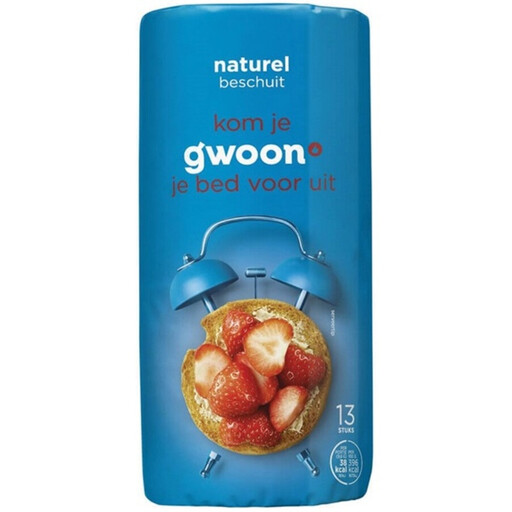 No image available
A separate plain base to try alongside wholemeal rusks; choose your chocolate sprinkles separately.
125 g pack. Check the current allergen information and protect the rusks when you take them with you.
Put packaging and other rubbish in the bin, as NS asks passengers to do in its house rules. Take the rusks protected and the topping in a separate sealed container to help keep crumbs under control during the journey.
Not without taking the person’s taste preferences into account. According to Albert Heijn, AH Beschuit volkoren contains 9 g of fibre per 100 g, compared with 4.2 g for AH Beschuit naturel. If wholemeal has an unfamiliar texture, let them try both types before the journey.
No. Albert Heijn compares AH Hagelslag melk minder suiker specifically with AH Melk hagelslag; the former variety lists 43 g of sugars per 100 g. So check both the product used as the reference for the claim and the nutritional information.
No, don’t assume that without checking the label. The Netherlands Nutrition Centre says that baker’s salt is not compulsory in bread; check the ingredients for the rusks you choose or ask the manufacturer what type of salt is used.
Check the current packaging for each product separately. The rusk examples described list, among other things, cereals containing gluten and egg; the dark chocolate sprinkle varieties from De Ruijter and Venz described by Albert Heijn list milk and soya.