
Families who want the chocolate to take centre stage
They want to choose dark chocolate sprinkles for a school holiday lunch based on the stated cocoa solids, without assuming that a premium label means everyone will prefer the taste.


Choose the chocolate sprinkles and rusks separately. A stated cocoa solids percentage can help you pick a dark chocolate variety, while small portions are handy if children want to try different types. With wholemeal rusks, you can compare the fibre and ingredients. Check the portion size and allergens for the combination you choose, too; a different type of chocolate sprinkles won’t change the nutritional information for the rusks.
They want to choose dark chocolate sprinkles for a school holiday lunch based on the stated cocoa solids, without assuming that a premium label means everyone will prefer the taste.
They want children to be able to choose from different types of chocolate sprinkles and chocolate flakes, with pre-portioned amounts ready to serve.
Alongside the chocolate sprinkles, they compare the type of grain, fibre, ingredients and allergens in the rusks.
Decide what matters most for this lunch: the chocolate flavour, convenience at the table or the qualities of the rusks. Then compare the labels on both products.
| What to consider | What to check when buying | Especially useful for |
|---|---|---|
| Chocolate flavour | Compare the stated cocoa solids percentage and read the ingredients for the exact variety. | If I want the chocolate sprinkles to make the treat feel special, I want to be able to choose between dark and milk chocolate. Around 30% of consumers put chocolate flavour first. |
| Portions and variety | Check the number of portions, the weight per portion and which types are included in the pack. | For a lunch where people have different preferences, I want to be able to serve several types without portioning everything myself. Convenient portions are the main concern for around 30% of consumers. |
| Rusks and the label | Compare the type of grain, fibre per 100 g, ingredients and allergens in the rusks. | If I’m considering the whole combination, I want to know what’s in the rusks, not just which chocolate sprinkles go on top. Around 40% of consumers prioritise the rusks and the information on the label. |
A brand name or premium label doesn’t tell you what kind of chocolate flavour you’re choosing. Albert Heijn states that De Ruijter Specials Intens Puur contains at least 52% cocoa solids, while Venz Hagelslag melk contains at least 20%. These are different types of chocolate sprinkles, not a judgement on which everyone will prefer.
Compare the exact variety, ingredients and allergens before choosing your topping.
The nutritional information for wholemeal rusks describes the rusks, not the chocolate sprinkles you put on top.
Read the ingredients and nutritional information for each product separately.
If you serve bread instead of rusks, you can’t tell which salt was used in the bread from the presence of chocolate sprinkles. According to the Netherlands Nutrition Centre, using baker’s salt in bread is not compulsory.
If this matters when choosing bread, check the label or ask the baker.
A mix can contain chocolate sprinkles and flakes with different ingredients. In the De Ruijter Kleintjes range examined, milk, soya and wheat starch are among the ingredients to note.
Read the ingredients and allergen information for the whole pack, even if you mainly want to serve one type.
If you’re looking for dark chocolate sprinkles or individually portioned options, these are two different product choices from the brand.
The Hagelslag melk variety examined is a milk chocolate option for anyone looking for this type of chocolate sprinkles.
The dark wholemeal rusks examined are one possible base for serving with chocolate sprinkles.
The dark chocolate sprinkles examined are a larger-pack option from Lidl’s own-brand range.
Each of these products provides one part of a school holiday lunch: wholemeal rusks as the base or dark chocolate sprinkles as the topping. Choose the other part separately.
 Image unavailable
A rusk base for anyone who also wants to compare the type of grain and fibre; chocolate sprinkles are not included.
The product information states that these rusks are 100% wholemeal and contain 10 g of fibre per 100 g. They contain wheat, oats, barley and sesame, among other ingredients.
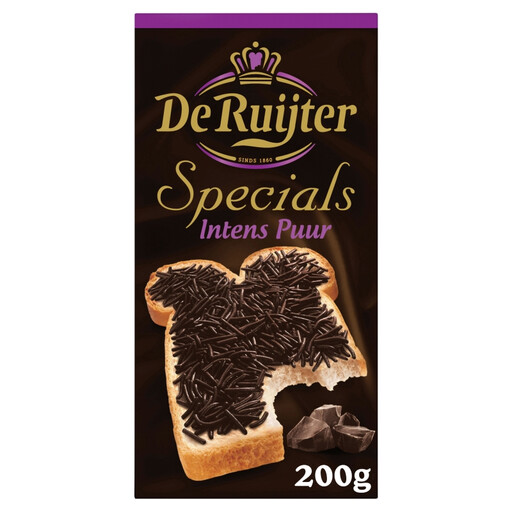 Image unavailable
Dark chocolate sprinkles for anyone choosing a topping based on its chocolate flavour; rusks are not included.
Check the ingredients and allergens on the exact pack if milk, soya or lactose are a concern.
No. The nutritional information for the chocolate sprinkles and the rusks relates to two separate products. For the combination you choose, compare the ingredients and nutritional values on both labels, ideally using the same basis, such as per 100 g.
Check every type in the mix, not just the chocolate sprinkles you’d choose first. The De Ruijter portion pack examined contains milk, soya and wheat starch, among other ingredients. Ingredients vary by product and variety.
No. According to the Netherlands Nutrition Centre, using baker’s salt in bread is not compulsory. If you’re serving bread instead of rusks and the salt used matters to you, check the label or ask the baker; don’t try to work it out from the chocolate sprinkles.
Follow the storage instructions on the exact packs. The product information examined recommends keeping both the chocolate sprinkles and wholemeal rusks in a cool, dry place. Keep the opened pack of rusks tightly sealed and protect it from moisture.