
Fans of sweet toppings
You’re looking for a crunchy rusk with a chocolate topping and care about choosing between milk and dark chocolate flavours.


Choose wholemeal rusks if the fibre content of the base is your main concern, or plain rusks if you prefer a familiar, neutral flavour. Then choose milk or dark chocolate sprinkles based on taste and the information on the label; dark chocolate isn’t automatically suitable if you have an allergy. If you’re taking this combination along for a café terrace visit, keep the rusks dry and add the topping just before eating.
You’re looking for a crunchy rusk with a chocolate topping and care about choosing between milk and dark chocolate flavours.
You want to keep eating chocolate sprinkles, but first compare the nutritional information for regular and wholemeal rusks. Then you check the topping separately.
You need to check the ingredients and allergens on each pack. If baker’s salt matters to your choice, check whether it’s listed on the label too.
Choose your rusk base and chocolate topping separately. Then compare the labels of the products you actually plan to eat together.
| What to consider | What to check | Who it matters to |
|---|---|---|
| Rusk base | Check the ingredients and compare fibre per 100 g if you’re considering plain and wholemeal rusks. | When I have chocolate sprinkles, I want to make a considered choice about the rusk underneath. For around 36% of consumers, the choice of base matters most. |
| Chocolate flavour | Check whether the sprinkles are milk or dark chocolate, and compare the cocoa content and sugars per 100 g on the labels. | I mainly want to choose a chocolate flavour I enjoy, without assuming that all dark varieties are the same. Around 36% of consumers put flavour first. |
| Ingredients and allergens | Read the allergen information for both the rusks and the topping; check the ingredients if baker’s salt is relevant to you. | If certain ingredients aren’t suitable for me, I can’t rely on the product name alone. The label is the top priority for around 28% of consumers. |
AH Wholemeal Rusks, as described by Albert Heijn, contain wheat, gluten and egg. Choosing wholemeal therefore tells you nothing about whether they’re suitable if you have an allergy.
Read the allergen information on the pack you buy.
According to Albert Heijn’s product information, the De Ruijter dark variety examined contains less sugar per 100 g than the milk chocolate variety examined, but this difference doesn’t automatically apply to other products. The Netherlands Nutrition Centre doesn’t include chocolate sprinkles in its Wheel of Five healthy eating guidelines.
Compare the nutritional information per 100 g for the varieties you’re considering, and decide how much you want to use.
According to the Netherlands Nutrition Centre, bakers aren’t required to use baker’s salt. So don’t assume it’s used just because a product is called bread or rusks.
Check the ingredients on the pack if this matters to your choice.
For AH Wholemeal Rusks, Albert Heijn recommends storing them in a dark, dry place and keeping them in a sealed tin after opening.
For a café terrace visit, take only what you plan to eat and seal the rest again. Add the topping just before eating to keep the rusks crunchy.
Worth considering if you want to compare milk and dark chocolate sprinkles from the same brand.
Worth considering if you’re looking at a 400 g pack of dark chocolate sprinkles.
A supermarket own-label brand that lets you compare plain and wholemeal rusks as separate bases.
A brand to explore if you want to compare regular, wholemeal and other types of rusks.
These products are chocolate toppings for your combination. Choose regular or wholemeal rusks separately; the chocolate flakes below are also a different type of topping from chocolate sprinkles.
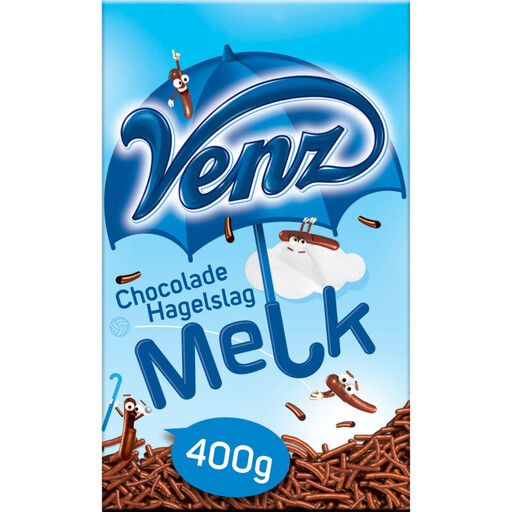 No image available
A chocolate sprinkles option if you’d like milk chocolate with your rusks. This product is the topping only; choose your rusks separately.
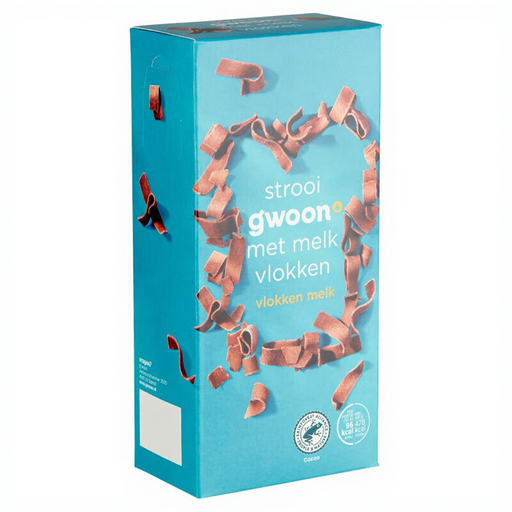 No image available
An option if you’d like to use milk chocolate flakes as a topping. These are flakes, not chocolate sprinkles, and you’ll need to choose your rusks separately.
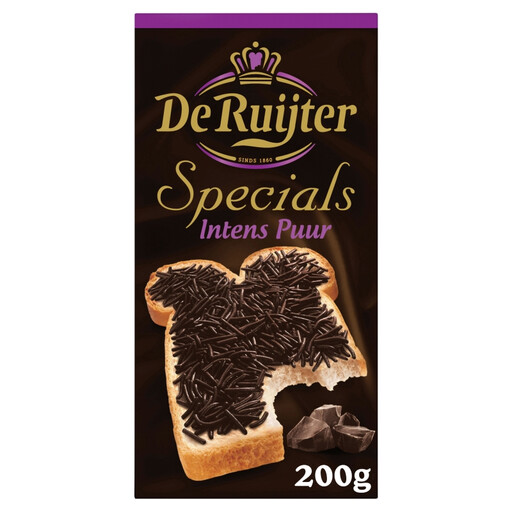 No image available
A chocolate sprinkles option if you prefer dark to milk chocolate. This is the topping only; check the label and choose your rusks separately.
No. AH Wholemeal Rusks, as described by Albert Heijn, contain 9 g fibre per 100 g, but you should also compare the flavour, ingredients and allergens. Assess the nutritional information for the chocolate sprinkles separately.
No, you can’t assume this is true of all products. According to the product information on Albert Heijn, the De Ruijter Intens Puur variety examined lists 43 g sugars per 100 g, while the De Ruijter milk variety examined lists 71 g per 100 g; compare other varieties using their own labels.
Store the rusks somewhere dry and seal the pack well after opening. For AH Wholemeal Rusks, Albert Heijn recommends storing them in a dark, dry place and keeping them in a sealed tin after opening; add the topping just before eating if keeping them crunchy matters to you.
No, don’t assume this without checking the label. The Netherlands Nutrition Centre says that bakers aren’t required to use baker’s salt, so check the ingredients of the rusks you choose.