
If you’d like more room for toppings
For an Easter brunch with butter and chocolate sprinkles, you might prefer a larger rusk. Look for a specific size description, such as ‘extra large’, but don’t assume this means the rusk is sturdier too.


If you’d like a larger base for butter and chocolate sprinkles at Easter breakfast, look for rusks described as extra large. If fibre is a priority, compare the nutritional information for wholemeal and multigrain varieties. Terms such as ‘thick cut’ and ‘robust’ don’t guarantee that rusks are less likely to break, so check the ingredients and allergens for the exact variety too.
For an Easter brunch with butter and chocolate sprinkles, you might prefer a larger rusk. Look for a specific size description, such as ‘extra large’, but don’t assume this means the rusk is sturdier too.
For wholemeal and multigrain rusks, you can compare the fibre content per 100 g with that of other varieties. Check the ingredients at the same time: grains and allergens vary from product to product.
Read the labels on both the rusks and the chocolate sprinkles if you need to avoid certain ingredients. If you need a gluten-free option, only choose rusks explicitly labelled gluten-free for the exact variety.
Start with what matters most for your Easter breakfast: room for toppings, the type of grain and fibre content, or suitability for your dietary needs. Then compare the information on the packaging of the rusks you’re actually buying.
| What to consider | What to check when buying | Who is this important for? |
|---|---|---|
| Room for toppings | Look for size descriptions such as ‘extra large’ and check that the pack is intact. | If I’m serving rusks with butter and chocolate sprinkles at Easter brunch, I want enough surface area to spread the toppings. For around 38% of consumers, having more room for toppings is the top priority. |
| Fibre and type of grain | Compare fibre per 100 g and check which grains the variety contains. | For my Easter breakfast, the ingredients matter more than a larger size, so I want to be able to compare wholemeal and multigrain rusks. Around 37% of consumers prioritise fibre and type of grain. |
| Allergens | Read the allergen information for both the rusks and the chocolate sprinkles; check any dietary claim on the exact variety. | If I need to avoid an ingredient, the combination I choose must suit my dietary needs. Dietary suitability and allergens are the main concern for around 25% of consumers. |
‘Extra large’ describes the size; ‘robust’ in a product name doesn’t prove that the rusks have been tested for break resistance. Even larger rusks can get damaged in transit or while you’re adding toppings.
Choose based on verifiable details on the packaging, keep the pack intact during transport and add the chocolate sprinkles just before serving.
You can’t tell from the product category alone which salt was used in a particular rusk. The Netherlands Nutrition Centre also points out that using baker’s salt in bread is not compulsory.
Check the ingredients of the rusks you choose rather than assuming they contain iodine based on the product name.
Multigrain rusks may contain gluten-containing grains, egg and sesame, among other ingredients. A wholemeal base isn’t automatically suitable if you need to avoid any of these ingredients.
Read the allergen information for the exact variety. If you need gluten-free rusks, look for an explicit gluten-free label.
The brands below play different roles when it comes to rusks with chocolate sprinkles: some make the rusks, while others provide the topping. So compare specific products rather than relying on brand names alone.
Bolletje offers classic Bakkers Beschuit rusks and high-fibre varieties.
Jumbo sells plain rusks as well as Robust Multigrain Rusks.
Schär Zwieback is a separate rusk option if you’re looking for a product explicitly labelled gluten-free.
Venz is relevant for the chocolate sprinkles on your rusk, not the rusk itself.
De Ruijter offers chocolate sprinkles to top your chosen rusks.
These rusks give you a choice of classic, multiseed and wholemeal varieties for a breakfast with toppings. If you’re mainly looking for more room for chocolate sprinkles, check the size description for the exact variety; the product name alone doesn’t prove that it’s larger or sturdier.
 Image unavailable
A multiseed variety to consider if you’d like to compare the ingredients in your rusks as well as the chocolate sprinkles on top. Check the ingredients and allergens on the packaging; the name says nothing about break resistance.
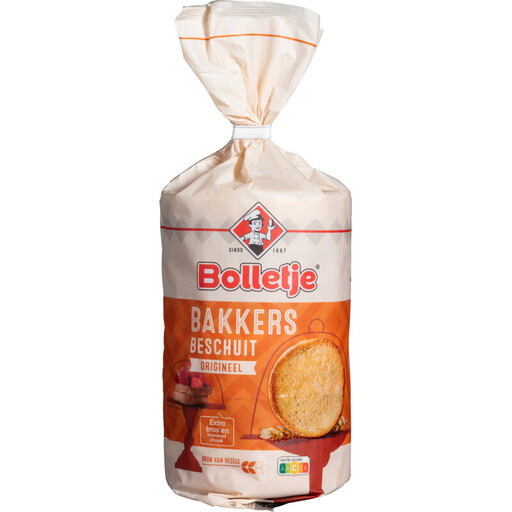 Image unavailable
A classic rusk variety if you’re choosing a base for chocolate sprinkles. If having more room for toppings is important to you, check the size on the packaging.
 Image unavailable
A dark wholemeal variety if you want to consider the type of grain at Easter breakfast. Compare the fibre content and allergens on the packaging; ‘wholemeal’ alone says nothing about break resistance.
 Image unavailable
A wholemeal option if the type of grain matters more to you than a stated larger size. The pack contains 13 pieces; check the nutritional information and allergens for this variety.
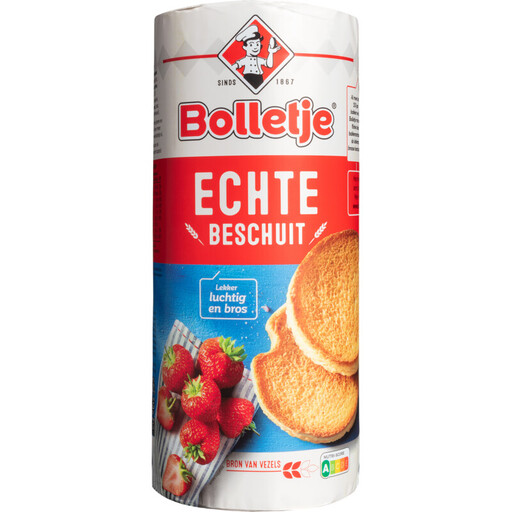 Image unavailable
A classic rusk option for breakfast with chocolate sprinkles. The pack contains 13 pieces; check the size separately if you’re specifically looking for a larger rusk.
No. This search term doesn’t guarantee that rusks are less likely to break. Look for specific details such as size and serving weight when choosing, and don’t treat ‘extra large’ or ‘robust’ as proof of break resistance either.
You can’t assume this of every rusk. Check the ingredients of the specific product to see which salt is listed; the Netherlands Nutrition Centre says that using baker’s salt isn’t compulsory even for bread.
Read the allergen information for both the rusks and the chocolate sprinkles you want to combine. According to the Netherlands Food and Consumer Product Safety Authority, allergen information for prepacked foods must appear on the label; always check the exact varieties you’re buying.