
Anyone serving topped BBQ bites
If rusks are the visible base for cold bites, their size and whether they contain seeds are important choices. Check that the pack size suits what you plan to serve, too.


For generously topped, cold BBQ bites, you could choose a larger rusk with seeds; if wholegrain or fibre is your priority, compare these features across the different varieties. Rusks stay crisp, so think about your toppings and when you’ll serve them. If any guests have allergies, always check the label on the exact pack you’ll be using.
If rusks are the visible base for cold bites, their size and whether they contain seeds are important choices. Check that the pack size suits what you plan to serve, too.
A darker colour doesn’t tell you how much fibre a rusk contains. Compare the nutritional information per 100 g and check the ingredients list to see whether your chosen variety is wholegrain.
Rusks with grains and seeds may contain ingredients such as wheat and sesame; some varieties also list egg. Before adding toppings, read the allergen information and any ‘may contain’ statements on the current pack.
When choosing rusks for topped BBQ bites, start with what matters most to you: the base for serving, the wholegrain and fibre content, the ingredients or a suitable pack that you can buy in time.
| What to consider | What to check | Who this matters most to |
|---|---|---|
| Presentation and toppings | Check the size and whether seeds are a good match for your chosen toppings. Check the number of rusks in the pack. | If I want to serve generous bites, I’m looking for a substantial base that lets the toppings stand out; presentation matters most to around 36% of consumers. |
| Wholegrain and fibre | Compare fibre per 100 g and check the wholegrain claim and ingredients. | I want to make a considered choice and pick a wholegrain variety for my BBQ shopping, rather than judging by colour alone; this profile comes first for around 29% of consumers. |
| Ingredients and allergens | Read the label on the pack you’ve bought, including allergen information and any ‘may contain’ statements. | If guests avoid certain ingredients, I want to know what’s in the rusks before serving them; this is the main consideration for around 21% of consumers. |
| Pack size and availability | Check the number of rusks in the pack and whether they’re available at your chosen shop. | For a larger shopping list, I want to be able to buy enough rusks without having to make a last-minute switch; this is the priority for around 14% of consumers. |
PLUS’s premium seeded rusks list wheat, cereals containing gluten, egg and sesame. You can’t tell whether a rusk is suitable for someone with an allergy just by looking at it.
Check the current pack of every variety you choose, and set aside a checked alternative for guests with relevant allergies. Take care to avoid cross-contact when adding toppings, too.
According to the Netherlands Nutrition Centre, bakers aren’t required to use baker’s salt. So don’t assume that all rusks contain iodine in the same way.
If the type of salt matters to you, check the ingredients list for the specific rusks. If you’re buying an unwrapped bakery product, ask which salt was used.
Albert Heijn and PLUS point out that ingredients and allergen information can change. So a product page you viewed earlier may not match the pack you serve.
Check the label again when your order arrives, paying particular attention to the ingredients, allergens and any ‘may contain’ statements.
Rusks that suit your serving plans aren’t necessarily available at the shop where you do your food shopping.
Check with your chosen shop shortly before buying, and decide in advance which other variety would work for your bites.
These brands and shops offer a look at different types of rusks. Always compare the specific variety: the features of one product won’t necessarily apply to the whole range.
Offers classic, multiseed and dark wholemeal rusks, among other varieties.
Offers a 230 g premium plain variety with seeds.
Offers various types of rusks, including plain, wholemeal and varieties with grains or seeds.
Offers own-brand rusks, as well as varieties with seeds or wholegrain cereals.
The Goud Gebakken brand offers wholemeal rusks, among other products, in a pack of 13.
Offers traditional multigrain rusks in a 230 g pack, among other products.
These Bolletje rusks let you choose between multiseed, dark wholemeal, wholemeal and classic varieties for topped BBQ bites. First decide which style suits your toppings and guests, then check the pack.
 Image unavailable
An option if you’re looking for seeded rusks to serve with toppings. The product information lists sunflower seeds, linseed and sesame, among other ingredients, and states that they contain 10 g of fibre per 100 g.
Before serving, check the current pack for wheat, cereals containing gluten, sesame and any additional allergen information.
 Image unavailable
An option if wholegrain is your main priority when choosing rusks. The information for this variety states that it is 100% wholegrain and contains 10 g of fibre per 100 g.
The ingredients information lists wheat, oats, barley and sesame. Before serving, also check the current pack for any other allergen information.
 Image unavailable
A good fit if you want to add wholemeal rusks to your shopping list without making a seeded variety your starting point. The pack contains 13 pieces.
If you have allergies, check the label for wheat, egg and any mention of sesame.
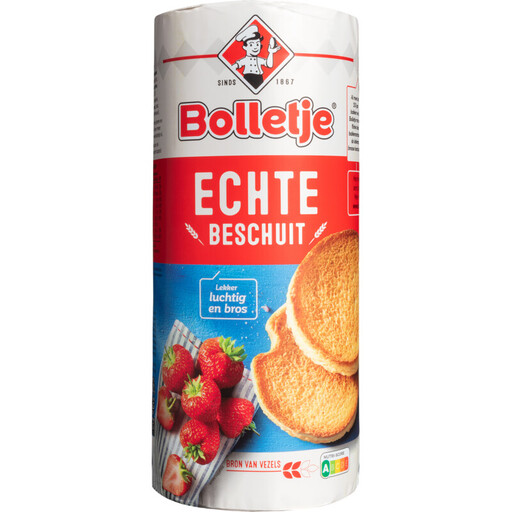 Image unavailable
A classic rusk option when you want the toppings to take centre stage and aren’t looking for a seeded or wholemeal variety. The pack contains 13 pieces.
If you have allergies, read the current pack: the product information lists wheat, egg and rye, among other ingredients, and says that it may contain sesame.
Only if you’ve checked the exact pack and its ingredients are suitable for the guest in question. For example, PLUS’s premium seeded rusks list wheat, cereals containing gluten, egg and sesame. If needed, set aside a checked alternative and avoid cross-contact when adding toppings.
Store the rusks in a dry place and follow the instructions on the pack. PLUS’s product information recommends storing its premium variety in a cool, dry, dark place. Seal an opened pack tightly and, ideally, only add toppings just before serving.
No, don’t assume this without checking the product information. The Netherlands Nutrition Centre says that bakers aren’t required to use baker’s salt. Check the ingredients list for the specific rusks or, if you’re buying an unwrapped product, ask the baker which salt was used.
Not necessarily: availability may depend on the shop you choose and when you do your shopping. So check with the shop when you place your order, and choose another suitable variety in advance in case your first choice isn’t available.