
Hosts serving generous savoury toppings
You want to serve rusks with toppings such as cheese or a spread, but don’t assume a larger or crispier product will hold the topping better.


When choosing rusks for generous toppings, don’t rely solely on terms such as ‘thick cut’ or ‘extra large’: they don’t prove how thick or sturdy a rusk is. Bolletje itself suggests Bakkers Beschuit as an option with a thick slice of mature cheese, while a multiseed or wholemeal variety may suit you better if the ingredients are a priority. Try your planned topping on one rusk first, and check the label for any guests who’ll be eating with you.
You want to serve rusks with toppings such as cheese or a spread, but don’t assume a larger or crispier product will hold the topping better.
You compare wholemeal and multiseed varieties by checking the label, and take the chosen product’s ingredients and allergens into account.
You want enough rusks for the planned portions, so you compare the number in each pack and the ingredients in different varieties.
First decide what you want to serve on your rusks, then compare the label and work out how many you’ll need. A product description alone won’t tell you whether a rusk will hold together with that topping.
| What to consider | What to check when buying | Who it matters to |
|---|---|---|
| Generous toppings | Treat serving suggestions as a guide, not a strength test. Try one rusk with the topping you plan to serve. | If I’m passing round a bite with a generous topping, I want to know whether it will stay intact when picked up; this is the top priority for around 42% of consumers. |
| Grains and fibre | Compare the ingredients and nutritional information per 100 g, and check the allergens on the current label. | For my party bites, I want to make an informed choice between a wholemeal or multiseed variety, while bearing in mind what guests can eat; around 33% of consumers focus on this first. |
| Number of bites | Count the portions you need and compare the number of rusks per pack; check how to store your chosen product after opening. | When I’m preparing lots of simple bites, I want to make sure I have enough rusks; around 25% of consumers prioritise this practical planning. |
A larger size or a description such as ‘extra crispy’ doesn’t tell you how much wet or heavy topping a rusk can hold. Bolletje suggests serving Bakkers Beschuit with a thick slice of mature cheese, but this isn’t a load test.
Make one test bite with the topping you’ll actually serve, and only top the remaining rusks shortly before serving.
Ingredients can vary between rusk varieties. Bolletje’s product information lists wheat and egg for Bakkers Beschuit, and wheat and sesame for the multiseed variety.
Check the current packaging for each variety you choose, and keep the information available for your guests.
The Voedingscentrum (Netherlands Nutrition Centre) states that bakers aren’t required to use baker’s salt. So you can’t assume it’s present just because a product is a rusk.
Check the ingredients list or ask the manufacturer about the specific product if you need this information to make your choice.
The range includes classic Bakkers Beschuit and multiseed rusks.
The own-brand range includes a plain variety, as well as wholemeal rusks and branded alternatives.
The range includes own-brand plain and wholemeal rusks, as well as Robuust varieties made with spelt or multigrains.
ALDI sells plain and wholemeal rusks under this brand.
These Bolletje varieties give you a choice of multiseed, wholemeal and classic rusks for topped party bites. Choose based on the variety and number of rusks, and try one bite first if you’re using a generous or moist topping.
 Image unavailable
An option if you’re specifically looking for multiseed rusks for party bites. Check the allergens on the packaging and try a generous topping on one rusk first.
 Image unavailable
An option if you want to use dark wholemeal rusks for your party bites. Try them with the topping you’ll be serving to see if they’re suitable for heavy or moist toppings.
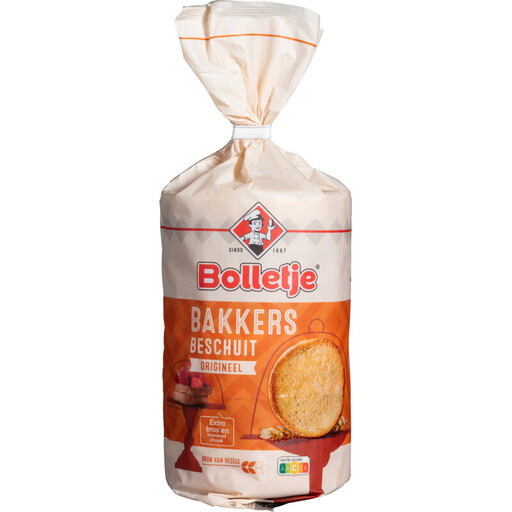 Image unavailable
A classic rusk variety for letting the topping take centre stage. Check the ingredients for your guests, and try your chosen topping on one rusk first.
 Image unavailable
An option if wholemeal rusks are your starting point for party bites. Check the nutritional information per 100 g or per portion on the current packaging before comparing fibre levels.
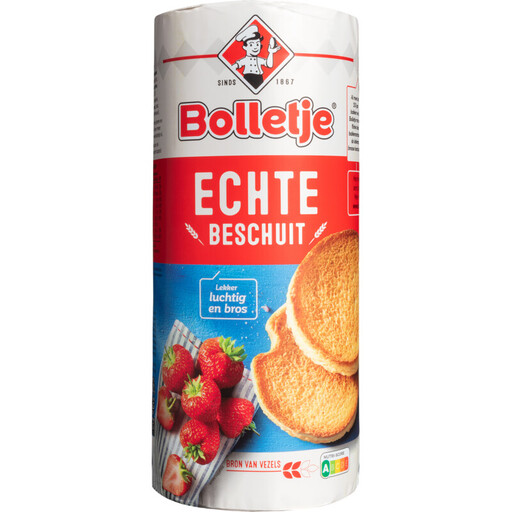 Image unavailable
A classic rusk base when you want to top a large number of party bites. Check the allergens for your guests, and try heavy or moist toppings before preparing all the rusks.
No, the term alone doesn’t prove how thick or strong a rusk is. ‘Extra large’ and Bolletje’s serving suggestion of a thick slice of mature cheese aren’t tests with your topping either, so try one bite first.
It’s best to top rusks shortly before serving, especially if the topping is moist. Follow the storage instructions on the packaging for your chosen variety; PLUS says Bolletje Echte beschuit should be stored in a cool, dry, sealed place after opening.
You can’t assume this is the case for every rusk product. The Voedingscentrum (Netherlands Nutrition Centre) states that bakers aren’t required to use baker’s salt; check the ingredients list or ask the manufacturer about your chosen variety.
Check the allergens for each product on the current packaging. Bolletje’s product information lists wheat and egg for Bakkers Beschuit, and wheat and sesame for the multiseed variety; don’t assume the same information applies to another variety.