
If you’re looking for a crunchy base for a sharing platter
A light, plain rusk lets a separately served topping take centre stage. Store the rusks somewhere dry in a sealed container and add toppings just before serving.


For an Asian night, choose plain rusks if you want a neutral, crunchy base to serve alongside other flavours. Multiseed rusks add their own seeds and texture, while with wholemeal rusks you can compare the ingredients and fibre content. Check the up-to-date allergen information for each variety, and add moist toppings just before serving.
A light, plain rusk lets a separately served topping take centre stage. Store the rusks somewhere dry in a sealed container and add toppings just before serving.
In a multiseed variety, the seeds contribute to the flavour and texture of the rusk itself. If you’re serving guests, check the information on sesame, cereals containing gluten and egg, among other allergens.
Compare fibre and salt per 100 g, and read the ingredients list if wholemeal flour or allergens matter to your choice. The word ‘premium’ is no substitute for product information.
First decide whether you want the rusk to be a neutral base or a flavour accent. Then compare the ingredients and nutritional information of the varieties that suit the way you plan to serve them.
| What to consider | What to check when buying | Who it matters to |
|---|---|---|
| Crunch and how you’ll serve it | Consider whether you want a plain flavour, and check the size and storage instructions. | If the topping is the star, I want a light base that stays crunchy when served separately. Around 40% of consumers prioritise this neutral role. |
| Seeds | Compare the types of seeds listed and check the allergen information. | I want the rusk to have a distinct seed profile even without a topping. For around 30% of consumers, that flavour and texture of its own matter most. |
| Wholemeal and fibre | Read the ingredients and compare fibre and salt per 100 g. | When I’m looking for wholemeal rusks, I want to know what they contain and how their nutritional values compare. Around 20% of consumers prioritise comparing labels. |
| Ingredients and allergens | Read the current packaging, including any ‘may contain’ statements. | When serving guests with specific dietary requirements, I need to be able to check which ingredients may be present in each variety. Around 10% of consumers give this the highest priority. |
A generously seeded rusk may have a different recipe from a plain variety, but the word ‘premium’ doesn’t tell you how much fibre or salt it contains.
Compare the ingredients and nutritional information per 100 g, then choose the flavour and texture that suit your serving plan.
The wheat, egg and sesame content varies between the rusk varieties reviewed. So choosing based only on the name ‘plain’ or ‘multiseed’ isn’t enough for guests with allergies.
Check the current packaging, including any ‘may contain’ statements, before serving the rusks.
Rusks are a dry, crisp base. A moist topping can reduce the crunchy contrast while the platter is waiting to be served.
Serve toppings separately or add them to the rusks just before eating. Seal any opened packaging tightly between servings.
An ingredients list that only says ‘salt’ doesn’t tell you whether iodised baker’s salt was used in the rusks.
If this matters to your choice, check the information on the packaging rather than assuming it from the product category.
Among the rusk varieties reviewed, you can compare plain, multiseed and wholemeal options.
AH Beschuit naturel is an option to compare if you’re looking for a simple base for toppings.
The range reviewed includes both plain rusks and Robuust Beschuit Spelt with seeds.
PLUS Beschuit volkoren met zaden is worth considering if you want to compare wholemeal flour and a generously seeded rusk.
Goud Gebakken has plain and wholemeal varieties in 13-piece packs among the products reviewed.
Lidl offers Ambachtelijk Beschuit Meergranen, a 230 g multigrain option.
These products suit a choice of rusks with seeds or wholemeal flour as a crunchy part of your spread. For TastyBasics, check that the product format matches the type of rusk you’re looking for.
 Image unavailable
An option if you want the rusks themselves to add a seed accent to your serving platter.
The product information for this variety lists 10 g of fibre and 0,52 g of salt per 100 g. Check the current allergen information, including details about wheat and sesame.
 Image unavailable
A dark wholemeal variety to consider if you want the rusks to have a distinctive grain flavour.
Compare the ingredients and nutritional information with those of other wholemeal varieties. If you’re serving guests, check the current allergen information, paying particular attention to cereals containing gluten and sesame.
 Image unavailable
An option if you want to serve wholemeal rusks and compare fibre content when buying.
The product information lists 11 g of fibre and 0,47 g of salt per 100 g. This variety contains wheat and egg; also check the current packaging for other allergen information.
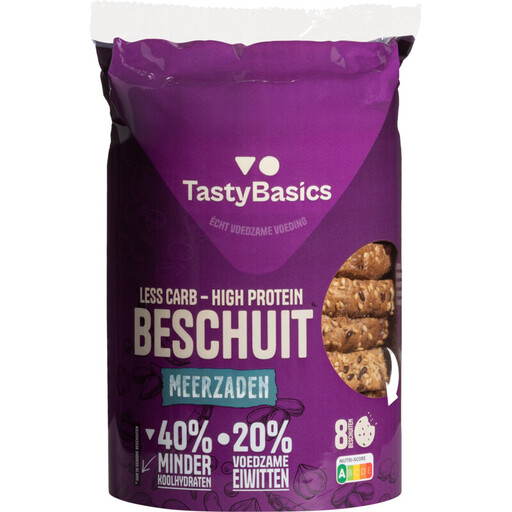 Image unavailable
Consider this seeded variety only if its format suits the crunchy base you want to serve.
The title uses ‘rusks’, while the description also refers to ‘crispbreads’. Check the format and the current ingredients and allergen information before buying.
Choose a plain or light rusk if you want a neutral, crunchy base. Serve moist toppings separately or add them just before serving.
No, it depends on the product. PLUS describes Bolletje Vezelrijk Beschuit Meerzaden as vegan, but this variety contains wheat and sesame; other rusks reviewed list egg, among other ingredients. Always read the current packaging, including any ‘may contain’ statements.
No, don’t assume this without checking the product information. The Voedingscentrum recommends checking the label or asking the baker which salt was used; the word ‘salt’ in an ingredients list alone doesn’t tell you.
Store the rusks somewhere dry in a tightly sealed container, and follow the storage instructions on the packaging. Add moist toppings just before eating if you want to preserve the crisp contrast.