Choose rusks if you want to serve the traditional Dutch treat of rusks topped with aniseed sprinkles. Sliced breakfast cake is a soft alternative for anyone who wants to offer something different. When comparing breakfast cakes, check the number of slices and the portion size. If you’re choosing between plain and wholemeal, also check the information on sugars, fibre, sweeteners and allergens. The search term ‘medium sliced’ doesn’t indicate a fixed slice thickness you can select.
Who might find this choice relevant?
Anyone preparing a treat without needing to slice it
You want to know in advance whether you’ll be serving rusks or a soft cake instead. If you choose breakfast cake, the number of slices and portion size can help you work out how many packs you’ll need.
Anyone comparing nutritional information across varieties
You want to compare plain and wholemeal breakfast cake for sugars and fibre, per 100 g or per portion. For varieties labelled ‘no added sugars’, check which sweeteners are listed in the ingredients too.
Anyone checking ingredients for guests
Before serving, you want to check whether rye, other cereals containing gluten or possible traces could be a problem for your guests. If the variety contains sweeteners, check the warnings on the pack too.
What should you look for when choosing?
First decide whether you want rusks with aniseed sprinkles or are deliberately choosing sliced breakfast cake as an alternative. Then compare the portions and the label of the cake you’ve chosen.
| What to consider |
What to check before buying |
Who it matters to |
| Base and portions |
Choose between rusks and breakfast cake; for sliced breakfast cake, check the number of slices and the portion size. |
When preparing a treat, I want to know whether rusks are what’s expected or whether I’d rather offer cake that needs no slicing; around 45% of consumers prioritise the base and convenience of serving. |
| Sugars and fibre |
Compare the nutritional information per 100 g and per portion; for varieties with no added sugars, check the ingredients list too. |
When choosing between plain and wholemeal, I mainly want to weigh up how much sugar and fibre a portion contains; around 33% of consumers prioritise this nutritional profile. |
| Allergens and sweeteners |
Check the allergens, possible traces and any warnings about sweeteners on the current packaging. |
If I’m serving guests with allergies or sweeteners are a concern at home, I want to know the ingredients in advance; around 22% of consumers prioritise these checks. |
Common mistakes
-
Assuming ‘medium sliced’ means a fixed slice thickness
Breakfast cake product pages may say ‘sliced’, but a pack with a different weight may also contain a different number of slices or have a different portion size. The search term alone doesn’t tell you how thick a slice is.
If the size matters for your treat, check the number of slices and the weight per portion on the pack.
-
Confusing ‘no added sugars’ with sugar-free
The Peijnenburg and Jumbo varieties mentioned here still contain sugars and use sweeteners. Their product information warns that excessive consumption may have a laxative effect.
Check both ‘of which sugars’ in the nutritional information and the ingredients and warnings on the pack.
-
Overlooking allergens
The sliced breakfast cakes described here list rye or other cereals containing gluten. Some product information also mentions the possible presence of other cereals or milk.
Check the allergen and trace information on the pack you’re actually serving, especially if any guests have allergies.
-
Treating online product information as the definitive label
Ingredients and nutritional information can change. Albert Heijn notes in its product information that dietary and allergy details may also change.
Use the online information to compare varieties, then check the current label before buying or serving.
Brands compared
You can compare sliced breakfast cakes from these brands by pack size, nutritional information and ingredients. The differences below apply to the varieties mentioned, not every product from each brand.
Peijnenburg
Peijnenburg lists its sliced plain breakfast cake in a 345 g pack containing 12 slices. There’s also a sliced wholemeal variety.
- The product information lets you compare the varieties: Albert Heijn lists 17 g of fibre and 4.9 g of sugars per 100 g for the wholemeal variety.
- The wholemeal variety described contains xylitol. Read the warnings about excessive consumption and animals, and check the label for rye and gluten.
Albert Heijn
The sliced plain breakfast cake from the AH own-brand range weighs 485 g; its product page lists 16 portions of 30 g.
- The stated number of portions gives you a practical starting point for planning a treat.
- This variety lists rye and cereals containing gluten. Albert Heijn warns that product information may change, so check the packaging.
Jumbo
Jumbo sells a 475 g variety of sliced breakfast cake labelled ‘0% added sugar’.
- Jumbo lists 17.4 g of fibre and 5.8 g of sugars per 100 g for this variety, so you can compare those figures with other labels.
- The variety contains sweeteners, rye and wheat. The pack warns that excessive consumption may have a laxative effect.
Lidl
Lidl Netherlands describes a 485 g sliced wholemeal breakfast cake.
- The sliced format and pack size give you a useful basis for comparing this variety with the number of portions you need.
- To compare sugars, fibre and allergens, check the nutritional information and ingredients on the pack.
Sliced breakfast cake at Joybuy
This product selection is for anyone who deliberately wants to use sliced breakfast cake instead of rusks for a treat with aniseed sprinkles. Check the pack to make sure the slices and ingredients are suitable for what you plan to serve.
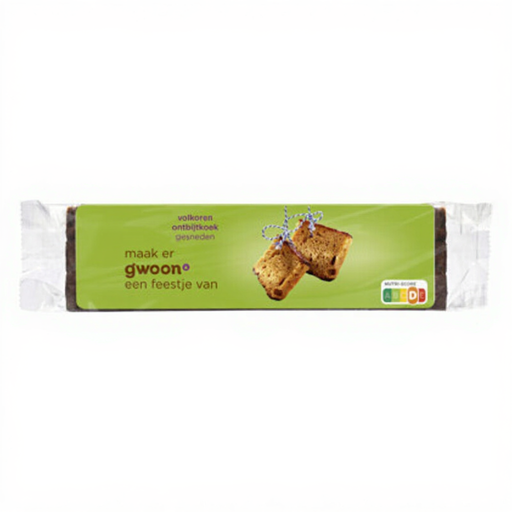 No image available
g'woon wholemeal sliced breakfast cake, 485 g
A sliced cake option if you deliberately don’t want to serve rusks.
Pack size: 485 g. Check the number of slices and the portion size when preparing a treat.
The product description mentions rye, but also contains contradictory allergen information. So check the current label before serving, especially if any guests have allergies.
View at Joybuy
Frequently asked questions
Is sliced breakfast cake the same as rusks with aniseed sprinkles?
No. Rusks and breakfast cake are different product categories. Choose rusks if you want to serve the traditional treat of rusks with aniseed sprinkles; choose sliced breakfast cake only if you deliberately want to offer a soft cake instead.
Is breakfast cake with no added sugars also sugar-free?
No. Albert Heijn lists 4.9 g of sugars per 100 g for the Peijnenburg wholemeal variety described here; Jumbo lists 5.8 g per 100 g for its variety. Both use sweeteners. Compare the current nutritional information and ingredients on the pack you buy.
Where can I check for rye and gluten in sliced breakfast cake?
Check the allergen and ingredients information on the current packaging. The plain, wholemeal and sweetened varieties described here list rye or cereals containing gluten. If you have an allergy, don’t rely on the product category or an online description alone.
How should I store breakfast cake once opened?
Follow the storage instructions on the packaging for your variety. For the sliced breakfast cake described here, Jumbo recommends storing it in a sealed tin once opened; also check the best-before date on the pack.
Does all breakfast cake contain iodised baker’s salt?
Don’t assume it does. The information from the Netherlands Food and Consumer Product Safety Authority about iodised baker’s salt doesn’t tell you which ingredients are in an individual breakfast cake. Check the product label or ask the manufacturer about its composition.


