
If you want to hand out a traditional birth celebration treat
You’ll want the familiar combination of rusks and aniseed sprinkles, served in individual crisp portions.


Choose rusks if you want the usual crisp base for aniseed sprinkles. A croissant makes a different kind of treat: choose one only if you’re deliberately going for a flaky alternative, and check that it’s unfilled and ready to serve. With medium-sliced bread, check each product to see whether the slice is suitable for toppings; the label ‘medium sliced’ tells you nothing about a croissant.
You’ll want the familiar combination of rusks and aniseed sprinkles, served in individual crisp portions.
You could consider a croissant as a different kind of treat, and add the toppings just before eating. Its flaky texture is different from that of a rusk.
Read the information for your chosen bakery product, including whether the use of baker’s salt is relevant. According to the Netherlands Nutrition Centre, bakers aren’t required to use baker’s salt.
First decide whether you want the usual rusk option or would deliberately prefer to serve something different. Croissants and medium-sliced bread each need their own checks: look at the filling and preparation for croissants, and the actual slice and intended serving time for bread.
| What to consider | What to check | Who it matters to |
|---|---|---|
| Base for aniseed sprinkles | Choose rusks for the usual option. If you want to use medium-sliced bread, check the thickness and whether the slice will take toppings as you’d like. | I want to hand out a familiar birth celebration treat in individual portions, without mistaking another type of bread for a rusk. For around 50% of consumers, that traditional base would be the main consideration. |
| Croissants as an alternative | Check whether the croissant is unfilled, whether it needs baking and whether you can add the toppings just before serving. | If I’m serving straight away at the table, I want to offer a flaky croissant as a deliberate alternative to the usual rusk. This alternative would be the main consideration for around 30% of consumers. |
| Product information | Read the current ingredients and allergen information. If you have questions about iodine, check whether baker’s salt is listed or ask the baker. | I need to know what’s in my chosen product before serving it. For around 20% of consumers, checking product information would be the first priority. |
Jumbo and ALDI Netherlands explicitly associate rusks with aniseed sprinkles for a birth celebration. A croissant has a different, flaky texture and won’t give you the same presentation.
Choose rusks if that familiar look matters. Only go for a croissant if you specifically want to serve a different kind of treat.
Croissants can also have savoury fillings; for example, ALDI Netherlands sells a ham and cheese croissant. So the product name ‘croissant’ alone doesn’t tell you whether it’s the right kind for aniseed sprinkles.
Check the name and ingredients of the specific croissant before choosing it as your base.
According to the Netherlands Nutrition Centre, bakers aren’t required to use baker’s salt. So the product category won’t tell you whether your chosen item has been made with it.
Check the label or ask the baker if the use of baker’s salt is relevant to your choice.
PLUS warns that information such as ingredients, nutritional details and allergens can change.
Read the current packaging of the product you buy, especially if a particular ingredient or allergen is important.
A rusk brand for anyone looking for the usual base for aniseed sprinkles. PLUS lists Bolletje Echte beschuit as a 125 g pack.
Has separate online categories for rusks and aniseed sprinkles, and also lists croissants on its bakery page.
Has online categories for rusks, aniseed sprinkles and croissants.
ALDI Netherlands mentions rusks with aniseed sprinkles for a birth celebration, and also stocks fresh and bake-at-home croissants.
Has separate product pages for wholegrain rusks and Délifrance croissants.
These Joybuy products show three different bases: a croissant as an alternative treat, rusks for the usual option, and crispbread as another crisp type of bread. A croissant or crispbread doesn’t become medium-sliced bread or a rusk.
 Image unavailable
A croissant option if you’re deliberately choosing something other than the traditional rusk. Check the packaging to see whether these croissants are unfilled and need baking before serving.
 Image unavailable
Wholegrain rusks for anyone who wants to serve the usual rusk option. Take care to avoid breakages when transporting and adding toppings, and check the current packaging if ingredients or allergens are important.
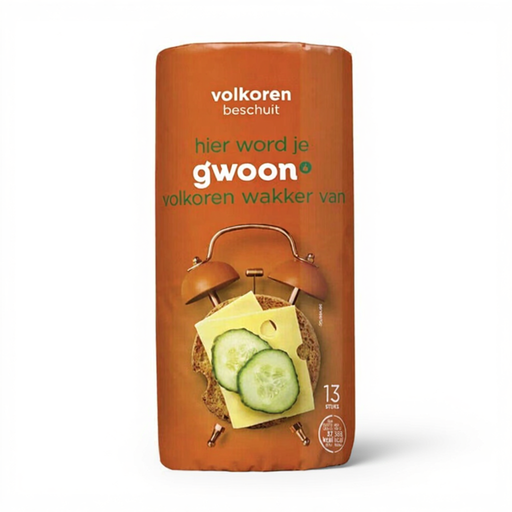 Image unavailable
Another crisp type of bread for anyone who doesn’t necessarily want to serve rusks. Check for yourself whether its shape and firmness suit the way you want to add butter and aniseed sprinkles; crispbread isn’t the same as a rusk.
No. The traditional birth celebration treat is made with rusks; Jumbo and ALDI Netherlands explicitly associate rusks with aniseed sprinkles for a birth celebration. You can serve a croissant straight away as a deliberate alternative, as long as you choose one that’s suitable for your toppings.
Butter or margarine is usually spread underneath the aniseed sprinkles. If you’re using a different base, choose a spread that suits the product, and check the ingredients if that matters to your guests.
No. According to the Netherlands Nutrition Centre, bakers in the Netherlands aren’t required to use baker’s salt. Check the label or ask the baker if you want to know which salt has been used in a particular product.
Transport rusks in a way that prevents the packs from being squashed, and add the toppings shortly before handing them out. Take a few extra in case you need to serve a set number of portions.
Read the current packaging of the product you’re going to serve. PLUS notes that online information, including details of ingredients and allergens, can change.