
Parents planning a treat
If rusk with chocolate sprinkles is only served now and then, you can choose a special flavour without confusing it with an everyday snack. Compare the ingredients on the pack of chocolate sprinkles you’re actually buying.


Choose premium chocolate sprinkles on rusk for a planned treat when the flavour of that particular topping is the main attraction. A more luxurious topping doesn’t automatically make the combination a suitable everyday snack. For children aged 4 to 12, the Netherlands Nutrition Centre lists vegetables, fruit and wholegrain products among its snack options. If you do choose rusk with chocolate sprinkles, check both packs, the portion size and any allergens.
If rusk with chocolate sprinkles is only served now and then, you can choose a special flavour without confusing it with an everyday snack. Compare the ingredients on the pack of chocolate sprinkles you’re actually buying.
If you’re looking for wholegrain or fibre, don’t just focus on the topping. Check the nutrition information and ingredients for both the rusk and the chocolate sprinkles: the qualities of one product don’t apply to the whole combination.
If you’re deciding between a special dark chocolate variety and a familiar chocolate sprinkle, compare the exact flavour, pack size, ingredients and nutritional values. A brand name alone won’t tell you which variety suits your preferences.
First decide whether you’re looking for an everyday snack or an occasional treat. Then choose the rusk base and topping, and check both packs if allergies or school or after-school club rules are relevant.
| What to consider | What should you check? | Who does this matter to? |
|---|---|---|
| Every day or now and then | Think about how often you’ll serve this combination and consider the portion size. For children aged 4 to 12, the Netherlands Nutrition Centre also lists vegetables, fruit and wholegrain products as snack options. | If I want to pack something for every school day, I’d rather start by looking for a snack that suits that regular occasion. Around 44% of consumers put this everyday choice first. |
| Allergens and school rules | Read the ingredients and allergen information on both current packs; check with the school or after-school club about what children are allowed to bring. | When I pack something for school, I need to know whether the combination is suitable for my child and complies with local rules. For around 33% of consumers, this is the top priority. |
| Flavour and ingredients | Compare the type of topping and the nutrition information for the exact variety. Consider any stated cocoa content in the context of that particular product. | For a planned treat, I mainly want to choose a flavour that goes down well at home, without overlooking the rest of the label. Around 23% of consumers put this preference first. |
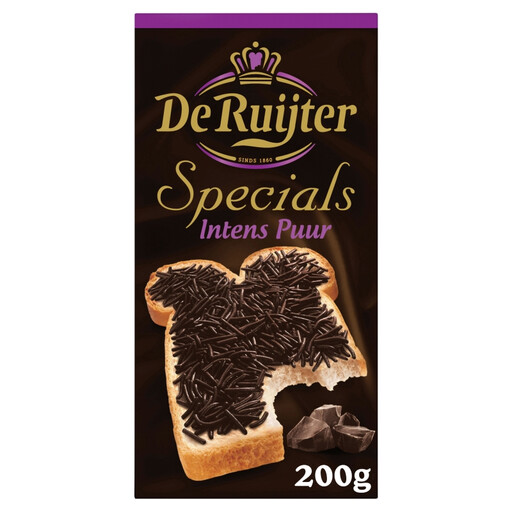
According to Albert Heijn’s product information, De Ruijter Specials Intens Puur contains at least 52% cocoa solids. This feature of the chocolate sprinkles doesn’t tell you how the complete snack fits into an everyday diet.
Choose this combination for a planned occasion, and also consider the rusk, portion size and nutrition information for the topping.
Rusk can also contain ingredients that are relevant to your child. According to Albert Heijn, the Bolletje Vezelrijk boeren beschuit volkoren rusk examined here lists, among other things, cereals containing gluten and sesame.
Check both current packs before buying or packing the combination, and ask the school or after-school club about its own rules.
The Netherlands Nutrition Centre points out that bakers aren’t required to use baker’s salt with added iodine. So don’t assume that different bread or rusk products have the same ingredients.
Check the ingredients of the rusk you’ve chosen, or ask which salt has been used if you’re buying an unwrapped product.
The Specials range is worth considering if you’re looking for a particular dark chocolate sprinkle for a treat.
A brand to explore if you’re looking for milk chocolate sprinkles or varieties in different shapes.
The own-brand range provides a useful reference when comparing types of chocolate sprinkles and pack sizes.
Worth considering if you want to compare a wholegrain rusk base as well as the chocolate sprinkles.
These are individual types of rusk and toppings for you to combine for a planned after-school treat. Chocolate flakes and sprinkles are different types of topping; none of the packs shown is a complete rusk-and-chocolate-sprinkle combination on its own.
 No image available
Dark chocolate sprinkles for you to pair with your own choice of rusk for a planned treat.
The pack contains 200 g of chocolate sprinkles; rusk is sold separately. Check the current pack for sugar content and for milk and soya if those allergens are relevant to your child.
 No image available
A wholegrain rusk base for anyone who wants to choose the topping separately.
The pack contains 13 rusks and no chocolate sprinkles. Check the ingredients and allergens before adding a topping for school or an after-school club.
 No image available
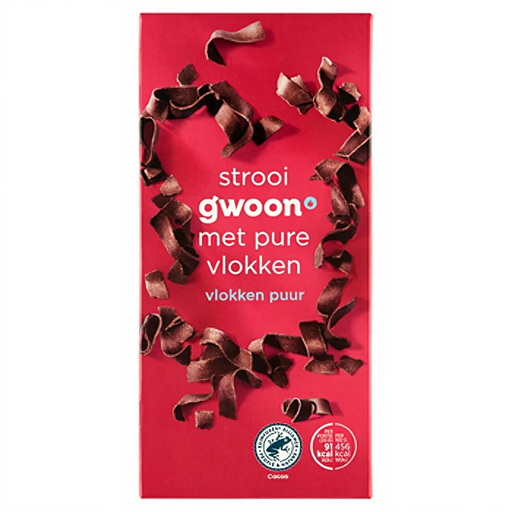
Dark chocolate flakes for anyone who wants to use this type of topping on rusk they’ve chosen separately.
The pack contains 300 g of flakes, but no chocolate sprinkles or rusk. If you have an allergy, check the current information about milk and possible traces of wheat.
 No image available
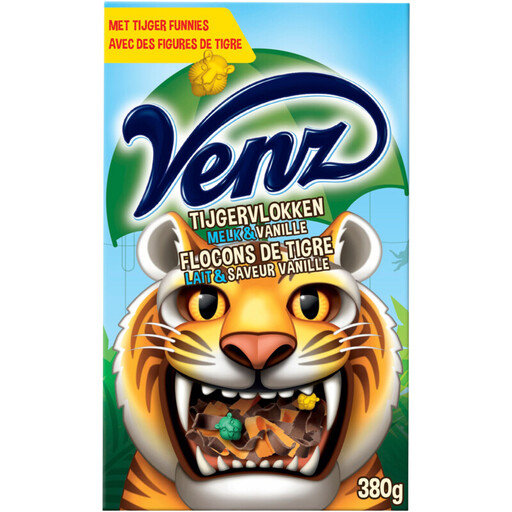
Milk chocolate sprinkles with fun shapes, for anyone looking for a topping to pair with rusk bought separately.
The pack contains 600 g of chocolate sprinkles, but no rusk. Check the nutrition information and the milk and wheat labelling on the current pack.
 No image available
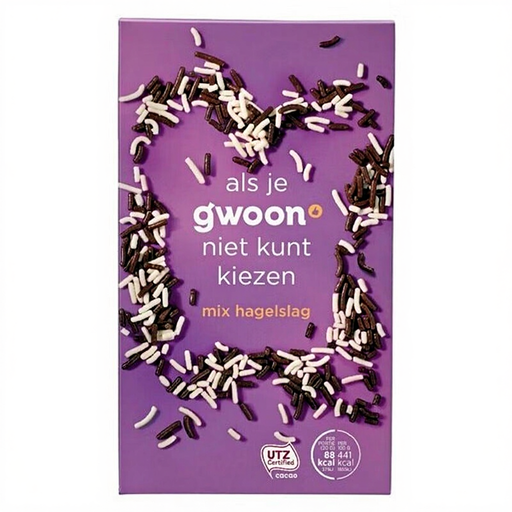
A mix of chocolate flakes for anyone who wants different shapes and flavours as a topping; choose the rusk separately.
The pack contains 200 g of topping. Check the ingredients in the whole mix and the current allergen information, including details of milk, soya and wheat.
For an everyday snack, it’s best to start with the options the Netherlands Nutrition Centre recommends for children aged 4 to 12, such as vegetables, fruit or wholegrain products. You can consider rusk with chocolate sprinkles as a planned treat, taking the portion size into account too.
Yes. If allergens are relevant to your child, check the current allergen information for both products. The Netherlands Food and Consumer Product Safety Authority explains how allergens are listed on the labels of pre-packed foods; also ask the school or after-school club about its own rules for food brought in from home.
No. Wholegrain describes the rusk base, not the nutritional information for the complete combination with a sweet topping. Check the ingredients and nutritional values of both products, and decide how often you want to serve this snack.
Don’t assume so: according to the Netherlands Nutrition Centre, bakers aren’t required to use baker’s salt with added iodine. Check the ingredients list for the rusk you’ve chosen, or ask which salt has been used if you’re buying an unwrapped product.