
Weekly shopper keeping an eye on the stock cupboard
Wants enough rusk at home for breakfast or lunch, so checks the number of pieces and the size of the pack.


Plain rusk is a good choice for a weekly stock-up when you want a variety of toppings. Choose wholemeal rusk if wholemeal is your priority, or seeded rusk if size and texture matter more. Compare the number of pieces in each pack and check the nutritional information and allergens on the current packaging, as these vary between products.
Wants enough rusk at home for breakfast or lunch, so checks the number of pieces and the size of the pack.
Looks for rusk labelled as wholemeal and compares the fibre content per 100 g or per piece, provided the serving size is clear.
Wants a size or texture that suits their chosen toppings and checks the ingredients too. The standard options reviewed contain ingredients including wheat or egg; sesame may also be a consideration in seeded varieties.
First, decide which type suits your needs and ingredient preferences. Then compare the number of pieces and nutritional information for the products you’re considering.
| What to consider | What to check when buying | Who is this important to? |
|---|---|---|
| Weekly stock-up | Check the number of pieces and the pack weight. | If I’m buying rusk for the whole week, I want a pack that suits how much my household eats for breakfast and lunch. Around 27% of consumers put having enough in stock first. |
| Wholemeal and fibre | Check that it’s labelled wholemeal and compare fibre per 100 g. Only compare values per piece when the serving size is clear. | If you’re specifically looking for a wholemeal option, don’t rely on the colour or name of the rusk alone. This is the most important factor for around 33% of consumers. |
| Size and texture | Check whether the pack contains standard, larger or seeded rusks. | If I’m adding generous toppings, I want a rusk with a size and texture I enjoy. This topping experience comes first for around 20% of consumers. |
| Ingredients and allergens | Read the current ingredients list and allergen information, including any warnings about traces. | If I need to avoid certain ingredients, the packaging determines whether an option is suitable for me. Around 20% of consumers give this check the highest priority. |
Packs can differ in weight and number of pieces. So buying several packs doesn’t necessarily mean you’ll have enough for the way you plan to use them.
Check the number of rusks in each pack and choose an amount that suits your household’s breakfast and lunch habits.
The plain options reviewed contain ingredients including wheat or egg. PLUS’s seeded option also lists sesame, so the name of a product isn’t a substitute for checking the allergen information.
Read the current ingredients list and any warnings about traces each time you buy, especially if you need to avoid certain ingredients strictly.
Seeds change the ingredients, but don’t tell you how much fibre or salt a rusk contains. For the seeded option reviewed, PLUS lists 5.2 g of fibre and 0.78 g of salt per 100 g, as well as ingredients including sesame and egg.
Compare the nutritional information per 100 g and check the ingredients when choosing between plain and seeded rusk.
A reference to salt in an ingredients list doesn’t tell you what type of salt was used or how much iodine the product contains.
If the type of salt matters to you, check the current packaging and ask the manufacturer for product-specific information.
Bolletje offers products including Echte Beschuit and Bakkers Beschuit. The brand describes Echte Beschuit as light and crisp.
Albert Heijn’s online rusk range includes plain and wholemeal options.
Jumbo offers a 13-piece pack of plain rusk, as well as options including wholemeal rusk and varieties with grains or seeds.
Alongside plain rusk, PLUS offers a larger variety with seeds and kernels.
ALDI offers both plain and wholemeal rusk under the Goud Gebakken brand.
This selection features four Bolletje options for your weekly stock-up: two wholemeal rusks, a multiseed rusk and a standard rusk. When choosing between packs, check the number of pieces and the current packaging for ingredients and nutritional information.
 No image available
A good choice if you want to add a wholemeal option to your weekly stock-up. The pack contains 10 pieces; check the current packaging for ingredients and allergens.
 No image available
For anyone looking for wholemeal rusk who also wants to take the number of pieces per pack into account. This pack contains 13 pieces; compare the fibre content on the current packaging only with values given on the same basis, such as per 100 g.
 No image available
An option for anyone who enjoys seeded rusk for breakfast or lunch. The pack contains 10 pieces; check the current ingredients list if seeds or other allergens affect your choice.
 No image available
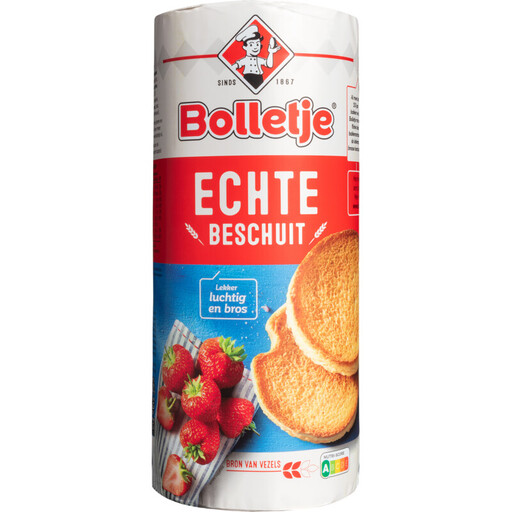
A standard rusk option for a stock cupboard that needs to suit a variety of toppings. The pack contains 13 pieces; if ingredients and nutritional information matter to your choice, check the current packaging.
Check the number of pieces per pack and how often your household eats rusk for breakfast or lunch. Pack sizes vary, so the number of packs alone won’t give you a complete picture of how much you have in stock.
Keep opened rusk in a tightly closed container in a dry place. Albert Heijn recommends storing it in a sealed tin once opened; Jumbo suggests a cool, dry and dark place.
No. Check that the packaging of your chosen option says wholemeal, and compare the stated fibre content on the same basis. Voedingscentrum gives 0.8 g of fibre per 10 g piece as a general value for wholemeal rusk; check the label for the ingredients in a specific pack.
No. The word ‘salt’ in the ingredients list doesn’t tell you what type of salt was used or how much iodine a specific rusk contains. Ask the manufacturer for product-specific information if this matters to your choice.