
For guests who want a traditional serving
If you want the familiar presentation for a birth celebration, rusk suits the occasion that ALDI Netherlands associates with aniseed sprinkles. Check the shape of the exact variant before you buy.


If you want to serve rusks with aniseed sprinkles in the traditional way, choose rusk rather than medium-sliced toast. Toast is a deliberate alternative if you’d prefer a larger, square or rectangular surface. For either product, check the ingredients, allergens and nutritional information for the exact variant.
If you want the familiar presentation for a birth celebration, rusk suits the occasion that ALDI Netherlands associates with aniseed sprinkles. Check the shape of the exact variant before you buy.
If you want to serve rusks with aniseed sprinkles and are also considering a wholemeal option, compare the ingredients and fibre per 100 g of the products you have in mind.
If you’d prefer a deliberately larger, square or rectangular surface, you could consider toast or toast bread. The presentation will be different from rusks with aniseed sprinkles.
First decide whether you want the traditional rusk presentation or a larger surface for toast. Then compare the nutritional information and label for your chosen variant.
| What to consider | What to check before buying | Who it matters to |
|---|---|---|
| Rusk presentation | Check that you’re buying rusk and that its shape suits the way you want to serve the aniseed sprinkles. | I want to keep the familiar rusk-and-aniseed-sprinkles tradition, rather than accidentally serving bread toast. For around 40% of consumers, the presentation comes first. |
| Fibre and type of grain | Read the ingredients list and compare the fibre per 100 g in different rusk variants. | If I’m considering wholemeal rusk, I want to know what it actually contains and how its nutritional value compares with another rusk variant. Around 30% of consumers give this top priority. |
| Surface for toast | Look at the shape of the toast and bear in mind that it will be served differently from rusk. | For my own way of serving it, I mainly want a larger surface, even if it doesn’t look traditional. Around 20% of consumers put this preference first. |
| Label information | Check the allergens on the exact packaging; if you have questions about iodine, check which salt was used. | Before serving, I need to know which ingredients and allergens are listed for my chosen product. For around 10% of consumers, checking the label is the main concern. |
ALDI Netherlands associates rusk with serving aniseed sprinkles at a birth celebration. The toast bread described by Albert Heijn, on the other hand, is square white bread for toasted sandwiches. The shape of the product changes the presentation.
Choose rusk if you want the familiar presentation, or deliberately opt for toast for a different take.
The colour doesn’t tell you how much wholemeal flour or fibre a particular rusk variant contains.
Read the ingredients list and compare the stated fibre per 100 g across rusk products.
The products reviewed list different ingredients and allergens. For example, Bolletje Echte Beschuit contains wheat, rye and egg, while the Albert Heijn toast bread described here contains wheat and soya, among other ingredients.
Before buying, check the allergen information on the packaging of the variant you want to serve.
According to the Voedingscentrum, bakers in the Netherlands aren’t required to use baker’s salt. So don’t automatically assume that a particular loaf contains added iodine.
If the salt used matters to your choice, check the ingredients list or ask the baker.
Worth considering if you’re specifically looking for rusk: Bolletje describes its Echte Beschuit as crisp and lists free-range egg as an ingredient.
The AH Extra lang lekker toast bread reviewed here is square white wheat bread for toasted sandwiches, not the same type of product as rusk.
Jumbo Naturel Beschuit is a plain rusk variant in a pack of 13.
Lidl Netherlands lists plain rusk in a 125 g pack and wholemeal rusk in a 140 g pack as separate products.
ALDI Netherlands distinguishes rusk from toast and also lists Sun Snacks Melba toast in its range.
These are rusk varieties: plain for a simple base, and wholemeal options if you want to compare grain types and fibre. If you’re specifically looking for a toast presentation, you’ll need to choose a different type of product.
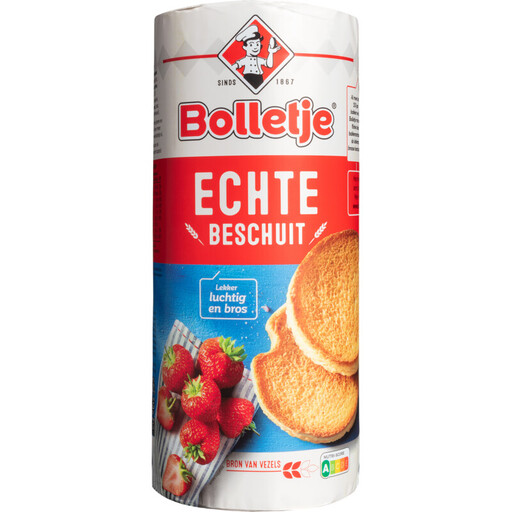 Image unavailable
For anyone who wants to serve rusk with aniseed sprinkles and is looking for a variant with a notch.
The product information states that it contains 4 g of fibre per 100 g and lists wheat, rye and egg as ingredients. Check the current packaging if allergens are important to your choice.
 Image unavailable
For anyone who wants to serve rusk and is looking for a wholemeal variety.
The product information states that it contains 11 g of fibre per 100 g and has a notch. Wheat and egg are listed as ingredients; check the current allergen information on the packaging.
 Image unavailable
For anyone considering wholemeal rusk with oats and seeds as a base for aniseed sprinkles.
The product information states that it contains 10 g of fibre per 100 g and lists wheat, oats, barley and sesame, among other ingredients. Check the current packaging if you have questions about allergens.
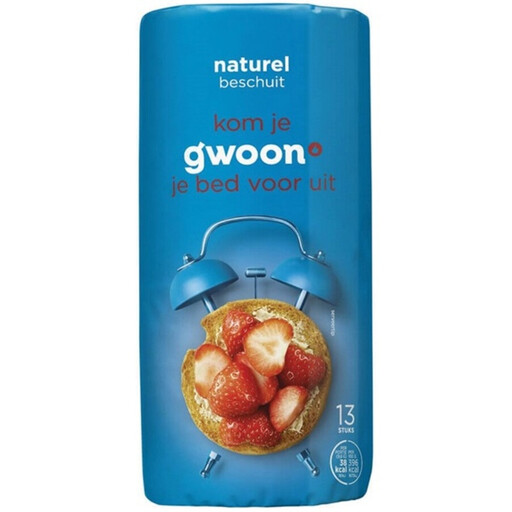 Image unavailable
For anyone looking for plain rusk to serve with aniseed sprinkles.
The product information states that it contains 2.1 g of fibre per 100 g and lists milk, egg and wheat among the ingredients and allergens. Check the current packaging before serving.
Yes, if you deliberately want a different presentation with a larger surface for the toast. For the traditional presentation, choose rusk: ALDI Netherlands associates it with serving aniseed sprinkles at a birth celebration, while Albert Heijn describes toast bread as square bread for toasted sandwiches.
According to the Voedingscentrum, store rusk in a cool, dry, dark place and keep it well sealed. Close the packaging securely after use to protect the rusk from moisture.
Read the allergen information on the exact pack. Bolletje Echte Beschuit lists wheat, rye and egg; Jumbo Naturel Beschuit lists egg, gluten and wheat. Don’t assume another variant has the same ingredients without checking its label.
No. According to the Voedingscentrum, bakers aren’t required to use baker’s salt. Check the ingredients list for the bread you choose, or ask the baker which salt was used if it matters to your choice.