
For students who want the toppings to take centre stage
Looking for a crunchy base for a light meal, they’ll choose the toppings and work out how many rusks they need first. Plain rusk is a good option to compare.


If the toppings are the star of the show, plain rusk makes a simple base. If you’d like the rusk itself to add more flavour or texture, consider a bakery-style or multiseed variety. If you specifically want wholemeal, check the description on the pack. The number of pieces, ingredients and allergens may also affect your choice.
Looking for a crunchy base for a light meal, they’ll choose the toppings and work out how many rusks they need first. Plain rusk is a good option to compare.
They want the rusk itself to add flavour or texture as well as complementing the toppings. A bakery-style or multiseed variety is worth considering, provided its ingredients suit everyone eating.
They’re specifically looking for a wholemeal variety or comparing fibre information. The product description, nutritional information and allergens on the pack itself matter more than the rusk’s colour or appearance.
For a student supper, first work out how many people you’re serving and what role the toppings will play. Then decide whether the rusk should be a neutral base, add something of its own or meet a specific ingredient preference.
| What to consider | What should you check? | Who is this important to? |
|---|---|---|
| Quantity and toppings | Check how many pieces are in the pack and decide how much rusk and how many toppings you’ll need for everyone. | When I’m making food for fellow students, I want to be able to put out enough rusk and toppings. Around 50% of consumers put meal planning first. |
| Flavour and texture | Check which ingredients set the variety apart, such as egg or seeds, and whether they’ll go well with your chosen toppings. | If I want the rusk itself to stand out on the table, I’m looking for more than a neutral base for toppings. Around 30% of consumers give this preference priority. |
| Wholemeal and ingredients | Check the wholemeal description, nutritional information per 100 g and allergens on the pack. | I want to know which grains and ingredients I’m serving, especially if anyone needs to take particular care. For around 20% of consumers, this is their first consideration. |
Egg, seeds or a bakery-style name don’t, on their own, tell you whether a rusk is wholemeal. A darker colour doesn’t prove it either.
If you’re looking for wholemeal rusk, check the product description and ingredients list. Compare fibre information using the nutritional values per 100 g.
According to Bolletje’s product information, Bakkers Beschuit contains egg and wheat; the multiseed variety described contains sesame, among other ingredients. These differences matter if anyone at the table has an allergy.
Before serving, check the current ingredients and allergen information for the exact variety you’ve bought.
The Dutch rules on iodine compounds in bakery products don’t prove that iodised baker’s salt is used in every pack of rusk.
If you want to know what type of salt a particular product contains, check the ingredients list or ask the manufacturer.
These brands and supermarket ranges offer different types of rusk. Always compare the specific variety: ingredients and allergens aren’t the same across an entire brand.
Offers plain, bakery-style, wholemeal and multiseed rusk, among other varieties.
Offers AH rusk in plain and wholemeal varieties, as well as other types.
Stocks several Bolletje varieties, including Echte Beschuit and Vezelrijk Meerzaden Beschuit.
Offers rusk varieties including plain, wholemeal and seeded.
ALDI own-brand rusk, available in plain and wholemeal varieties.
Offers plain rusk as a supermarket product in a 125 g pack.
These Bolletje varieties let you choose between seeded rusk, wholemeal rusk and classic rusk as a base for toppings. When choosing, also check how many pieces are in the pack and read the label for the specific variety.
 Image unavailable
Worth considering if you’d like to serve seeded rusk alongside your toppings.
Pack of 10 pieces. Check the ingredients and allergens on the pack.
 Image unavailable
A variety to consider if you’re specifically looking for wholemeal rusk when planning your meal.
Pack of 10 pieces. Read the nutritional information and allergens on the pack.
 Image unavailable
A wholemeal variety to consider when the rusk is a key part of the meal.
Pack of 13 pieces. Check the ingredients and allergens for this variety.
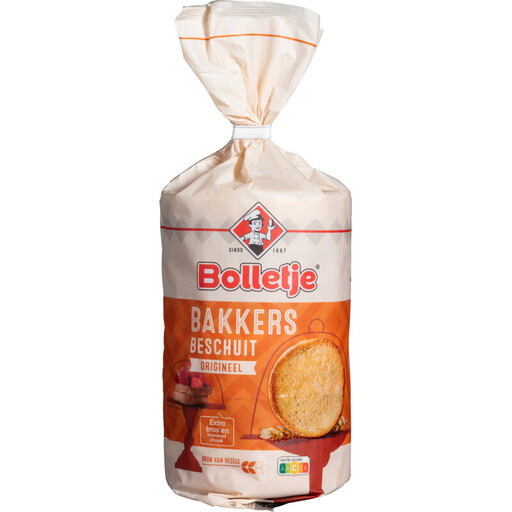 Image unavailable
A classic rusk variety for a meal where you choose the toppings.
Pack of 10 pieces. Check the label if you have specific ingredient requirements.
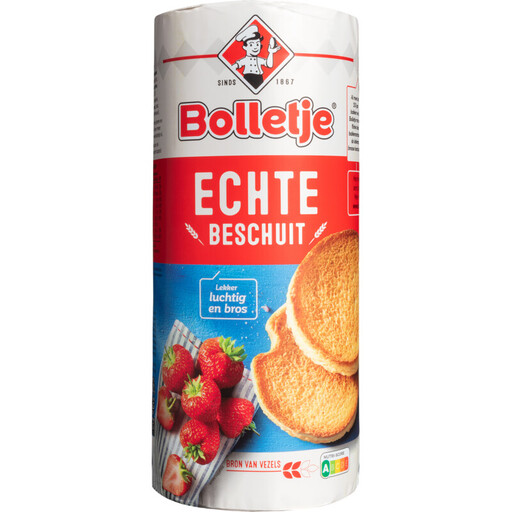 Image unavailable
A classic rusk base to pair with sweet or savoury toppings.
Pack of 13 pieces. Check the ingredients and allergens on the pack for everyone you’re serving.
No. The presence of seeds in rusk doesn’t, on its own, tell you whether the grains used are wholemeal. If you specifically want wholemeal rusk, check the product description and ingredients list.
It depends on the variety. According to Bolletje’s product information, Bakkers Beschuit contains egg and wheat, while the multiseed rusk described contains sesame, among other ingredients. If you have an allergy, always check the current information on the exact pack.
No, that isn’t required by Dutch regulations. Under the Commodities Act Decree on the Addition of Micronutrients to Foodstuffs, in force since 14 November 2014, iodine compounds may be present in bread, bread substitutes and other bakery products only through baker’s salt. The Netherlands Food and Consumer Product Safety Authority sets a maximum of 65 mg of iodine per kg of salt. To find out whether a particular pack of rusk contains this salt, check the ingredients list or ask the manufacturer.
Use rusk as a base and choose toppings and any side dishes to suit the meal you want to serve. Work out in advance how many pieces you’ll need; choosing a seeded variety or one labelled wholemeal doesn’t change that practical consideration.