If you don’t eat rusk very often, choose a roll of around 125 g or 13 pieces rather than a larger pack, and seal it well after opening. If you’re specifically looking for wholemeal rusk or a variety with seeds, compare the ingredients, allergens and the amount you’ll actually use too. A larger roll isn’t automatically the right choice for a small household.
Who should consider this?
Small households that eat rusk occasionally
A smaller roll means you’ll have less open at any one time. According to the Netherlands Nutrition Centre’s Food Storage Guide, opened rusk can be kept in a kitchen cupboard for around a month, provided it’s stored somewhere cool, dry and dark, and sealed well.
Shoppers comparing wholemeal options or fibre content
A wholemeal product name and its fibre content answer different questions. Read the ingredients and compare the nutritional information per 100 g for the specific varieties you’re considering.
Shoppers for whom allergens are a deciding factor
Check the current packaging before choosing a roll size. The plain varieties described by Albert Heijn, Jumbo and PLUS contain ingredients including wheat and egg; the PLUS variety with seeds described here also contains sesame.
What should you look for when choosing?
Rusk is sold in rolls, not half loaves. A standard roll of 125 g or 13 pieces limits how much you have open. If you’re looking for wholemeal rusk or a larger variety with seeds, consider that feature alongside the total quantity.
| What to consider |
What to check when buying |
Who is this important to? |
| Quantity and storage |
Compare the weight and number of pieces per roll. Check how to store the rusk after opening, too. |
I only eat rusk occasionally and don’t want a large roll left open; around 38% of consumers prioritise keeping a small stock. |
| Wholemeal and fibre |
Read the product name and ingredients. Compare the fibre per 100 g in the varieties you’re considering. |
If I’m looking for wholemeal, I don’t want to judge by colour or visible seeds alone; around 25% of consumers prioritise choosing wholemeal or fibre-rich products. |
| Ingredients and allergens |
Read the current allergen information and any statement about possible traces on the packaging. |
I need to avoid certain ingredients, so the packaging determines whether I can eat this rusk; around 25% of consumers prioritise checking allergens. |
| Availability |
Check that your chosen variety is available at your supermarket before you shop. |
I want to be able to pick up my chosen roll at my usual shop; availability is the most important factor for around 12% of consumers. |
Common mistakes
-
Choosing a larger roll without considering how much you eat
A 230 g roll leaves more rusk open at once than a roll of around 125 g. If rusk isn’t stored in a well-sealed container, its quality can deteriorate.
Choose a quantity that suits how often you eat rusk, and store an opened roll somewhere cool, dry and dark, sealed well.
-
Assuming seeds or a darker colour mean it’s wholemeal
Seeds don’t automatically make rusk wholemeal. In 2024, the Netherlands Food and Consumer Product Safety Authority highlighted misleading wholemeal claims in a study of wholemeal products, including rusk.
Check the product name and ingredients list for the variety you’re buying. To compare fibre content, use the nutritional information per 100 g.
-
Skipping the allergen information
The plain varieties described by Albert Heijn, Jumbo and PLUS contain wheat and egg. The PLUS variety with seeds described here also contains sesame; information about possible traces may vary between products.
Check the current packaging every time you buy if you need to avoid an ingredient or allergen.
-
Assuming the product contains iodine based on its category
The name ‘rusk’ doesn’t tell you whether a specific product was made with baker’s salt or how much iodine it contains.
Check the ingredients and any iodine information for the specific product, rather than assuming this applies to all rusk.
Brands to consider
Bolletje
Bolletje lists Echte Beschuit and Volkoren Beschuit as separate product ranges.
- You can look specifically for a regular or wholemeal variety within the brand.
- Check the ingredients and roll size of the variety you choose; the product ranges aren’t identical.
Albert Heijn
Albert Heijn describes a 125 g plain roll with 13 pieces.
- The stated weight and number of pieces make it easier to judge whether the quantity suits a small household.
- The variety described contains ingredients including wheat and egg; check the current allergen information.
Jumbo
Jumbo lists plain rusk in a 125 g, 13-piece roll, alongside other varieties.
- The number of pieces makes it easy to compare with other standard rolls.
- The plain variety described contains wheat and egg. Check that your chosen variety is available, too.
PLUS
PLUS lists a 125 g plain roll and a larger 230 g variety with seeds.
- The difference in weight helps you decide how much rusk you want to open at once.
- The variety with seeds described here contains ingredients including wheat, egg and sesame; check the packaging if allergens are a concern.
Goud Gebakken (ALDI)
ALDI lists plain Goud Gebakken rusk in a 13-piece pack and also mentions wholemeal rusk.
- The number of pieces is useful when comparing it with other 13-piece rolls.
- Check the label on the variety you choose in store for its ingredients and allergens.
Lidl
Lidl lists 140 g wholemeal rusk and 230 g multigrain rusk.
- The stated weights show that the two varieties come in different pack sizes.
- Wholemeal and multigrain aren’t the same product description; check the ingredients and nutritional information for each variety.
Rusk rolls at Joybuy
These Bolletje rusk rolls contain 13 or 10 pieces. If you don’t eat much rusk, compare the net weight of your chosen roll, too: fewer pieces doesn’t automatically mean less rusk.
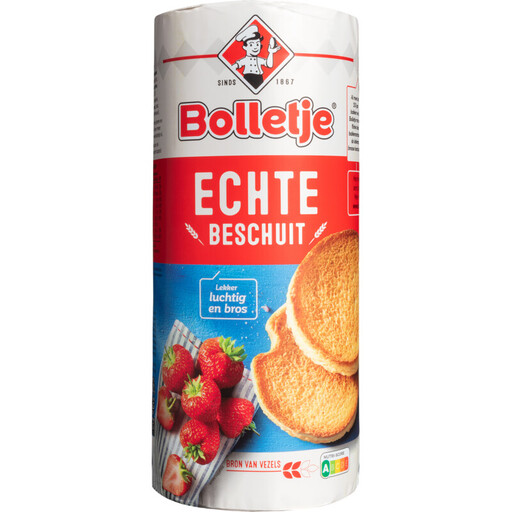 Image unavailable
Bolletje Real Rusk, 13 stuks
You can compare this 13-piece roll with other rusk rolls if you want to keep the amount you have open to a minimum.
Check the net weight to assess the total quantity, and read the current packaging for allergen information.
View at Joybuy
 Image unavailable
Bolletje Wholegrain Rusk, 13 stuks
This 13-piece roll, labelled wholegrain, is worth considering if you’re specifically looking for wholemeal rusk.
Compare the net weight and check the ingredients and allergens on the current packaging.
View at Joybuy
 Image unavailable
Bolletje Dark Whole Wheat Rusk, 10 stuks
You can compare this 10-piece variety, labelled whole wheat, with the 13-piece rolls if you’re considering wholemeal rusk.
Use the net weight, not just the number of pieces, to judge the total quantity, and check the current allergen information.
View at Joybuy
Frequently asked questions
Can I look for half a loaf when buying rusk?
It’s better to compare rolls, weights and the number of pieces. The supermarket products described here include rolls of 125 g and 13 pieces, a 140 g variety and larger 230 g varieties.
How should I store an opened roll of rusk?
Store the roll somewhere cool, dry and dark, and seal it well. The Netherlands Nutrition Centre’s Food Storage Guide recommends keeping opened rusk in a kitchen cupboard for around a month; check its quality before eating it, too.
Is rusk with seeds wholemeal?
Not necessarily: seeds don’t tell you whether the flour used is wholemeal. Check the product name and ingredients list for the specific variety.
Does all rusk contain iodine from baker’s salt?
You can’t tell from the name ‘rusk’. Check the ingredients list and any iodine information for the specific product; don’t assume that all rusk contains iodine or that it contains the same amount.
Which allergens should I check for in rusk?
Always read the information for the specific product. The plain varieties described by Albert Heijn, Jumbo and PLUS contain ingredients including wheat and egg; the PLUS variety with seeds described here also contains sesame. Any statements about possible traces may vary.


