
Organisers taking rusk for a group
You’re looking for a base you can top yourself. The number of pieces in each pack helps you work out how many packs you’ll need.


Standard rusk is a good choice if you’re looking for a base to top yourself when catering for a group. Compare wholemeal or multiseed rusk if fibre or seeds are a priority. Check the number of pieces to work out how much you’ll need, and check the ingredients, allergens and storage instructions for each variety. Don’t use ‘medium sliced’ as a measure for rusk unless the product dimensions are specified.
You’re looking for a base you can top yourself. The number of pieces in each pack helps you work out how many packs you’ll need.
You’re considering plain, wholemeal or high-fibre rusk and comparing the nutritional information per 100 g for the exact varieties.
Before sharing with visitors, you want to check the packaging for relevant cereals, egg, sesame and any may-contain warnings.
First decide whether the number of pieces, nutritional value or ingredients matter most to you. Then check the packaging of the variety you plan to take.
| What to consider | What to check | Who it matters to |
|---|---|---|
| Quantity and storage | Check the number of pieces and the storage instructions, including what to do after opening. | If I’m putting rusk out for several visitors, I want to take enough pieces and be able to store the rest in a sealed container. For around 40% of consumers, this practical use for a group is the priority. |
| Fibre and nutritional value | Compare fibre and salt per 100 g on the packaging of the exact varieties. | When I’m choosing between plain and wholemeal, I want to compare their nutritional values on the same basis. Fibre and the overall nutritional profile are the main reasons for choosing for around 40% of consumers. |
| Ingredients and allergens | Read the current ingredients and allergen information, including relevant may-contain warnings. | If I’m sharing rusk with others, I need to know whether any relevant allergens are listed on the packaging. For around 20% of consumers, this check is the top priority. |
This term refers to slice thickness, whereas the Dutch rusk pages reviewed list the number of pieces, weight and sometimes servings. So it isn’t a useful measure for comparing rusk.
Use the number of pieces and the pack weight to plan what you’ll need. Only ask about dimensions if they matter for the toppings or presentation.
The Bolletje Vezelrijk boeren beschuit volkoren variety reviewed lists ingredients including wheat, oats, barley and sesame. Choosing it for its fibre content doesn’t remove the need to check allergens.
First check the label against the needs of your guests, then compare the nutritional information per 100 g for suitable varieties.
Albert Heijn states that product information may change if a product is updated. This matters if someone needs to avoid an ingredient or allergen.
When you receive the product or buy it in store, check the packaging of the variety you’ll actually be using.
Albert Heijn and Jumbo stock several Bolletje varieties, including standard, wholemeal and multiseed rusk.
Albert Heijn’s own-brand range includes plain, wholemeal, multiseed and spelt rusk.
TastyBasics offers rusk varieties with seeds and kernels in Albert Heijn’s rusk range.
This selection of Joybuy products includes multiseed, wholemeal and standard rusk. Use the number of pieces to plan for your group, and check the packaging if ingredients or allergens affect your choice.
 Image unavailable
A multiseed variety to consider if you’re looking for rusk with seeds for the procession.
The pack contains 10 pieces. If you have a relevant allergy, check the current information for wheat and sesame.
 Image unavailable
A wholemeal variety to consider when comparing the nutritional value of rusk.
The pack contains 10 pieces. Check the nutritional information per 100 g and, for allergens, look out for wheat, oats, barley and sesame.
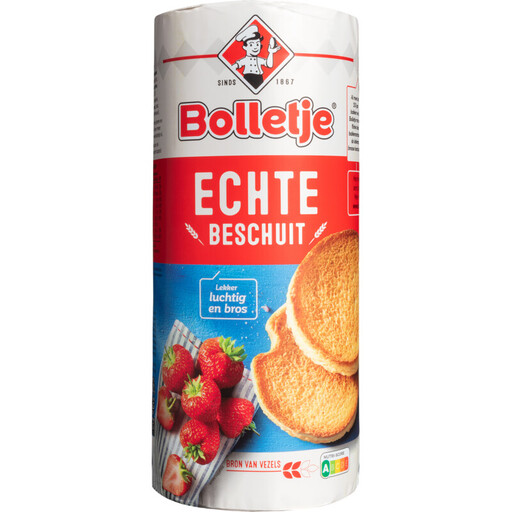 Image unavailable
Standard rusk if you’re looking for a base to top yourself when catering for a group.
The pack contains 13 pieces. For allergens, check the information for wheat, rye and egg, as well as the warning about possible sesame.
 Image unavailable
A wholemeal variety to compare if you’re also considering nutritional value for your group.
The pack contains 13 pieces. Check the nutritional information per 100 g; for allergens, look out for wheat and egg, as well as possible sesame.
Not if you want to compare Dutch rusk varieties without further product details. The pages reviewed list the number of pieces, weight and sometimes servings, rather than slice thickness. If you need them for your intended use, ask for the dimensions of a specific product.
Follow the instructions on your chosen pack and keep the rusk dry and sealed. For AH Beschuit naturel, Albert Heijn advises storing it in a cool, dry place and using a sealed tin after opening.
Compare wholemeal or high-fibre rusk if fibre is your main reason for choosing. Compare the exact products per 100 g and check the ingredients too: the Bolletje Vezelrijk boeren beschuit volkoren variety described by Albert Heijn lists ingredients including wheat, oats, barley and sesame.
Check the allergen information on every pack you plan to hand out. The product examples reviewed list ingredients including wheat, rye, egg and sesame; the information that applies depends on the exact variety.