
Larger households with a regular breakfast staple
If you eat rusk regularly, you’ll want to choose packs with a similar amount in them and a suitable number of pieces for repeat purchases.


If your family eats rusk regularly, a plain variety is a sensible place to start. Compare the pack size and number of pieces like for like. Choose wholemeal or a seeded variety if those qualities matter to you, and check the ingredients and allergens on the packaging for each variety.
If you eat rusk regularly, you’ll want to choose packs with a similar amount in them and a suitable number of pieces for repeat purchases.
If you’re looking for wholemeal, multigrain or seeded rusk, the ingredients and the fibre listed per 100 g matter more than the variety name alone.
If an ingredient or allergen matters to someone in your household, check the details on the exact pack, as they can vary between varieties.
First, choose the type of rusk that suits how you’ll use it at home. Then compare pack sizes and check the label of the variety you’ve chosen.
| What to consider | What should you check? | Who is it important to? |
|---|---|---|
| Like-for-like plain varieties | Compare plain rusk with plain rusk, and check the weight and number of pieces. | If rusk is often on the table at home, I want to know whether the packs contain roughly the same amount. For around 39% of consumers, this comparability comes first. |
| Stocking up and everyday use | Check the pack size, the size of the rusks and the storage instructions. | When several family members eat rusk, I want a pack that suits how much we use. This is the main consideration for around 23% of consumers. |
| Wholemeal and fibre | Check the types of grain in the ingredients list and compare the fibre per 100 g. | I’m specifically looking for a wholemeal variety or checking the stated fibre content, even if a plain pack is enough for the family. This is the top priority for around 23% of consumers. |
| Ingredients and allergens | Read the ingredients, allergen information and any ‘may contain’ warnings for the exact variety. | If someone at home needs to avoid an ingredient, I want to check the right pack before buying. This is the main concern for around 15% of consumers. |
These terms don’t describe the same thing. Multigrain rusk contains several types of grain, but the name alone doesn’t tell you how much fibre the product contains.
Check the ingredients and compare the nutritional information per 100 g for the varieties you’re considering.
Ingredients can vary between rusk varieties. For the varieties described here, wheat, egg and sesame are among the allergens to look out for.
Check the allergen information on the exact pack again, even if you’ve bought rusk from the same brand before.
Goud Gebakken makes a plain rusk that comes in a pack of 13.
The range includes AH plain and wholemeal rusk.
Jumbo sells 125 g packs of plain rusk and 230 g packs of Robuust Multigrain.
PLUS sells 125 g packs of plain rusk and 230 g packs of wholemeal rusk with seeds.
Bolletje sells Echte Beschuit, as well as wholemeal and multiseed varieties.
Lidl lists plain rusk in its range.
These products include a plain option for regular use and two Bolletje varieties for anyone looking for a different type of rusk. Compare the pack sizes and check the packaging before choosing.
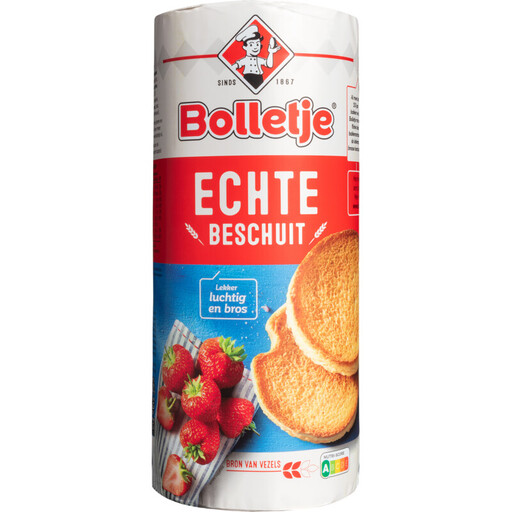 Image unavailable
An everyday rusk variety for anyone who eats rusk regularly at home.
Pack of 13. Bolletje lists wheat, rye and egg in Echte Beschuit; check the current packaging for allergen information.
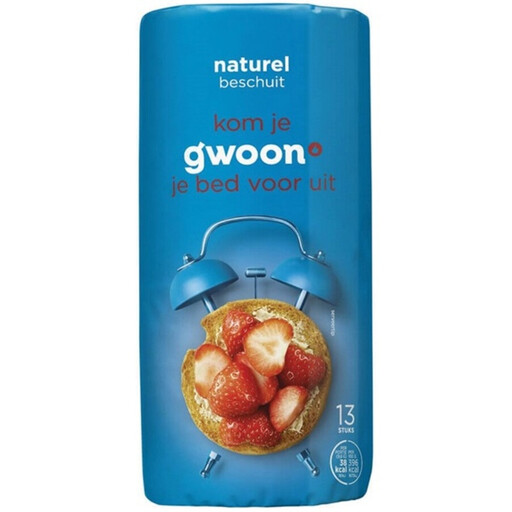 Image unavailable
A plain variety for anyone looking for a regular rusk to keep at home for the family.
Pack weight: 125 g. Check the ingredients and allergens on the packaging.
 Image unavailable
A wholemeal variety for anyone who pays attention to the grains used when choosing rusk.
Pack of 10. Check the nutritional information and allergens for the exact variety.
Start by comparing plain varieties by weight and number of pieces. This will show you whether the packs you’re considering for regular use contain a similar amount.
No, it depends on what you’re looking for in a rusk. If wholemeal ingredients or fibre content matter to you, compare the ingredients and nutritional information per 100 g for the exact varieties.
Keep rusk in a sealed container in a cool, dry place. Also follow the storage instructions on the packaging to help prevent moisture from making it soft.
No. Don’t assume that every rusk variety is made with iodised baker’s salt. The Netherlands Food and Consumer Product Safety Authority sets out conditions for using iodine compounds in baker’s salt in bakery products, but this isn’t a guarantee for every rusk; if it matters to your choice, check the ingredients list on the exact pack.