
Solo diner keeping an eye on pack size
If you usually have breakfast or lunch on your own, you’ll want to choose an amount that suits how often you eat rusk. Compare the number of pieces and keep an opened pack well sealed and dry.


For breakfast or lunch for one, plain rusk is a simple base that lets you choose your own toppings. If you eat rusk regularly and are mainly keeping an eye on fibre, compare wholemeal options per 100 g and per piece. For both choices, also check the pack size, salt content and ingredients.
If you usually have breakfast or lunch on your own, you’ll want to choose an amount that suits how often you eat rusk. Compare the number of pieces and keep an opened pack well sealed and dry.
If rusk is often on the menu, fibre content may influence your choice. The Netherlands Nutrition Centre lists an average of 0.8 g of fibre per 10 g piece of wholemeal rusk. For individual products, also compare the weight per piece and the nutrition information per 100 g.
If you have an allergy or another reason to avoid certain ingredients, the specific pack is what matters. Rusk varieties may contain wheat, egg, rye or sesame, among other ingredients. Also check any warnings about ingredients the product may contain.
First, think about how often you eat rusk and what else you’ll have with it. Then compare the pack sizes and labels of the varieties that suit your needs.
| What to consider | What to check when buying | Who should bear this in mind? |
|---|---|---|
| Pack size and storage | Compare the number of pieces and the pack size; check how to keep the pack dry and sealed after opening. | When I eat on my own, I want to choose a pack that suits how much I use, without leaving the rusk exposed. For around 36% of consumers, getting this practical fit right matters most. |
| The whole meal | Think about which toppings and other foods you want to have with your rusk; check the nutrition information per serving if needed. | For lunch for one, I don’t want to serve just a few dry rusks. I also want to plan what I’ll have with them. Around 29% of consumers give the make-up of the meal top priority. |
| Fibre for regular use | Compare fibre per 100 g and per piece; also check the salt content and the weight of each rusk. | If I eat rusk often, I want to know what a wholemeal variety provides per piece and whether the portion sizes are comparable. For around 21% of consumers, fibre comes first when making this choice. |
| Ingredients and allergens | Read the current label for the variety you’ve chosen, including any warnings about ingredients the product may contain. | If I need to avoid an ingredient, I can’t base my choice on whether it’s called plain or wholemeal alone. For around 14% of consumers, checking the ingredients is the first requirement. |
You should assess these separately. PLUS lists 5.2 g of fibre and 0.78 g of salt per 100 g for its luxury plain rusk with seeds.
Compare the fibre and salt per 100 g in the varieties you’re considering, and check the pack label.
The nutrition information for rusk on its own doesn’t tell you what you’ll ultimately eat for breakfast or lunch. The Netherlands Nutrition Centre lists, among other things, 2.8 g of protein and 0.6 g of fibre for an average 20 g piece of plain rusk.
Choose your toppings thoughtfully and decide what else you’d like to eat alongside them, such as fruit or vegetables.
Ingredients and nutrition information can change. Albert Heijn notes that its product information is updated regularly.
Check the label on the specific pack when you buy it, especially if a particular ingredient or allergen is a deciding factor for you.
These brands offer different varieties of rusk. Always compare the specific product: a feature of one variety doesn’t automatically apply to the rest of the range.
Bolletje offers Echte Beschuit, wholemeal varieties and Bakkers Beschuit, among other products.
The own-brand range includes plain and wholemeal rusk, as well as other varieties.
Jumbo has an own-brand plain rusk variety containing 13 pieces and weighing 125 g.
PLUS offers plain rusk and a luxury plain variety with seeds.
Goud Gebakken is an ALDI own-brand range offering plain and wholemeal rusk.
These Bolletje products let you choose between rusk with seeds, wholemeal varieties and a classic option. Use the pack size and current label to decide which pack suits when and how often you eat rusk.
 Image unavailable
A seeded variety for anyone who also wants to consider the ingredients in their rusk.
The pack contains 10 pieces. If you have an allergy, check the current label for wheat and sesame, and compare the nutrition information per 100 g.
 Image unavailable
A wholemeal option to compare if rusk is a regular part of your meals.
The pack contains 10 pieces. Compare fibre and salt on the current label; check the ingredients if you need to avoid wheat, oats, barley or sesame, among other ingredients.
 Image unavailable
A wholemeal option for anyone wanting to compare a pack of 13 rusks with smaller packs.
Check the unit used for the fibre content on the pack before comparing this product with other varieties per serving. If you have an allergy, also check the warnings for cereals containing gluten, egg and possible sesame content.
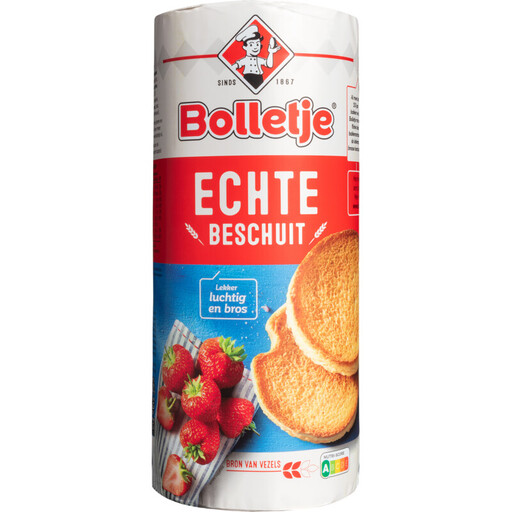 Image unavailable
A classic rusk variety for anyone who likes to put together a meal with their own choice of toppings.
The pack contains 13 pieces. Check the current label if you need to avoid wheat, rye, egg or possible sesame content.
Rusk on its own doesn’t make up the whole of your breakfast or lunch. The Netherlands Nutrition Centre lists 2.8 g of protein and 0.6 g of fibre for an average 20 g piece of plain rusk. So think about which toppings and other foods you’d like to have with it, too.
You can’t assume that for every individual product. The Netherlands Nutrition Centre lists an average of 0.8 g of fibre for a 10 g piece of wholemeal rusk and 0.6 g for a 20 g piece of plain rusk. Compare the labels per 100 g and per piece, as recipes and piece weights can vary.
Keep opened rusk dry and well sealed, for example in its closed pack or a tin. This helps prevent moisture from making it less crisp.
No, don’t assume that without checking the product. Look at the ingredients label for the specific rusk or ask the manufacturer which salt was used.
Check the allergen list for the specific variety, even if you’ve bought it before. The product information for the rusks discussed here lists wheat and egg, among other ingredients. Rye or sesame, as well as warnings about possible presence, may also be relevant for some varieties.