
Fussy eaters who accept mild flavours
If visible seeds or a coarser texture are putting them off rusk, a plain variety is a good place to start. That doesn’t guarantee they’ll enjoy the taste, though.


If a fussy eater turns down strong flavours or visible seeds, start with one roll of plain rusk rather than buying a stockpile straight away. Wholemeal rusk is an option if they accept the flavour and texture and you’re looking to increase fibre. Check the ingredients and allergens on the packaging for every variety.
If visible seeds or a coarser texture are putting them off rusk, a plain variety is a good place to start. That doesn’t guarantee they’ll enjoy the taste, though.
If you want to keep rusk in the cupboard, compare the weight and number of pieces in each roll. Try an unfamiliar variety on its own first, so you don’t end up with several uneaten rolls.
According to the Voedingscentrum, wholegrain products contain more fibre than white grain products. Whether wholemeal rusk is suitable also depends on the flavour and texture the eater accepts, so check the ingredients for the variety you choose.
First, decide which flavour and texture the eater is willing to try. Then compare the quantity per roll and check the nutritional information and ingredients for the specific variety.
| What to consider | What to check | Who it matters to |
|---|---|---|
| Flavour and texture | Check whether it’s plain, wholemeal or a seeded variety. Try an unfamiliar type in a small quantity first. | If visible seeds or a coarser bite are a stumbling block, I want to know first whether they’ll eat a simple plain variety. For around 40% of consumers, that predictable flavour and texture come first. |
| Quantity per roll | Compare the weight and number of pieces. A 125 g roll isn’t the same as a pack labelled only with the number of pieces. | When trying it for the first time, I don’t want to be left with several rolls if the rusk isn’t a hit. For around 40% of consumers, keeping the first purchase small is the main priority. |
| Wholemeal and ingredients | Check the wholemeal labelling and nutritional information if fibre is a factor. If you have an allergy, read the ingredients and allergen information on the packaging. | If I want to try wholemeal or need to avoid certain ingredients, the variety I choose must also suit what can and will be eaten. For around 20% of consumers, this check is the top priority. |
A variety with a different flavour or visible seeds may be left uneaten if the eater mainly accepts plain rusk. According to the Voedingscentrum, wholegrain products contain more fibre than white grain products, but that doesn’t tell you whether someone will enjoy the taste.
Try an unfamiliar variety as a separate roll first, and see how the eater responds to its flavour and texture.
If they turn it down, the rest of the roll may go uneaten.
Ingredients and allergens can vary between varieties. If you have an allergy, the information on the packaging you’re actually using is what matters.
Check the current ingredients and allergen information before use. If you’re unsure, ask the retailer or manufacturer for clarification.
The Voedingscentrum explains that bakers aren’t required to use baker’s salt. So you can’t assume a product contains it just because of its category.
If baker’s salt is relevant to your choice, check the ingredients for the specific rusk.
Bolletje offers plain and wholemeal rusk, as well as varieties with different ingredients or textures.
The own-brand range includes plain and wholemeal rusk.
The own-brand range includes plain and wholemeal rusk, as well as varieties with grains or seeds.
This ALDI own brand offers plain and wholemeal rusk.
PLUS offers plain and wholemeal rusk, as well as seeded varieties.
These options include plain rusk and two Bolletje varieties, including wholemeal rusk. If you’re trying rusk for the first time, choose based on the flavour and texture the eater is willing to try. A product name can’t tell you whether they’ll actually eat it.
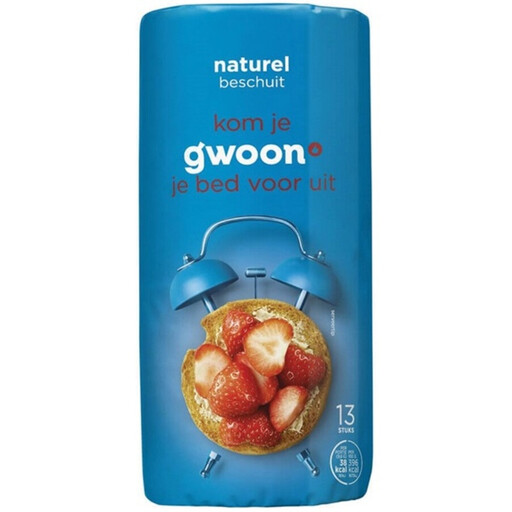 No image available
A plain variety to try if you’d rather avoid visible seeds; the pack contains 125 g of rusk. If you have allergies, check the ingredients and allergens on the pack.
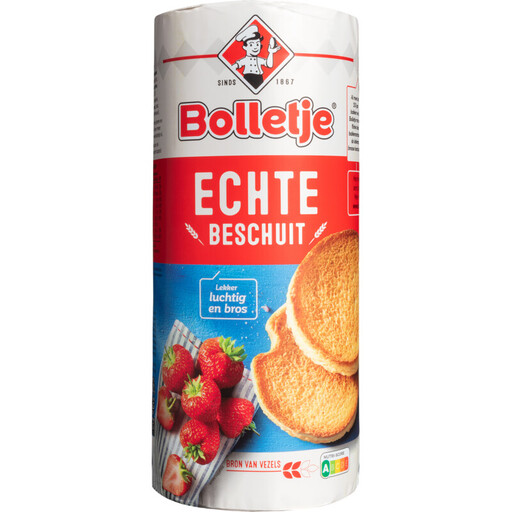 No image available
A branded variety to consider if the eater already accepts this rusk; the pack contains 13 pieces. If you need to avoid certain ingredients or allergens, check the information on the packaging.
 No image available
A wholemeal variety for anyone who wants to try that flavour and texture; the pack contains 13 pieces. Check the nutritional information and, if you have allergies, read the ingredients on the pack.
Not if the flavour or texture is likely to put them off. According to the Voedingscentrum, wholegrain products contain more fibre than white grain products. Try wholemeal rusk if the eater is open to it, perhaps alongside a plain variety they already accept.
They show how much rusk you’re buying, which is particularly useful when trying a flavour for the first time. Check both details on the packaging: some rolls are labelled by weight, while others show the number of pieces.
Before using it, read the current ingredients list and allergen information for the specific variety. The Netherlands Food and Consumer Product Safety Authority explains that allergens must be listed on the labels of prepacked foods. Don’t rely on the ingredients for a different variety of rusk.
You can’t assume that based on the type of product. According to the Voedingscentrum, bakers aren’t required to use baker’s salt. Check the ingredients list for the rusk if baker’s salt matters to your choice.