If you want to keep an eye on the fibre in the rusk base for an after-school snack, compare wholemeal rusks. Plain rusk may be a more familiar starting point for a fussy eater. Either way, keep the chocolate sprinkles to a small amount and serve them only occasionally: the Netherlands Nutrition Centre says chocolate sprinkles are not included in the Wheel of Five. Before packing them for school or after-school care, check the labels on both products and the local policy.
Who might find this choice useful?
Parents of a fussy eater
A familiar, crunchy rusk can be a good starting point for trying plain and wholemeal varieties. Consider the rusk and the amount of chocolate sprinkles separately, rather than treating the combination as a regular daily snack.
Parents keeping an eye on fibre
Compare wholemeal rusks by checking the ingredients and fibre per 100 g. The chocolate sprinkles do not change your choice of base, but they do contribute to the nutritional value of the whole snack.
Parents packing a snack for school or after-school care
Read the latest allergen information for both the rusk and the chocolate sprinkles. Also ask about the school or after-school care provider’s food and allergen policy.
What should you look for when choosing?
First, choose a type of rusk your child will eat and that suits any dietary requirements. Then compare the nutritional information and decide how much chocolate sprinkles to add.
| What to consider |
What to check when buying |
Who is this most important for? |
| Fibre in the base |
Check whether wholemeal flour is listed in the ingredients and compare the fibre content per 100 g. |
If I serve chocolate sprinkles, I mainly want to know what the rusk itself contributes. For around 45% of consumers, the fibre in the base would be the first consideration. |
| Familiar taste and texture |
Compare plain and wholemeal rusks; if you like, start with a small amount of chocolate sprinkles. |
There’s little point buying a new type of rusk if my child leaves it uneaten. Whether they’ll eat the combination would be the main consideration for around 33% of consumers. |
| Allergens and packing |
Read the allergen information on both labels and ask about the school or after-school care provider’s rules. |
When packing a snack, I first want to know whether the ingredients and the snack are suitable for that setting. For around 22% of consumers, this would be the main consideration. |
Common mistakes
-
Thinking wholemeal rusk changes the chocolate sprinkles
A wholemeal base may contain more fibre, but the Netherlands Nutrition Centre says chocolate sprinkles also contain sugar and saturated fat. The amount you use and how often you serve the combination still matter.
Compare the rusks on their own, use a small amount of chocolate sprinkles and vary the snacks you offer with options such as fruit or vegetables.
-
Only reading the chocolate sprinkles label
Rusk can contain allergens too. For example, AH Wholemeal Rusk lists wheat and egg; the chocolate sprinkles products checked include milk and soya.
Check the latest packaging for both products when you buy them. Before packing a snack, also ask about the school or after-school care provider’s allergen policy.
-
Assuming every product made with baker’s salt contains iodine
The Netherlands Nutrition Centre says bread made with iodised baker’s salt can be a source of iodine, but using baker’s salt is not compulsory. Don’t assume this applies to a particular rusk.
To find out what type of salt has been used in a product, check the ingredients on the packaging.
-
Choosing a large pack before you know if they like the taste
Plain rusk, wholemeal rusk and different types of chocolate sprinkles can all taste or feel different. A larger pack isn’t much use if your child won’t eat the combination.
Try the combination you’ve chosen on a few snack occasions first, then follow the storage instructions on both packs.
Once opened, rusk needs to be kept in a tightly sealed pack to stay crisp.
Brands to compare
The examples below can help you compare rusk and chocolate sprinkles. A brand name alone doesn’t tell you whether every variety is suitable.
De Ruijter
A brand to look at if you want to compare different types of dark chocolate sprinkles as a separate topping.
- Albert Heijn lists at least 52% cocoa solids for De Ruijter Specials Intens Puur.
- A higher cocoa content doesn’t automatically make chocolate sprinkles suitable as an everyday topping. Also check the sugar per 100 g and the allergens in the variety you choose.
Venz
A useful point of comparison if you’re considering a 400 g pack of dark chocolate sprinkles.
- Albert Heijn’s product information lists at least 32% cocoa solids for Venz Hagelslag Puur.
- According to the product information, this variety contains milk and soya and may contain lactose. Before buying, check that the current label and pack size suit your needs.
Albert Heijn
Worth considering when comparing a wholemeal rusk base with chocolate sprinkles chosen separately.
- AH Wholemeal Rusk lists wholemeal wheat flour as its first ingredient and contains 9 g of fibre per 100 g.
- This rusk contains wheat and egg. Check the label if allergens affect your choice.
Jumbo
Offers a range where you can compare different types of rusk and chocolate sprinkles side by side.
- The selection checked includes wholemeal and multigrain rusk, as well as milk, dark and duo chocolate sprinkles.
- Jumbo lists milk as an allergen in its milk chocolate sprinkles product that was checked. Read the labels on both products in your chosen combination.
Lidl
An option to consider if you’d like to try multigrain rusk as an alternative base.
- Lidl lists Ambachtelijk Beschuit Meergranen in a 230 g pack.
- Don’t assume ‘multigrain’ tells you how much fibre a product contains. Compare the nutritional information and ingredients on the packaging.
ALDI
A useful point of comparison for De Ruijter chocolate sprinkles as a separate rusk topping.
- ALDI lists De Ruijter Hagelslag melk or puur in a 390 g pack.
- Check the ingredients and allergens on the current packaging for the variety you choose.
Rusk and chocolate sprinkles at Joybuy
These products are separate parts of the snack: two types of wholemeal rusk for the base and two types of dark chocolate sprinkles for the topping. Choose a combination only after checking the labels on both products.
 No image available
Bolletje Dark Whole Wheat Rusk, 10 pieces
A wholemeal rusk base to pair with chocolate sprinkles chosen separately. The pack contains 10 pieces; check the ingredients and allergens before packing the rusk for school or after-school care.
View at Joybuy
 No image available
Bolletje Wholegrain Rusk, 13 pieces
Another wholemeal rusk base to try if you’d like to compare the taste and texture. The pack contains 13 pieces; compare the fibre per 100 g and allergens on the current label.
View at Joybuy
 No image available
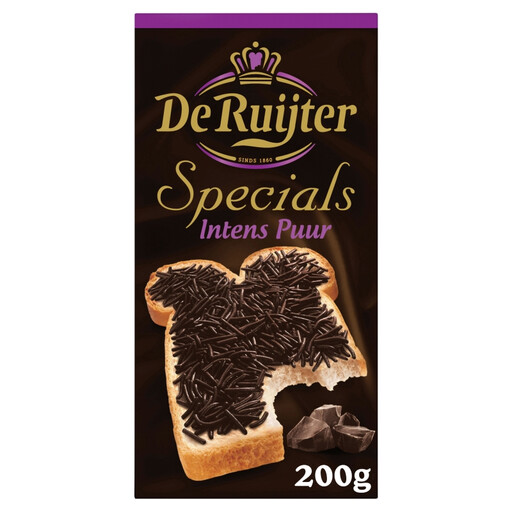
De Ruijter Intense Pure chocolate sprinkles, 200 g
Dark chocolate sprinkles for anyone who wants to choose the topping separately from the rusk. The pack contains 200 g; decide on a small amount for each snack and read the allergen information on the current label.
View at Joybuy
 No image available
De Ruijter Dark Chocolate Sprinkles, 390 g
Dark chocolate sprinkles in a 390 g pack, to pair with rusk chosen separately. According to the Joybuy product information, this variety contains milk and soya; check the current label and keep the amount per snack small.
View at Joybuy
Frequently asked questions
Is rusk with chocolate sprinkles suitable as an everyday after-school snack?
It’s best not to make it a regular daily choice. The Netherlands Nutrition Centre says chocolate sprinkles are not included in the Wheel of Five; for children aged 4 to 12, it lists options such as fruit, vegetables and wholemeal bread as snacks. Save rusk with a small amount of chocolate sprinkles for an occasional treat.
Does wholemeal rusk automatically make a better combination with chocolate sprinkles?
Wholemeal rusk can provide a higher-fibre base, but it doesn’t change the chocolate sprinkles. Compare the fibre per 100 g in the rusk and also consider how much topping you use and how often you serve the combination.
Which allergens should I check in rusk with chocolate sprinkles?
Check the latest labels on both products: the rusk products checked include wheat and egg, while the chocolate sprinkles products checked may contain milk or soya. The Netherlands Food and Consumer Product Safety Authority explains the mandatory allergen labelling requirements for prepacked foods. If you’re packing a snack, also ask about the school or after-school care provider’s policy.
How should I store opened rusk and chocolate sprinkles?
Follow the storage instructions on the packaging for both products. Seal opened rusk tightly to keep it crisp, and check the instructions and best-before date on the chocolate sprinkles pack.


