
Families with different breakfast preferences
If you’re shopping for several people, you can have plain rusk alongside a wholemeal option. That way, one person’s preference doesn’t have to dictate the type of rusk everyone eats.


When doing your weekly shop, choose a rusk base for each person: wholemeal if the grain content is your priority, or plain if that texture is a better fit. Then choose chocolate sprinkles that people will actually eat, and check the ingredients and allergens in both products. Chocolate sprinkles don’t change the composition of the rusk.
If you’re shopping for several people, you can have plain rusk alongside a wholemeal option. That way, one person’s preference doesn’t have to dictate the type of rusk everyone eats.
If you use chocolate sprinkles regularly, it’s worth considering how much is in a pack and whether you’ll finish the chosen flavour before its best-before date.
If you’re choosing based on sugar or ingredients, check both the chocolate sprinkles and the rusk. Allergens can vary between products.
| What to consider | What to check | Especially relevant to |
|---|---|---|
| The rusk base | Compare the grain content and fibre per 100 g in plain and wholemeal rusk. | If the grain base is your main priority, you’ll want to be able to choose wholemeal rusk, even if you’re adding chocolate sprinkles. For around 31% of consumers, the base comes first. |
| Flavour and texture | Check which types of rusk and chocolate sprinkles the people in your household actually eat. | If not everyone likes the same texture or chocolate flavour, it helps to have different combinations to choose from. Around 31% of consumers prioritise the preferences of different people in their household. |
| Pack size | Check the amount in the pack and choose a size you expect to finish before its best-before date. | If chocolate sprinkles are a regular on your table, you’ll want to have enough in the cupboard without leaving a pack unused. Pack size is the top priority for around 23% of consumers. |
| Sugars and allergens | Read the nutritional information and allergen details for both the chocolate sprinkles and the rusk you’ve chosen. | If ingredients or sugars are decisive for your household, you’ll want to check both labels before choosing. Around 15% of consumers put these checks first. |
According to the Netherlands Nutrition Centre, bakers aren’t required to use baker’s salt. So you can’t tell from the product type alone whether a particular rusk is made with it.
Check the ingredients list if baker’s salt is important to your choice.
A claim about sugar doesn’t tell you anything about all the other ingredients. Albert Heijn also lists milk and lactose in its lower-sugar plain chocolate sprinkles.
Read the nutritional information and allergen details for the exact product you choose.
A larger pack is only right for your weekly shop if the people in your household will eat those chocolate sprinkles.
Check the pack size and best-before date. If people have very different tastes, consider buying separate varieties that you’ll finish in time.
The rusk base has its own ingredients and allergens, too. For example, wholemeal or multigrain rusk may contain different ingredients from plain rusk.
Check both packs for every combination you choose.
A chocolate sprinkles brand offering dark, milk and mixed varieties, among others.
A chocolate sprinkles brand offering milk, dark and mixed flavours, among others.
Offers both regular dark chocolate sprinkles and a dark variety labelled ‘less sugar’.
Offers its own-brand chocolate sprinkles in different flavours, as well as several types of rusk.
A brand to consider if you’re looking for a larger pack of dark chocolate sprinkles.
These products are dark chocolate sprinkles for anyone who wants to choose plain, wholemeal or another type of rusk. Choose the rusk separately, and check the pack size and label for your chosen variety of chocolate sprinkles.
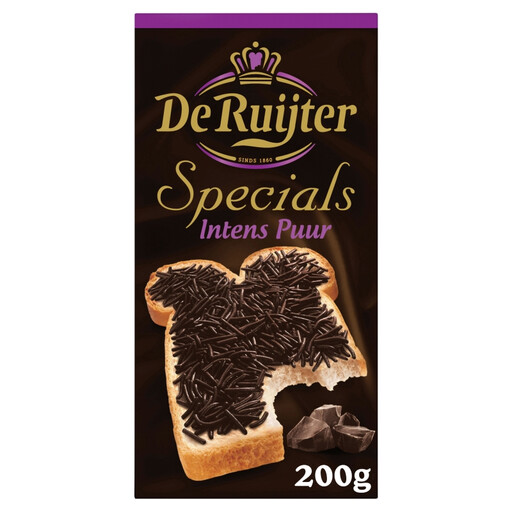 Image unavailable
A smaller pack of dark chocolate sprinkles to enjoy with your choice of rusk. The pack contains 200 g; check the ingredients and allergens on the current packaging.
 Image unavailable
For anyone looking for a larger pack of dark chocolate sprinkles and expecting to use it up. The pack contains 390 g; the product information lists milk and soya as allergens. Check the label on the rusk you’re pairing with the sprinkles, too.
If fibre from the grain base is your priority, wholemeal rusk is a sensible choice. According to the Netherlands Nutrition Centre, wholegrain products contain more fibre and other nutrients than white grain products. The chocolate sprinkles don’t change the composition of the rusk.
No, you can’t tell from the product type alone: according to the Netherlands Nutrition Centre, bakers don’t have to use baker’s salt. Check the ingredients list for the specific rusk if this is important to your choice.
No, those descriptions don’t give you a complete picture of the allergens. The product information for De Ruijter Dark Chocolate Sprinkles lists milk and soya; always check the exact variety of chocolate sprinkles and the rusk.
Follow the storage instructions on both packs. The chocolate sprinkles information reviewed says to store them in a cool, dark and dry place. For the high-fibre rusk reviewed, the instructions say to store it in a dark, dry place in a sealed container after opening.