
Home bakers looking for a topping
You want to sprinkle chocolate sprinkles over rusk or use them to decorate cupcakes. Your choice of flavour depends on what you’re baking and whether you prefer milk or dark chocolate.


If you want a wholemeal base for your chocolate sprinkles, choose wholemeal rusk; if you’re looking for a more neutral base, compare plain rusk instead. Then choose milk or dark chocolate sprinkles to suit your taste, and check the sugars, ingredients and allergens on each pack. A higher cocoa content doesn’t automatically make a variety of chocolate sprinkles a better choice for everyday use.
You want to sprinkle chocolate sprinkles over rusk or use them to decorate cupcakes. Your choice of flavour depends on what you’re baking and whether you prefer milk or dark chocolate.
You want to keep the chocolate sprinkles but compare rusk bases by their wholemeal ingredients and fibre content. According to the Netherlands Nutrition Centre, wholegrain cereal products contain more fibre than white cereal products.
You check the ingredients, sugars and allergens first. The rusk and chocolate sprinkles described here have different allergen declarations, including for wheat, egg, milk and soya.
First choose the type of rusk you want to serve, then decide which flavour of chocolate sprinkles you prefer. Before buying, check the nutritional information and allergens on both packs.
| What to consider | What to check before buying | Who it matters to |
|---|---|---|
| Wholemeal base | Check whether the rusk is labelled wholemeal and compare fibre per 100 g. | If I want to keep using chocolate sprinkles but choose a base with fibre in mind, I give the rusk priority when making my decision. For around 30% of shoppers, this choice of base comes first. |
| Flavour and decoration | Compare milk and dark varieties by their product descriptions and stated cocoa content. Also consider whether you’ll use them on rusk or in baking. | For rusk or cupcakes, I mainly want a topping whose flavour goes well with the rest. For around 40% of shoppers, flavour and decoration are the top priorities. |
| Sugars and cocoa | Check sugars and saturated fat per 100 g and, if stated, per serving. If a product claims to contain less sugar, check what it is being compared with. | When choosing between varieties of chocolate sprinkles, I don’t want to rely solely on the word ‘dark’ or the cocoa content. Sugars and cocoa are the most important points of comparison for around 20% of shoppers. |
| Allergens | Read the allergen information on both current packs, including any warnings that a product may contain allergens. | If I need to avoid an allergen, the variety I choose must be suitable for me. For around 10% of shoppers, checking the label takes priority over other choices. |
According to Albert Heijn, De Ruijter Specials hagelslag intens puur contains at least 52% cocoa solids, but also 43 g of sugars and 12 g of saturated fat per 100 g. Cocoa content alone doesn’t tell you the full nutritional picture.
Use cocoa as a guide to flavour, and also compare the nutritional information and how much you sprinkle on.
According to Albert Heijn, the AH Beschuit volkoren described here contains wheat and egg. The chocolate sprinkles varieties described list other allergens, including milk and soya. Even two varieties from the same brand can differ.
Check the allergen information on the pack of both the rusk and the chocolate sprinkles you choose. Also look for any warning that the product may contain other allergens.
A claim about reduced sugar compares a product with a specific reference variety. It doesn’t tell you what’s in another pack that’s currently available.
Compare the products currently available to buy by sugars per 100 g, ingredients and allergens.
You can’t assume that baker’s salt has been used in every rusk or home-baked product. The Netherlands Nutrition Centre says that bakers aren’t required to use baker’s salt.
For packaged rusk, check the ingredients list. If you’re buying an unpackaged bakery product, ask which salt has been used.
This own-brand option is worth considering if you’re looking for wholemeal rusk to use as a base for chocolate sprinkles.
Venz offers milk chocolate sprinkles which, according to the product description, can also be sprinkled over cupcakes.
The Specials intens puur variety is worth considering if you want to compare a dark chocolate sprinkle flavour with milk chocolate.
The own-brand range includes separate milk and dark chocolate sprinkle varieties to compare.
These products include chocolate sprinkles for rusk or baking, and one wholemeal rusk option to use as a base. Choose your rusk and topping separately; differences in flavour or product type are no substitute for checking the label.
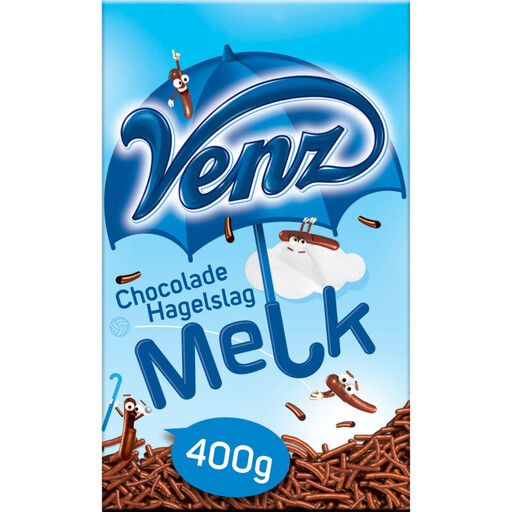 Image unavailable
A milk chocolate option if you like this flavour on rusk or want to decorate cupcakes.
The product information for Venz Hagelslag melk states that it contains at least 20% cocoa solids, 69 g of sugars per 100 g, and milk and soya as allergens. Check the pack you buy.
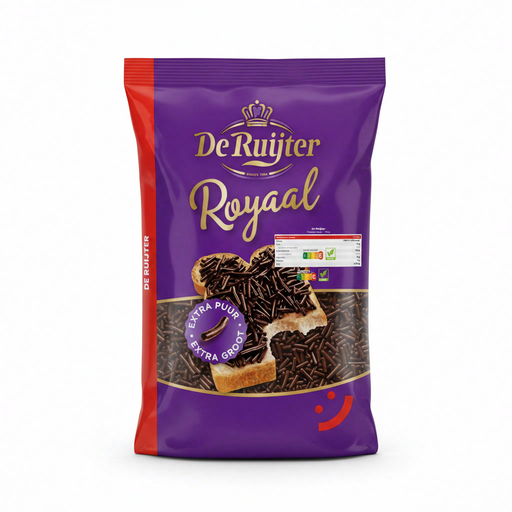 Image unavailable
A chocolate topping to consider if you’re looking for chocolate pieces rather than fine sprinkles. Compare the nutritional information and allergens on this pack; figures for De Ruijter Specials intens puur don’t automatically apply to Chocolate Chunks.
 Image unavailable
A dark chocolate sprinkle option if you want the chocolate flavour to take centre stage on rusk or as a cupcake decoration.
The product information for the intens puur variety states that it contains at least 52% cocoa solids, 43 g of sugars and 12 g of saturated fat per 100 g. Also check the current pack for milk and soya.
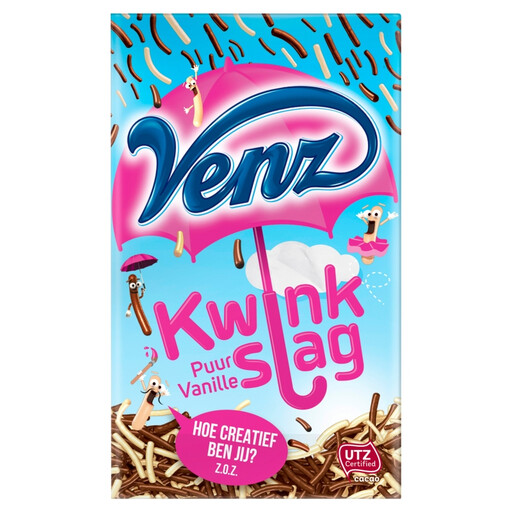 Image unavailable
A mixed-flavour option if you don’t want to use only chocolate sprinkles on rusk or in baking. For this combination, be sure to compare the ingredients, nutritional information and allergens on the pack you choose.
 Image unavailable
A wholemeal rusk base for anyone who wants to choose their chocolate sprinkles separately. Compare the fibre content on the pack with other rusk products, and check which allergens are listed.
Choose wholemeal rusk if fibre in the base matters more to you than a neutral rusk flavour. According to the Netherlands Nutrition Centre, wholegrain cereal products contain more fibre than white cereal products; assess the chocolate sprinkles separately by checking their nutritional information and allergens.
Only choose a variety after checking the allergen information on the current pack. The Venz milk variety described lists milk and soya; the De Ruijter intens puur variety described also lists milk and soya. Don’t rely on the terms ‘milk’ or ‘dark’ alone.
You can’t assume that all rusk does: according to the Netherlands Nutrition Centre, bakers aren’t required to use baker’s salt. Check the label on packaged rusk, and ask which salt has been used for an unpackaged bakery product.
Store opened chocolate sprinkles in a dry place and follow the instructions on the pack. The Netherlands Nutrition Centre gives up to one year in the kitchen cupboard as a general storage guide for opened chocolate sprinkles; also look out for an unusual smell or other signs of spoilage.