
If you’re shopping for yourself for the first time
If you’re not sure how often you’ll eat rusk with chocolate sprinkles, pack size matters. Think about how much you can store and are likely to use.


For your first stock-up as a one-person household, choose rusk and chocolate sprinkles separately. This lets you weigh up the rusk base, chocolate flavour and pack size individually. Check the ingredients and fibre content of the rusk, compare the sprinkles’ nutritional values per 100 g, and check the current label of both products for allergens.
If you’re not sure how often you’ll eat rusk with chocolate sprinkles, pack size matters. Think about how much you can store and are likely to use.
When comparing wholemeal rusk, check the ingredients and fibre per 100 g. Also check the allergens, as these can vary between varieties.
Milk, dark and extra-dark are different flavour options. As well as the product name, check the stated cocoa content, nutritional values and allergen information.
First decide which rusk you want to store and use, then choose the chocolate sprinkles and pack size to go with it.
| What to consider | What should you check? | Who is this important to? |
|---|---|---|
| Rusk base | Compare the ingredients and fibre per 100 g; read the allergen information for the variety you choose. | I want the rusk base to suit my preference for wholemeal and need to know what it contains. Around 37% of consumers prioritise this. |
| Chocolate sprinkles | Check the flavour variety and compare sugars and saturated fat per 100 g. | The chocolate flavour is the deciding factor for me, but I also want to weigh up the nutritional value of the topping. Around 36% of consumers prioritise this combination. |
| Pack size | Compare the pack weight with how much you expect to use, and check the storage instructions. | If I don’t yet know how often I’ll eat this, I don’t want to choose a pack that will be difficult to finish. A suitable first stock-up is the main consideration for around 27% of consumers. |
The stated cocoa content doesn’t tell you how much sugar or saturated fat the chocolate sprinkles contain. According to Albert Heijn’s product information, De Ruijter Specials Intens Puur contains 43 g of sugars and 12 g of saturated fat per 100 g.
Compare the nutritional values per 100 g alongside the cocoa content, and think about how much chocolate sprinkles you plan to use.
A large pack won’t necessarily suit a first stock-up for one person. How often you eat chocolate sprinkles and how much storage space you have will determine whether it’s practical to keep that quantity.
Choose a size that suits how you use the product, and check how to store it after opening.
A pack you don’t finish could leave you with leftovers or lead to waste.
Rusk can also contain allergens you need to know about. The wholemeal varieties reviewed list ingredients such as wheat and, depending on the product, egg or sesame.
If you have a relevant allergy, check the current ingredients and allergen information for both the rusk and the chocolate sprinkles.
The Netherlands Food and Consumer Product Safety Authority explains that iodine compounds may be present in bakery products through baker’s salt. This doesn’t mean that every individual pack of rusk contains them.
Only base a choice on iodine content if you have information about the specific product.
Among the chocolate sprinkle products reviewed, you can compare the standard dark varieties with Specials Intens Puur.
The brand offers chocolate sprinkles and chocolate flakes for anyone who wants to compare flavours or product types.
The AH Wholemeal Rusk reviewed is one possible base to top with chocolate sprinkles of your choice.
The Vezelrijk boeren beschuit volkoren reviewed is another wholemeal base for this combination.
The Sprinkles milk or dark chocolate reviewed come in a pack size you can compare with how much you expect to use.
These are separate rusk and chocolate sprinkle options for a first stock-up. Pair a rusk with a topping that suits your taste and preferred pack size; none of the products shown is a complete combination.
 Image unavailable
A wholemeal rusk base for choosing your own chocolate sprinkles.
The pack contains 10 pieces. Compare the fibre per 100 g and check the label for any allergens relevant to you.
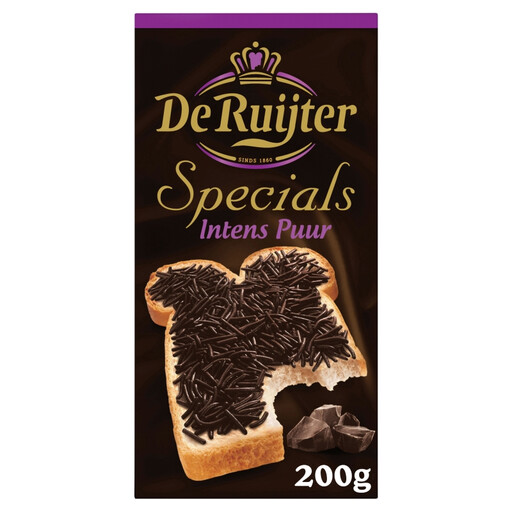 Image unavailable
Dark chocolate sprinkles in a 200 g pack for anyone who wants to choose their rusk and topping separately.
Compare the cocoa content with the sugars and saturated fat per 100 g; if you have allergies, check the current packaging.
 Image unavailable
A wholemeal rusk base if you want to add your own choice of chocolate sprinkles.
The pack contains 13 pieces. To compare fibre, check the nutritional values per 100 g and read the current allergen information on the label.
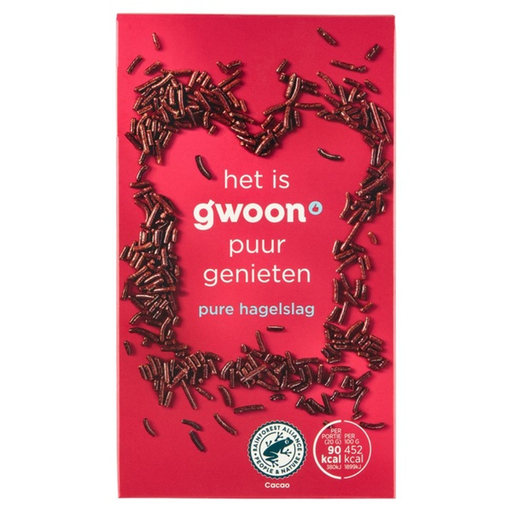 Image unavailable
Dark chocolate sprinkles in a 400 g pack for anyone who thinks that size suits how they use the product.
If you’re stocking up for one person for the first time, consider whether you’ll use the whole pack. Check the nutritional values and allergens on the label.
Compare the nutritional values per 100 g, as the Netherlands Nutrition Centre advises when comparing labels. For chocolate sprinkles, check the sugars and saturated fat, and read the ingredients list too.
Read the labels of both products separately. Depending on the variety, wheat, egg or sesame may be relevant in rusk, while milk or soya may be present in chocolate sprinkles. Don’t rely on the brand name alone.
Follow the storage instructions on each product’s packaging. For the AH rusk reviewed, Albert Heijn recommends storing it in a sealed tin after opening; the product information for the De Ruijter chocolate sprinkles reviewed says to store in a cool, dry place.
You can buy rusk and chocolate sprinkles separately, so you can choose both yourself. Jumbo listed its product Beschuit met Hagelslag Melk as no longer available in its online range; check the current selection if you’d still like a ready-made option.
No. The Dutch rule on iodine compounds in baker’s salt doesn’t guarantee that they’re present in every individual rusk product. The Netherlands Food and Consumer Product Safety Authority explains that these compounds may be present in bakery products; if iodine content matters to your choice, check the information for the specific product.