Which rusk is right for you?

Breakfast lovers looking to compare fibre

If wholegrain products are your main reason for choosing a different type of rusk, compare the grain base and fibre content per 100 g. The Netherlands Nutrition Centre lists wholegrain products as foods that contain fibre.

Lovers of classic, light rusk

Plain rusk is a good choice if you want the topping to provide the flavour and are looking for a light, crisp base. When comparing packs, check how many rusks they contain too.

Breakfast lovers looking for a more substantial crunch

A larger rusk with grains or seeds is worth considering if texture and size matter more to you than a smaller plain variety. Check which ingredients and allergens are in the variety you choose.

What should you look for when choosing?

First, decide whether you want a neutral base, a wholegrain base or a more substantial texture. Then compare the nutritional information and packaging of the varieties that fit the bill.

What to look for What to check when buying Who it matters to
Wholegrains and fibre Check the wholegrain information and compare fibre per 100 g. For my Sunday breakfast, I want to choose a wholegrain base and care more about the ingredients than finding the lightest rusk possible. Wholegrains and fibre are top priorities for around 38% of consumers.
Light, crisp texture Check whether it’s plain and how many rusks the pack contains. When switching between sweet and savoury toppings, I want a neutral, crisp base that won’t overpower their flavour. This classic eating experience matters most to around 37% of consumers.
Substantial size and seeds Compare the size and pack weight; read the ingredients and allergen information. For a more filling breakfast, I’m looking for a larger rusk with a firmer crunch. Around 25% of consumers say that substantial character is their priority.

Common mistakes when choosing

  • Assuming all rusk offers the same amount of fibre

    Plain, wholemeal and seeded varieties differ in their ingredients. A product name alone doesn’t tell you how much fibre a portion contains.

    First choose the type of rusk that suits your breakfast, then compare the fibre per 100 g in the nutritional information.

  • Confusing pack weight with the number of rusks

    For example, PLUS lists its plain rusk at 125 g and a larger seeded variety at 230 g. The weight alone doesn’t tell you how many rusks are in a pack.

    Compare pack weight, number of rusks and size if the amount you get for breakfast matters to you.

  • Assuming rusk contains iodine based on its name

    The product name doesn’t tell you which type of salt was used in that particular rusk.

    Check the product-specific ingredients list if the type of salt used is important to your choice.

  • Guessing the allergens from the variety name

    Ingredients can vary between rusk varieties. Jumbo’s product information lists wheat and egg in one plain rusk; a seeded variety described by Jumbo contains sesame seeds, among other ingredients.

    If you have an allergy, read the current allergen information for the specific product, even if you’ve bought rusk from the same brand before.

Brands with relevant rusk varieties

Bolletje

Bolletje offers classic, wholemeal and seeded rusk, among other varieties, to suit different preferences for grain base and texture.

  • According to Jumbo’s product description, Bolletje bakes its Bakkers Beschuit with egg and describes the texture as crisp and light.
  • Compare the ingredients and nutritional information for each variety; the brand name doesn’t tell you which ingredients you’re choosing.

Albert Heijn

Albert Heijn’s range includes AH plain rusk and AH wholemeal rusk.

  • The two varieties offer a straightforward choice between plain and wholemeal from the same supermarket brand.
  • Use the nutritional information for each individual product to compare what’s in it.

Jumbo

Jumbo offers plain rusk and Robuust varieties, including multigrain and spelt.

  • Jumbo lists its plain rusk as 13 pieces and 125 g; the Robuust Multigrain and Spelt varieties are listed in 230 g packs.
  • Compare the size and ingredients of the variety you choose rather than assuming the supermarket brand means you’ll get the same eating experience.

Lidl

Lidl lists plain, wholemeal and artisan multigrain rusk.

  • The plain rusk listed weighs 125 g per pack; the artisan multigrain variety weighs 230 g.
  • Check the packaging or product information for the nutritional values of the variety you want to compare.

ALDI

Under the Goud Gebakken name, ALDI lists both plain and wholemeal rusk.

  • ALDI lists 13 pieces in its Goud Gebakken wholemeal rusk pack.
  • Read the ingredients and nutritional information for the plain and wholemeal varieties separately before choosing between them.

PLUS

PLUS lists plain rusk, seeded rusk and a spelt variety with seeds and kernels.

  • The PLUS plain rusk listed weighs 125 g per roll; PLUS Luxury Plain Rusk with Seeds weighs 230 g per roll.
  • Check the number of pieces, ingredients and size for each product. The range available may vary locally.

Rusk for different breakfast preferences at Joybuy

These rusks suit three Sunday breakfast preferences: plain rusk, a wholemeal variety and a dark wholemeal variety for those looking for a different texture. Check the packaging for the specific product before deciding based on size or ingredients.
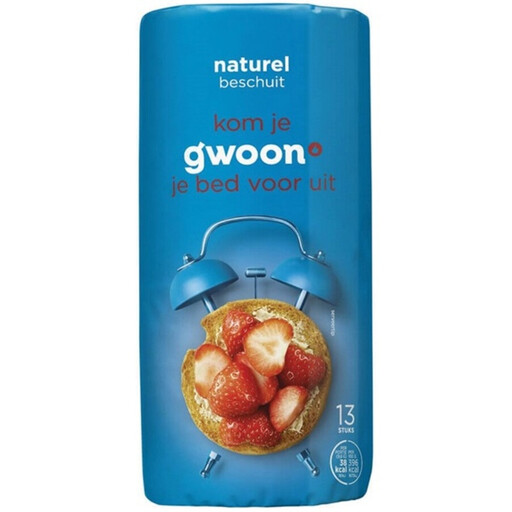
g'woon plain rusk, 125 g

g'woon plain rusk, 125 g

A plain variety to consider if you’re looking for a simple base for toppings at Sunday breakfast.

Pack weight: 125 g. Check the size and current allergen information on the packaging if these are important to your choice.

View at Joybuy

Bolletje wholemeal rusk, 13 pieces

Bolletje wholemeal rusk, 13 pieces

A variety to consider if a wholegrain base is your priority for Sunday breakfast.

The pack contains 13 pieces. Compare fibre per 100 g in the current nutritional information and check the label if you have allergies.

View at Joybuy

Bolletje dark wholemeal rusk, 10 pieces

Bolletje dark wholemeal rusk, 10 pieces

A dark wholemeal variety to consider if you’re looking for a different rusk texture from a light, plain variety.

The pack contains 10 pieces. Check the size and read the current ingredients and allergen information before choosing.

View at Joybuy

Frequently asked questions about rusk

Does ‘medium-thick sliced’ mean rusk comes in a particular size?

Don’t rely on that description as a measure of rusk size. Jumbo describes rusk as a baked bun that is cut in half, after which the halves are baked again. For breakfast, it’s better to compare the actual size, number of pieces and type of rusk.

Can I assume that rusk contains iodine?

No, don’t assume which type of salt has been used based on the product name. Check the ingredients information for the specific rusk if this matters to your choice.

Should I check the allergens for every rusk variety?

Yes. If you have an allergy, check the current packaging for the variety you’re buying. Jumbo lists wheat and egg, among other ingredients, in its plain rusk, while its description of a seeded rusk mentions sesame seeds. The Netherlands Food and Consumer Product Safety Authority highlights the importance of clear allergen information on the label.

How should I store rusk after opening?

Follow the storage advice on the packaging and seal the rusk well after opening. The seeded variety described should be stored in a cool, dry place to help prevent moisture from affecting its crisp texture.
