
Vandaag of morgen in huis

Kwaliteit gegarandeerd

Welkomstaanbiedingen ontgrendelen: GRATIS bezorging | Tot 80% korting | Gratis 30 dagen JoyPlus-proefperiode
Download de app
Buying running shoes seems simple until you have to choose between lightweight running shoes, cushioned models, sports shoes and trainers that all appear suitable for sporting activities. A shoe that feels comfortable during a short walk will not necessarily be right for a long road session or a muddy woodland trail.
The biggest purchasing mistakes usually come down to three pitfalls:
Start with the surface and your training goal. For asphalt and cycle paths, running shoes with an even outsole and a comfortable midsole are practical. If you mainly run shorter distances, look for flexibility and low weight. For long-distance running shoes, fit, ventilation and cushioning are more important than appearance alone.
Unpaved trails require different features. Trail running shoes generally have a more pronounced tread and a more abrasion-resistant outer. This helps with mud, loose ground and wet surfaces, but an aggressive tread may feel less smooth on slippery asphalt.
The difference between men’s and women’s running shoes is not simply a matter of colour. Some models are available in different last shapes and size ranges. Always check the specific product details rather than assuming that a particular model will automatically suit every foot shape.
The midsole largely determines how the shoe feels. Many models use EVA foam, Cloudfoam, Lightstrike or a comparable foam. Pay attention to the description and intended use:
According to the product information, the adidas Adizero Boston 13 uses a Lightstrike and Lightstrike Pro midsole with ENERGYRODS. The model is described as being designed for intensive training and race preparation. This makes it a logical choice for runners looking for a responsive training model, but beginners should first consider whether the firmer, speed-focused roll-through suits their running style.
A breathable running shoe generally has a mesh upper. Mesh allows air to pass through, while reinforcements around the midfoot provide a more secure fit. Check the following:
A soft lining feels comfortable for everyday use, but may feel less airy in warm weather. An open mesh construction usually provides better ventilation, while a reinforced upper can offer more protection on unpaved trails.
Look at the sole pattern before buying running shoes. Rubber with a flatter pattern is generally suited to road use. Trail models have deeper lugs for grip on soft or uneven ground. According to the product description, the Boston 13 has a Lighttraxion outsole with Continental Rubber at the front. The Nike Zoom Vomero 5 has a rubber outsole with a waffle pattern, designed to provide grip for everyday use and training.
No sole pattern makes a shoe completely slip-free in all conditions. Rain, leaves, paving and mud all affect grip. Choose based on the environment in which you actually run.
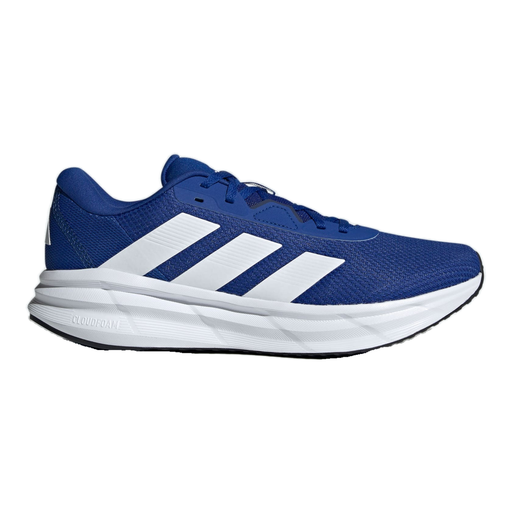
Why it suits this profile: This road model has a regular fit, Cloudfoam midsole and textile upper. This makes it a practical choice for beginners who combine short to medium-length training sessions with everyday use.
The product information lists specific materials and a standard fit. You therefore do not have to rely solely on a general comfort claim.
Cloudfoam midsole, textile lining, TPU outsole and lace fastening.
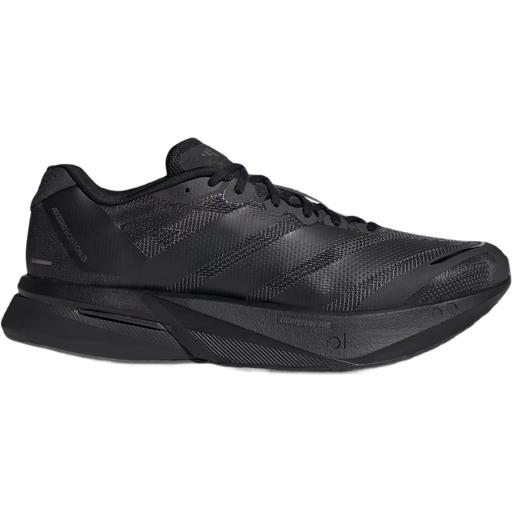
Why it suits this profile: According to adidas product information, this model is designed for intensive training and race preparation. The combination of Lightstrike Pro, ENERGYRODS and a mesh upper suits runners focused on pace and responsiveness.
The choice is based on verifiable components: midsole, ENERGYRODS, mesh and Continental Rubber. However, check that the size and firmer running feel suit you.
Lightweight textile upper, Lightstrike Pro midsole and Continental Rubber at the front.

Why it suits this profile: The product description focuses on road-to-trail use, with a breathable upper, EVA midsole and ROCKYTEC rubber outsole. This suits runners who switch between city roads and unpaved trails.
The profile and sole are clearly specified. However, pay attention to the difference between the standard and slim versions if you have narrower feet.
Sandwich mesh, highly elastic EVA and ROCKYTEC rubber; suitable for various surfaces according to the product information.
We have put together a complete, up-to-date list of products that fully meet these strict selection criteria and the applicable European safety regulations.
Their lifespan depends on running distance, body weight, surface, rotation and care. Regularly check whether the tread is visibly worn, the midsole has become permanently compressed or the upper is coming away. There is no universal mileage that applies to every model. Do not simply switch a pair used mainly on asphalt to trail running without checking the sole.
A running shoe should feel secure around the heel and midfoot, without pressure points. Some extra room around the toes is desirable, particularly over longer distances when feet may swell. Try on both shoes with the socks you use for running and check the size chart for the specific model.
That depends on the construction. Skechers trainers, New Balance trainers and lifestyle models such as the Puma Speedcat are designed for everyday use or style, and do not always have the sole pattern and fit required for repeated running. For regular running, it is better to choose a model whose product information explicitly mentions road or trail running. A casual trainer may still be suitable for walking, commuting or light fitness activities.
