
Vandaag of morgen in huis

Kwaliteit gegarandeerd

Welkomstaanbiedingen ontgrendelen: GRATIS bezorging | Tot 80% korting | Gratis 30 dagen JoyPlus-proefperiode
Download de app
Choosing a new pair of running shoes may seem straightforward. Yet many buyers run into the same problems: the fit is different from expected, the sole does not provide enough grip, or the shoe feels less comfortable after a few training sessions. If you focus only on the brand name, colour or a prominent cushioning claim, you may end up paying for features that do not suit the way you use the shoes.
The main pitfalls are:
A running shoe should wrap around your foot without putting pressure on your toes. When trying shoes on, allow a small amount of space in front of your longest toe. Ideally, try shoes on with the socks you use when running.
Check the size chart for the specific model. The adidas Runfalcon 5, for example, is available in various EU sizes and lists a foot length for each option. Size 40 2/3 corresponds to 25,9 cm; size 42 2/3 corresponds to 26,7 cm. This information is more reliable than simply relying on the general indication that the shoe “fits true to size”.
If you have wide feet or want to run in thicker socks, look for models with a roomier toe box. The LI-NING Yueying 6 is described as having a wide toe area. According to the product description, the brand recommends choosing half a size larger if you have wider feet. Always check this against your own foot length and the available size.
Cushioned running shoes are particularly worth considering if you regularly run on hard surfaces. The midsole plays a major role in how the shoe feels when landing and pushing off. Materials such as EVA, Cloudfoam, Dreamstrike+ and Bounce 2.0 each use a different construction.
According to adidas, the Cloudfoam midsole in the Runfalcon 5 is designed to provide a softer feel during everyday training. The Galaxy 7 also uses Cloudfoam and has a TPU outsole. Bounce 2.0 is described as a lightweight, responsive material in the Ultrarun 5. These are product and brand claims, not a guarantee that every user will experience the same level of comfort.
As well as cushioning, consider:
For running shoes for everyday use, a standard fit with moderate cushioning may be more practical than an especially soft or rigid construction.
For asphalt, a rubber outsole with a relatively flat tread pattern is usually sufficient. For trail running shoes, deeper lugs and a sole made from terrain-specific rubber are more important. According to the product description, the Salomon models in this selection use an All Terrain Contagrip outsole. The Salomon Genesis also has an Active Chassis system and Energy Foam midsole.
These features make the shoes relevant for paths with gravel, mud or uneven surfaces, but they do not automatically make a shoe suitable for every type of terrain. Also check the wear on the lugs and avoid prolonged use on asphalt when the sole has clearly been designed for trails.
Stable running shoes can be useful if you want extra guidance around your foot. However, stability comes from several components: the heel counter, the width of the sole, torsional stiffness and the fit. So do not look only at a marketing name.
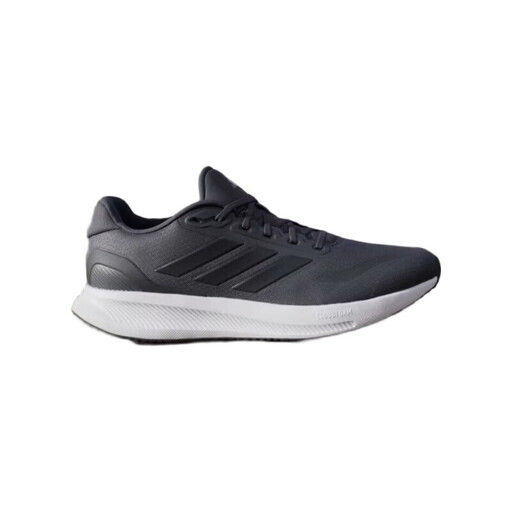
Why it suits this profile: According to adidas, this model is designed for everyday training, the track and the treadmill. The mesh upper and Cloudfoam midsole make it suitable for anyone looking for one pair for easy runs and everyday use.
The product information lists both the materials and the foot length for each size. This allows you to make a more informed choice than relying on the EU size alone.
Cloudfoam midsole, mesh upper, OrthoLite insole and Adiwear outsole according to the product specifications.

Why it suits this profile: This model is designed for trail running and walking on technical terrain. The GORE-TEX membrane, 3D Advanced Chassis, Contagrip outsole and Quicklace system are clear specifications for outdoor use.
This shoe is not focused solely on cushioning: the waterproof membrane, reinforced toe box and terrain outsole are better suited to wet and rugged paths.
GORE-TEX membrane, rubber Contagrip sole, Quicklace and ankle height according to the product description.
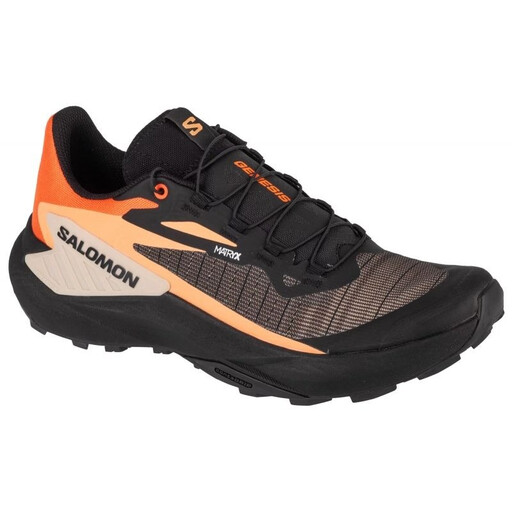
Why it suits this profile: According to Salomon, the Genesis is designed for trail running and mountain adventures. Active Chassis, Energy Foam and All Terrain Contagrip are relevant to runners who want to combine stability, cushioning and grip on uneven terrain.
Its intended use is clearly defined as a trail and mountain shoe. This reduces the risk of choosing a smooth road sole for muddy or rocky routes.
Active Chassis, Energy Foam, reinforced mesh and rubber All Terrain Contagrip sole.
We have put together a complete, up-to-date list of products that fully meet these strict selection criteria and the applicable European safety regulations.
Lifespan depends on body weight, running style, surface, distance and maintenance. There is therefore no fixed mileage limit that applies to every pair. Replace your shoes when the sole shows visibly uneven wear, the cushioning feels different or the upper develops cracks.
For everyday use:
A mesh running shoe is generally more breathable, but less suitable for prolonged rain. A GORE-TEX model may be a better choice for wet walks, although it may feel warmer. Choose based on your route rather than relying solely on the promise of waterproofing.
Not according to a fixed timeframe. Regularly check the wear on the outsole, the shape of the midsole and the firmness of the upper. With frequent use on asphalt, signs of wear may appear sooner than with occasional walking.
Yes, everyday-use models can be suitable for walking on asphalt and light trails. For wet, rocky or muddy routes, trail running shoes or waterproof walking shoes are the more logical choice because of their sole profile and construction.
Your toes should not touch the front, especially when walking downhill. Compare the size chart with your measured foot length and check that your heel remains stable when you walk. A roomier toe box can be useful for wider feet, but it should not cause your foot to slide inside the shoe.
