
Vandaag of morgen in huis

Kwaliteit gegarandeerd

Welkomstaanbiedingen ontgrendelen: GRATIS bezorging | Tot 80% korting | Gratis 30 dagen JoyPlus-proefperiode
Download de app
Buying running shoes seems simple until you have to choose between cushioning, stability, weight, grip and fit. A model that feels comfortable during a walk may feel too warm, too narrow or not stable enough during a longer training session. The right choice therefore depends mainly on your running surface, distance and foot shape.
A soft sole feels comfortable when trying shoes on, but it does not tell you everything about how they will feel after a few kilometres. Cushioned running shoes are particularly suitable if comfort is important to you, but also pay attention to the firmness of the midsole and the support around the heel.
A lightweight shoe is not automatically suitable for long distances either. Lightweight running shoes can be comfortable for short training sessions, while a slightly more robust model offers greater stability and protection on longer routes.
Running shoes for tarmac and treadmills usually have a flat rubber outsole. Trail running shoes, on the other hand, use a more aggressive tread for mud, gravel and uneven paths. A road shoe on wet woodland ground may slip more easily, while a trail shoe on tarmac can feel stiffer and wear out faster.
For routes combining cycle paths and unsealed tracks, running shoes for gravel and trail are a practical compromise. However, check whether the sole is intended for mixed terrain according to the product description.
Sizes vary between brands and models. An EU size 42 does not have exactly the same internal length or fit in every shoe. Measure your foot at the end of the day, wearing the socks you use for running. Then compare the measurement with the product’s size chart.
As well as length, consider the width of the forefoot. Your toes should be able to move without your heel lifting out of the shoe. A little extra room for your toes can be helpful over long distances, but a shoe that is too roomy may cause your foot to slide around.
The midsole largely determines how the shoe feels. Materials such as Cloudfoam, Dreamstrike, Bounce and EVA are linked to cushioning or responsiveness in product descriptions. These are material names; the actual feel is personal and depends on your weight, pace and running style.
For running shoes for everyday use, a regular fit with moderate cushioning is often practical. If you run longer distances, you may place greater value on a comfortable midsole and an outsole that does not wear out too quickly.
A mesh upper generally allows more air through than a dense synthetic material. This can be comfortable during indoor sports-hall training or on warm days. However, mesh does not always offer much protection against rain or splashes of dirt.
Also check how the shoe fastens. Traditional laces allow you to adjust the pressure across the instep. This is relevant to both men’s running shoes and women’s running shoes, because foot shape is more important than marketing categories for men or women.
Look at the type of rubber and the shape of the tread. Adiwear, TPU, rubber lugs and All Terrain Contagrip are different terms used in the product information. According to the relevant product descriptions, these materials are designed to provide grip and durability, but performance can vary depending on the surface and weather conditions.
For tarmac, small, evenly spaced tread elements are usually sufficient. For gravel, wet leaves or mud, deeper grooves and an off-road tread pattern make more sense.
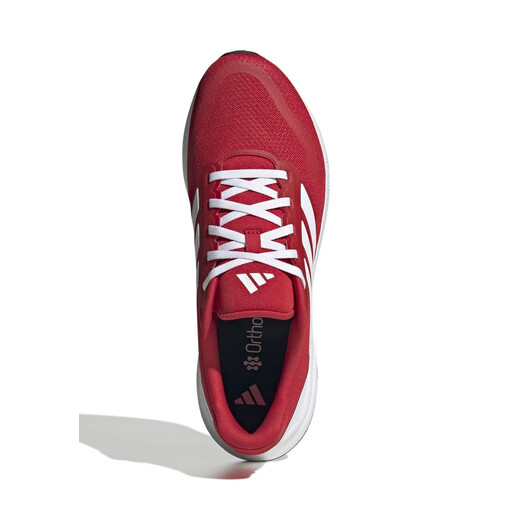
Why it suits this profile: According to the product description, this model is designed for road training and short distances of 0 to 10 km. That makes it suitable for anyone building a running routine or alternating between jogging and walking.
The product information mentions a Cloudfoam midsole, breathable mesh and an Adiwear outsole. This allows you to check specifically whether the cushioning, ventilation and everyday-use features suit your route.
Cloudfoam cushioning, mesh upper, OrthoLite insole and size 42 2/3 with a stated foot length of 26.7 cm.
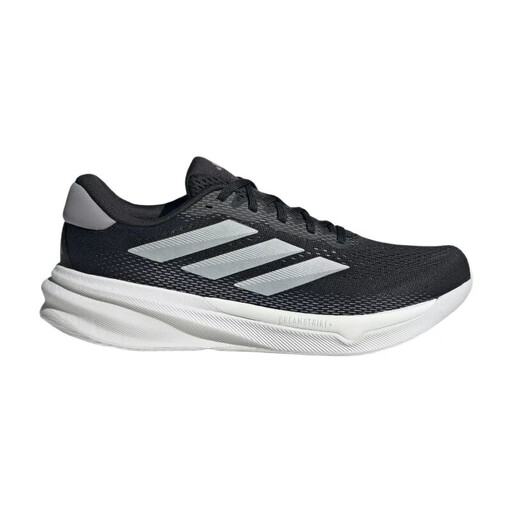
Why it suits this profile: For runners who train more frequently or are building up to longer distances on the road, this model features, according to adidas, a hybrid Dreamstrike+ and EVA midsole and an Adiwear outsole.
The choice is not based solely on a soft feel: the product details also mention the upper, midsole and outsole durability. This makes it easier to compare models.
Mesh and synthetic upper, hybrid Dreamstrike+/EVA cushioning and Adiwear rubber; suitable for training according to the product description.
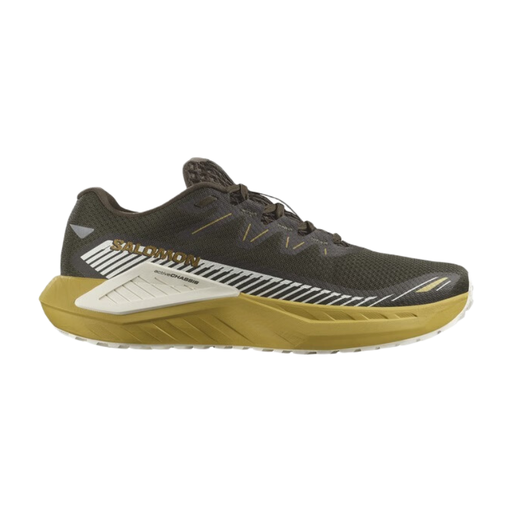
Why it suits this profile: According to the product description, this model is designed for gravel, mixed terrain, trail running and walking. It suits users who do not run exclusively on tarmac.
The sole is not described solely as a road outsole. Active Chassis and All Terrain Contagrip are mentioned for support and grip on gravel and mixed surfaces.
Active Chassis, Energy Foam midsole, synthetic mesh and All Terrain Contagrip rubber according to the product details.
We have put together a complete, up-to-date list of products that fully meet these strict selection criteria and the applicable European safety regulations.
For size 42 running shoes and size 44 running shoes, the stated EU size is only a starting point. Always check the foot length in millimetres or centimetres. For example, adidas Runfalcon 5 size 42 2/3 lists a foot length of 26.7 cm. Other models may correspond to the same European size differently.
Clean your shoes after use with a damp cloth and allow them to air-dry. Avoid the washing machine, tumble dryer and direct heat, as these can affect the glue, foam and upper. Rotate your shoes if you run several times a week. Replace them when the sole shows visible uneven wear, the cushioning feels noticeably different or the upper no longer fits securely. A fixed number of kilometres is not a reliable guide for every runner.
Products in this selection state a statutory conformity guarantee of at least two years under EU consumer rules. This guarantee covers your legal rights in the event of defects and does not mean that the running shoes will retain the same cushioning throughout the entire period.
This depends on usage, body weight, running style, surface and care. Pay particular attention to tread wear, the midsole sinking unevenly and changes in fit. Do not use a mileage limit as your only deciding factor.
They can be, but comfort alone is not enough. Also check the fit around the toes, heel stability and the durability of the outsole. A cushioned model for everyday use may be suitable, as long as the feel and size are right for you.
A road model may be sufficient for short stretches on unsealed surfaces. If you regularly run on gravel, mud or uneven paths, it is better to choose trail running shoes or a model for mixed terrain. Pay attention to the tread, grip and protection provided by the upper.
