
Vandaag of morgen in huis

Kwaliteit gegarandeerd

Welkomstaanbiedingen ontgrendelen: GRATIS bezorging | Tot 80% korting | Gratis 30 dagen JoyPlus-proefperiode
Download de app
A pair of running shoes can look impressive in photos and still be unsuitable for your running style. Many buyers focus mainly on the brand, colour or discount. As a result, they end up with shoes that feel too warm after a few training sessions, offer insufficient grip or become uncomfortable over longer distances.
Three common pitfalls keep coming up:
The right choice therefore starts with how you will use the shoes, not with the logo. Do you mainly run on tarmac, in the park, along woodland paths or on mixed terrain? And are you looking for men’s running shoes, women’s running shoes or a model for an active teenager? Use your answers as the first filter.
Cushioning largely determines how the shoe feels during repeated landings. Look at the material and construction of the midsole, not just the name of the technology.
The adidas Runfalcon 5 features a Cloudfoam midsole and an OrthoLite sockliner. The adidas Ultrarun 5 is listed with Bounce 2.0. According to the product descriptions, both models are designed to provide a comfortable running experience, but the Runfalcon 5 is specifically associated with road running and shorter distances of up to 10 km.
A breathable upper is often made from mesh or woven textile. This can support air circulation, which is particularly useful in warm weather or during longer training sessions. Also check whether the upper includes reinforcements. These can improve durability, but may make the shoe less flexible.
Pay attention to the lining too. A lightweight mesh construction feels different from a padded shoe with more coverage. A slightly sturdier upper can be practical for everyday use, while many runners prefer lightweight running shoes for summer runs.
The outsole should suit the surface:
Also check the width of the toe area. Running shoes with a wide toe box give your toes more room, but a spacious toe area should not mean that your heel slips. Your foot should remain securely in place while running.
Measure both feet at the end of the day, preferably wearing the socks you use for running. Compare the longer foot with the size chart for the model you have chosen. Allowing roughly a thumb’s width of space in front of the longest toe can be a useful guideline, but the exact fit varies from one foot to another.
Pay attention to these points:
A listing such as running shoes size 42 or running shoes size 43 is only useful if you also check the stated foot length. For example, the adidas Runfalcon 5 in size 42 2/3 states a heel-to-toe length of 26.7 cm. The adidas Ultrarun 5 in size 43 1/3 states a foot length of 270 mm. These are more specific details than simply relying on a general size label.
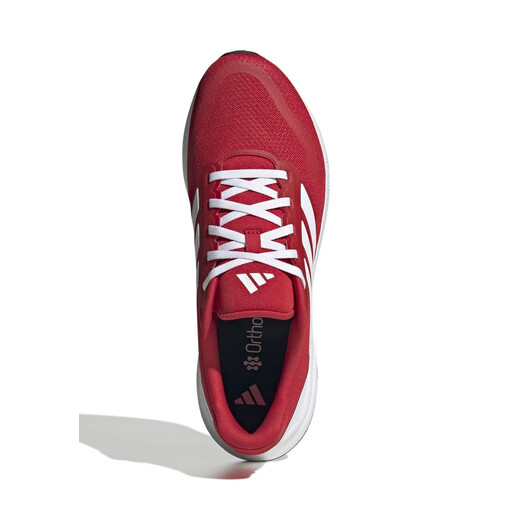
Why it suits this profile: An accessible model for beginner runners who mainly train on the road or over short distances. The product information lists Cloudfoam cushioning, a mesh upper and an Adiwear outsole.
The specifications make it clear that this model is primarily intended for road running and distances of 0–10 km. This helps you avoid choosing a flat road shoe for demanding terrain.
Mesh upper, Cloudfoam midsole, OrthoLite sockliner and adjustable lace fastening.
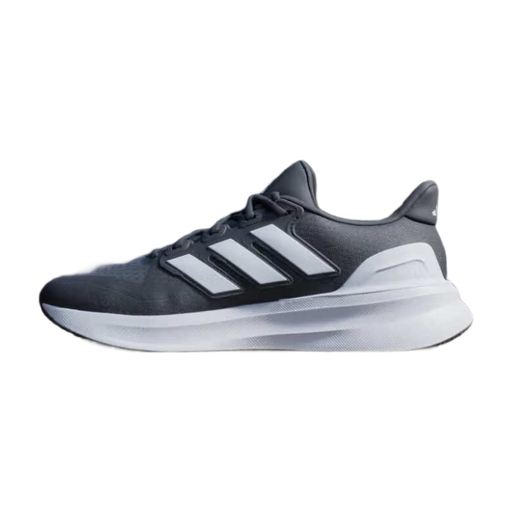
Why it suits this profile: Suitable for runners who want to increase their distances and value a lightweight, responsive midsole and a regular fit.
The product description explicitly states a regular fit and gives a foot length of 270 mm. This helps you check the fit of size 43 1/3 instead of relying blindly on the size label.
Bounce 2.0 midsole, mesh upper, OrthoLite sockliner and Adiwear rubber outsole with grip.
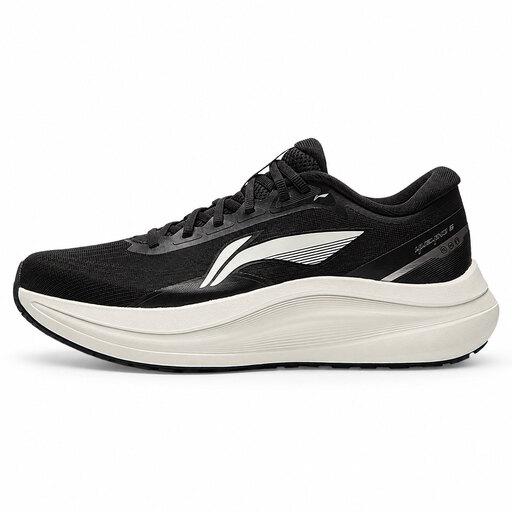
Why it suits this profile: An option for runners who prioritise extra toe room, cushioning and support during outdoor activities. The product description mentions a wide toe box and a rubber outsole with grip zones.
The stated wide toe box is more relevant than simply labelling it a men’s model. For wide feet, the product information suggests considering half a size larger if necessary.
Full-length Tempo Bounce midsole, PROBAR LOC support, extra toe room and rubber/EVA sole.
Not every model in the running-shoe category is intended for running. The adidas Run 70s 2.0, for example, is described as a retro-inspired trainer for everyday use, with a lightweight rubber sole. For school, walking or active children, this can be a practical choice, but it may lack the tread needed for muddy trails.
For trail running shoes, you could consider the PELLIOT models, among others. According to the product description, these models feature a sandwich-mesh upper, an EVA midsole and a ROCKYTEC rubber outsole. Vibram Megagrip is listed for some versions, so always check which option you select. The standard and slim-fit options are relevant for different foot shapes.
Care affects how long your shoes last. Wipe shoes clean with a damp cloth when recommended by the manufacturer, allow them to dry naturally and do not use a tumble dryer or harsh cleaning products. If you train frequently, consider alternating between two pairs. Replace a pair when the outsole shows visibly uneven wear, the heel is no longer stable or the cushioning feels noticeably different.
We have compiled a complete, up-to-date list of products that fully meet these strict selection criteria and the applicable European safety regulations.
This depends on your body weight, running style, running surface, maintenance and frequency of use. Do not look only at a fixed number of kilometres. Uneven wear, a loose-fitting heel or noticeably reduced comfort are practical signs that it is time to replace a pair.
Look for a wide last or wide toe box, and check the sizing in millimetres. The LI-NING YUEYING 6 states that it has a wide toe box. PELLIOT lists a standard and slim fit for various models. A wider shoe should still fit securely around the heel.
Not necessarily. Cushioning is a personal preference and should suit your distance, pace and running surface. Compare the midsole, weight, stability and fit. If you experience persistent pain or discomfort, it is advisable to consult a medically qualified professional rather than simply buying another model.
