
Vandaag of morgen in huis

Kwaliteit gegarandeerd

Welkomstaanbiedingen ontgrendelen: GRATIS bezorging | Tot 80% korting | Gratis 30 dagen JoyPlus-proefperiode
Download de app
Buying a pair of running shoes sounds simple, until you have to choose between women’s running shoes, men’s running shoes, unisex running shoes, trail running shoes and sporty trainers. A striking design or a well-known brand name says little about how well a shoe will fit your feet or suit your running route.
The most important question is therefore not which shoe is advertised the most, but where, how often and over what distance you will be running in them. Below, you’ll find the key buying criteria, common pitfalls and some popular choices from the range.
Lightweight running shoes often feel comfortable during short training sessions, but a low weight does not automatically tell you anything about cushioning, stability or durability. For longer distances, a shoe with a slightly firmer midsole may be more practical. So check the midsole material and intended surface rather than looking only at the weight or product title.
Running shoes for road use generally have a sole pattern designed for flat, paved surfaces. On wet woodland paths, gravel or mud, a deeper tread is more useful. Trail running shoes are usually designed for this, but may feel less smooth or comfortable on tarmac. A road and trail model is a compromise: useful for mixed routes, but not automatically suitable for technical mountain terrain.
Sizes vary between brands, models and lasts. As well as the EU size, check your foot length in millimetres or centimetres. Pay attention to the space around your toes: during a longer training session, feet can swell slightly. A toe box that is too narrow can also become uncomfortable, even when the length appears to be correct. Some models are available in a slim fit or a roomier version.
In cushioned running shoes, the midsole largely determines how the shoe feels. EVA foam is widely used because it is relatively light and can provide cushioning. The exact experience depends on the density, construction and your personal preference.
Product descriptions sometimes use terms such as “shock absorption” or “joint protection”. Treat these as claims made by the brand or seller, not as a medical guarantee. According to PELLIOT’s product description, several models use an elastic EVA midsole with cushioning and rebound. These are verifiable material specifications; how the shoe feels to you should be assessed based on fit and use.
For short runs on tarmac, a soft midsole can feel comfortable. For longer distances, a good balance of cushioning, stability and a reliable fit is more important than maximum softness.
Breathable running shoes often have a mesh upper. Mesh allows air to pass through and is generally lighter than dense synthetic material. The trade-off is that an open upper offers less protection against rain, mud and sharp branches.
According to adidas’ product description, the Runfalcon 5 has a mesh upper and a Cloudfoam midsole. The Ortholite insole is also mentioned as a moisture-regulating component. PELLIOT lists sandwich mesh and woven material, with a TPU film included on certain versions for improved durability. When buying, make sure you check which version and size are listed on the product page.
Look at the outsole if you often run outdoors in the Netherlands. For cycle paths and tarmac, a rubber sole with a relatively flat tread is usually sufficient. For woodland and gravel, deeper grooves and a more pronounced lug pattern are useful.
According to Salomon’s product description, the DRX DEFY GRVL has an All Terrain Contagrip outsole and Active Chassis support for gravel and mixed surfaces. This makes the model interesting for trail running and walks outside the city. The PELLIOT models list ROCKYTEC rubber; Vibram Megagrip is mentioned only for certain versions. So check carefully whether this technology is actually included in the variant you choose.
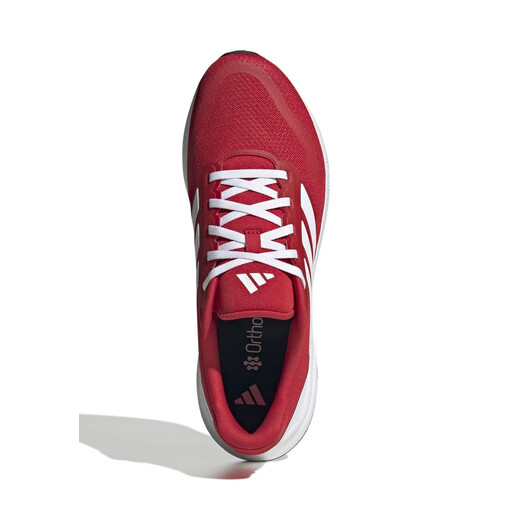
Why it suits this profile: According to the product description, this model is designed for everyday running and short distances of up to 10 km on the road. The fixed size 42 2/3 makes it especially important to check the stated foot length of 26.7 cm.
The product information lists specific materials instead of relying only on general comfort language: mesh, Cloudfoam, Ortholite and Adiwear.
Mesh upper, Cloudfoam midsole and rubber Adiwear outsole according to adidas.
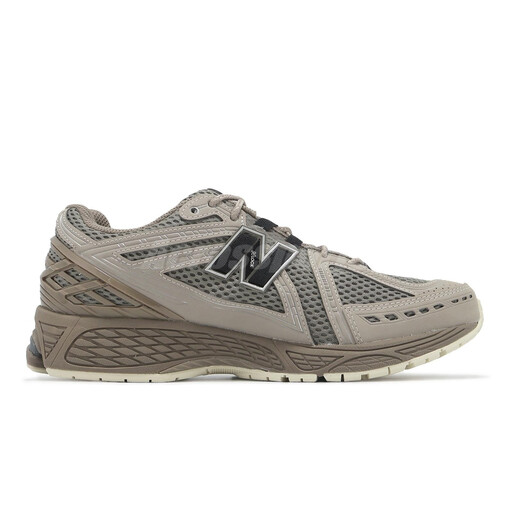
Why it suits this profile: According to the product description, this model combines mesh and synthetic material with ABZORB cushioning and Stability Web. Its retro look also works well for everyday wear outside training sessions.
The specifications identify both the upper and the sole and midsole materials, so you do not have to judge the shoe by its appearance alone.
ABZORB midsole, Stability Web and breathable mesh according to the product description.
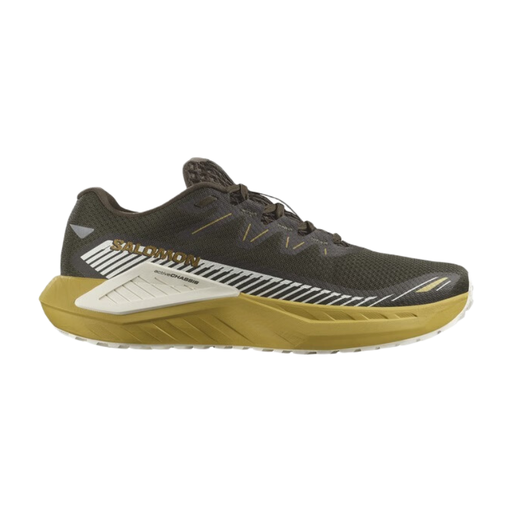
Why it suits this profile: According to Salomon’s product description, this model is designed for gravel, mixed surfaces, trail running and walking. The combination of Active Chassis, Energy Foam and All Terrain Contagrip is well suited to routes away from tarmac.
The recommended surfaces are clearly described. This makes the choice less dependent on general terms such as “all-round” or “sporty”.
Active Chassis, Energy Foam and All Terrain Contagrip according to the product description.
Measure both feet at the end of the day and compare the longer foot with the size chart. Put on the running socks you normally wear. There should usually be some room in front of your longest toe, while your heel should not lift as you walk or run.
Proper care extends the useful life of your shoes. Remove sand and mud with a soft brush, use lukewarm or cold water and leave the shoes to air-dry. Do not place them on a radiator or use a tumble dryer unless the manufacturer explicitly allows it. If you rotate between several pairs, the materials can dry out between uses and the shoes will retain their shape for longer.
There is no fixed mileage limit that applies to every pair. Look out for a worn-smooth outsole, cracks in the upper, a midsole that has collapsed unevenly or noticeably reduced comfort. With intensive use on tarmac, signs of wear may appear more quickly than with gentle walking.
We have put together a complete, up-to-date list of products that fully meet these strict selection criteria and the applicable European safety regulations.
Do not replace them based solely on a certain number of kilometres. Check the outsole, midsole and fit. If the grip has clearly deteriorated, the material is cracking or the cushioning feels different, it is worth comparing them with a new pair.
Many running shoes can also be used for walking, training and everyday use. Do pay attention to the sole, though: a road model is not always practical on muddy woodland paths. For changing routes, a model with a deeper tread may be more suitable.
Not necessarily. Fit, foot width, size and running style are more important than whether a shoe is labelled women’s or men’s. Unisex running shoes can be a good choice when the available sizes and last suit your feet. Always check the size chart and stated width.
