
Vandaag of morgen in huis

Kwaliteit gegarandeerd

Welkomstaanbiedingen ontgrendelen: GRATIS bezorging | Tot 80% korting | Gratis 30 dagen JoyPlus-proefperiode
Download de app
Buying a new pair of running shoes may seem straightforward, but an attractive appearance or a well-known brand name says little about whether they are suitable for your route. A soft sole may feel comfortable when trying them on, yet provide too little stability on tarmac. Conversely, a sturdy trail sole may be unnecessarily heavy for everyday miles around town.
Joybuy Product Recommendation Officer selects products based on verifiable product information. Pay particular attention to the surface, fit, cushioning and materials. This helps you avoid paying for features you will not use.
Running shoes for tarmac are generally designed for even surfaces and a smooth heel-to-toe transition. On mud, gravel or wet woodland paths, however, a flat rubber sole may provide less grip. Trail running shoes usually have a more pronounced tread and a sole designed for varied surfaces.
A road-and-trail model can be practical if your route combines both. However, do not automatically expect the same grip as you would get from shoes made specifically for technical terrain.
A thick or soft midsole will not feel comfortable for everyone. More important is whether your foot stays securely in the shoe and whether there is enough room around your toes. Too much movement can cause your foot to slide; a toe box that is too narrow can become uncomfortable over longer distances.
Also check whether the insole is removable. Several models in this selection have a fixed insole, including the Skechers Track-Ripkent and Track Syntac. This is relevant if you use your own insole.
A pair of sports shoes for everyday use does not always have the same fit as a running shoe. Ideally, try a model on at the end of the day, wearing the socks you run in. As well as checking the EU size, look at the stated foot length or width.
The product information for the selected models often describes a regular fit. This is a guideline, not a guarantee that every foot will experience the same amount of space. Always check the size guide on the product page.
For town routes, cycle paths and paved parks, running shoes for tarmac with a rubber outsole and even ground contact are a sensible choice. For woodland, gravel and wet paths, deeper lugs and a terrain tread are more practical.
According to the product description, the Salomon Ultra Flow is designed for a combination of road and trail running. The Salomon DRX DEFY GRVL uses an All Terrain Contagrip outsole and, according to the manufacturer, is intended for gravel and mixed surfaces. These are brand claims; check the current specifications when buying.
If you run longer distances or train regularly, you will often look for cushioned running shoes. Do not focus only on the name of the foam layer; consider the intended use as well. For example, the adidas Galaxy 7 M has a Cloudfoam midsole. According to the product information, the adidas Ultrarun 5 uses Bounce 2.0 and an Adiwear rubber outsole.
Cushioning is a comfort feature, not a medical solution. Choose a shoe that feels stable and suits your pace, distance and running surface.
A mesh upper can support airflow while keeping weight down. This makes breathable running shoes and lightweight running shoes appealing for training and warmer days. However, mesh does not always protect against rain, mud or branches.
For everyday use, a combination of mesh and synthetic material can be a practical compromise. Leather or synthetic overlays may feel more robust, but they may be less breathable than an upper made almost entirely from mesh.
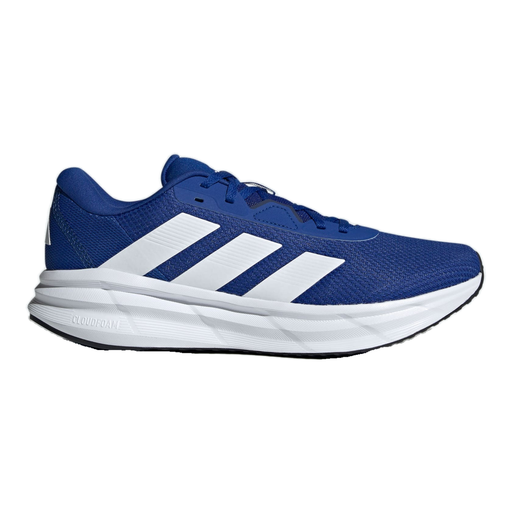
Why it suits this profile: The combination of a regular fit, lace fastening and Cloudfoam midsole is well suited to short- to medium-distance training and everyday use on paved routes.
The product information mentions use for long distances on the road, while the tread remains focused on paved surfaces. This makes it clearer when these shoes are and are not the right choice.
Cloudfoam midsole, textile upper, TPU outsole and lace fastening. The stated size is EU 42 with a foot length of 270 mm.
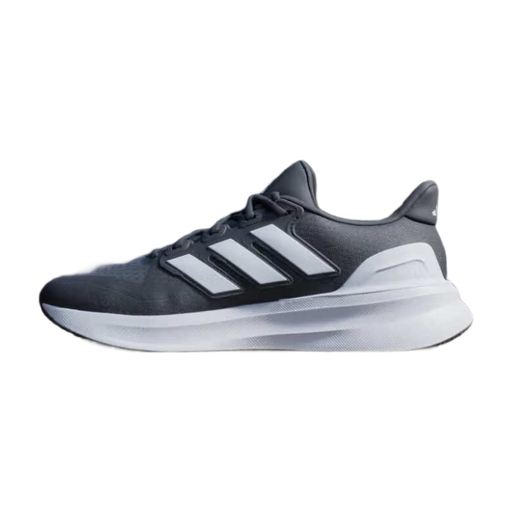
Why it suits this profile: This model is an appealing option for runners who want to combine ventilation, a responsive midsole and a grippy rubber outsole for road training.
The specifications distinguish between the mesh upper, Bounce 2.0 midsole and Adiwear outsole. This allows you to assess whether the combination is right for your route.
Mesh and synthetic material, Bounce 2.0 cushioning, an OrthoLite insole according to the product description, and an Adiwear rubber outsole.
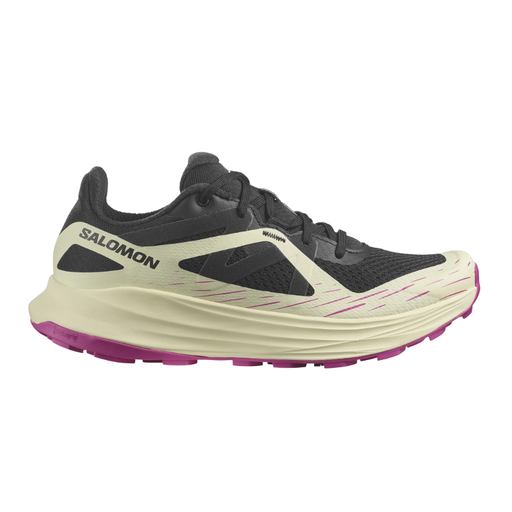
Why it suits this profile: According to the product description, this model is intended for runners who combine tarmac and trail routes and are looking for soft cushioning and a mixed-surface outsole.
The description clearly states that the shoes are suitable for road and trail use. This means you do not automatically need to choose a heavy shoe designed exclusively for off-road terrain when running a mixed route.
EVA midsole, soft synthetic materials, breathable upper and a rubber sole with a tread for mixed surfaces.
We have put together a complete, up-to-date list of products that fully meet these strict selection criteria and the applicable European safety regulations.
The difference between men’s running shoes and women’s running shoes is not just colour. Models may differ in sizing, the shape of the last and the widths available. For example, the Salomon Ultra Glide 2 W is designated as a women’s model and features a Quicklace system, Energy Surge midsole and Contagrip sole according to the product information.
Choose based on your foot shape as well, rather than solely on whether a shoe is labelled for men or women. A regular fit is not the same as a wide fit. If you have a wider forefoot, a model with more room may feel more comfortable; always check this in the size guide.
Their lifespan depends on how often you run, your body weight, the surface, maintenance and wear. Regularly check the tread, unevenly worn areas and any permanent deformation of the midsole. There is no fixed mileage limit that applies to every model. Alternate between shoes after use and allow wet shoes to air-dry.
They can be, provided the construction and fit suit the activity. According to the product descriptions, many models in this selection are suitable for both training and casual use. For long walks or a full day at work, comfort, ventilation and a stable fit are at least as important as the name on the shoe.
The price is influenced by factors including the brand, midsole, outsole, materials and construction. A more expensive model is not automatically right for your route. First compare the specifications you need: surface, cushioning, grip, weight and available sizes. That way, you pay for features you will actually use.
