
Vandaag of morgen in huis

Kwaliteit gegarandeerd

Welkomstaanbiedingen ontgrendelen: GRATIS bezorging | Tot 80% korting | Gratis 30 dagen JoyPlus-proefperiode
Download de app
A pair of running shoes might look convincing in photos, but that tells you little about how well the model will suit your feet and your route. A city runner has different needs from someone running along muddy woodland trails. Beginners, children and people looking for one pair of shoes for sport and everyday wear can also make the wrong choice by focusing only on the brand, colour or discount.
The three most common pitfalls:
Don’t look at EU size alone. Ideally, measure both feet at the end of the day, wearing the socks you plan to run in. Compare your foot length with the brand’s size chart. Running shoes usually need to leave a little room for your toes, without your heel slipping up.
Also check the width. Some models come in a standard fit and a narrower version. According to the product information, PELLIOT running shoes are available in a standard fit and a slim version for narrower feet. That’s more practical than trying to make a shoe that’s too narrow work by buying a larger size.
The midsole largely determines how a shoe feels. EVA, Dreamstrike, React and ABZORB are different materials or technologies described in the product listings as providing cushioning, spring or shock absorption. Feel is still personal: a soft shoe won’t feel stable to everyone, and a firmer shoe won’t feel comfortable to everyone.
If you’re easing into running with short to medium distances, look for cushioned running shoes in a standard fit. According to the product information, the adidas Supernova Ease has a full-length Dreamstrike midsole and a breathable mesh upper. A cushioned model can also feel comfortable for everyday wear, but don’t choose a trail shoe for running exclusively on tarmac if its deep tread feels unnecessarily heavy.
The outsole should suit the surface you run on. A flatter rubber tread generally works well on tarmac and treadmills. For woodland paths, gravel and mud, deep lugs and a durable rubber compound matter more. Check whether the shoes are explicitly described as waterproof too. GORE-TEX is included in the product descriptions for the Salomon models; don’t assume that breathable mesh shoes without a membrane are waterproof.
Waterproof running shoes can be useful in wet conditions, but a membrane may feel less breathable in warm weather. If you’ll be using them intensively in changeable conditions, it’s worth weighing up water resistance, ventilation and drying time.

Why it suits this type of runner: This unisex model is aimed at anyone looking for one lightweight pair for tarmac, park paths and easy trails. The product information lists a standard fit and an EVA midsole.
The product description mentions both breathable mesh and a ROCKYTEC rubber outsole. Check that your chosen variant has the listed features.
Lightweight upper, EVA cushioning and several foot widths, according to the product information.

Why it suits this type of runner: According to the product details, this model is designed for trail running and hiking on technical terrain. GORE-TEX, 3D Advanced Chassis and a Contagrip outsole make it well suited to wet and uneven routes.
The outsole and membrane are clearly specified, so you don’t have to rely on the word “trail” alone. Check the size and fit carefully.
GORE-TEX waterproofing, according to the product description, Quicklace and a Contagrip outsole.
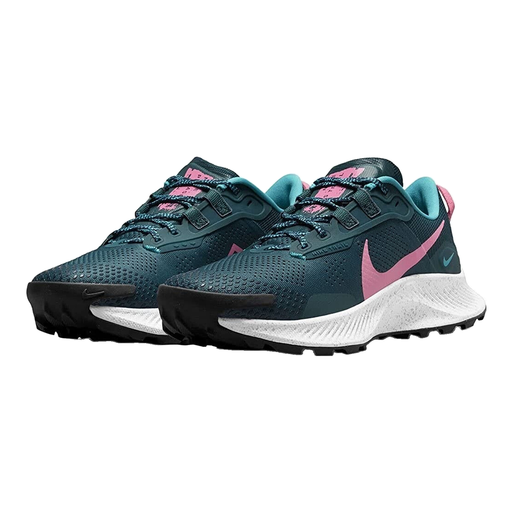
Why it suits this type of runner: According to the product information, this model is designed for routes that switch between city streets and trails. It’s a good fit for runners who don’t want to use a different pair for every route.
The product description specifies multidirectional lugs and reinforced toe and heel areas. That gives you a clearer idea of where the shoes are suited to than a general claim of versatility.
React midsole according to the product details, breathable mesh and rubber lugs for a range of surfaces.
The labels “men’s” and “women’s” aren’t just about colour. The shape of the shoe, size range and available widths can vary, so always check the specific size chart. For children, trainers with a simple fastening are often more practical. According to the product information, the New Balance PC574EVN has a hook-and-loop fastening, an EVA midsole and a treaded rubber outsole. That makes it suitable for school, play and everyday wear, but not necessarily for serious running training.
For casual outfits, Nike Dunk Low, Vans Old Skool and New Balance trainers are good places to start. These models are designed for everyday wear, not primarily for running. Training shoes, on the other hand, need to offer good ventilation and stability, as well as an outsole suited to the training surface.
After a muddy run, clean your shoes with a soft brush or damp cloth. Leave them to dry at room temperature and avoid radiators, direct sunlight and tumble dryers. Don’t put running shoes in the washing machine without checking first; always follow the care advice on the product page.
Replace your shoes when the outsole shows obvious uneven wear, the cushioning no longer feels as comfortable or the upper no longer holds your foot securely. How long they last depends on your body weight, running frequency, the surface you run on and how well you care for them. A second pair for alternating between runs can help with drying and extend their practical lifespan.
We’ve put together a complete, up-to-date list of products that meet these strict selection criteria and the applicable European safety regulations.
It depends on the model, how you use them and the surface you run on. Look out for wear on the tread, cracks in the upper and a midsole that feels less springy. There’s no single mileage limit that applies to every pair.
They can be, especially for rainy routes or walks. Depending on how they’re made, a waterproof membrane may feel less breathable than open mesh. For warm weather and dry runs on tarmac, a well-ventilated model may be more practical.
Yes, many models are suitable for walking if the fit and outsole feel comfortable. Trail running shoes are especially useful on unsurfaced, wet or uneven paths. For everyday wear, ordinary trainers or walking shoes may be better suited to your pace and the surfaces you walk on.
