
Vandaag of morgen in huis

Kwaliteit gegarandeerd

Welkomstaanbiedingen ontgrendelen: GRATIS bezorging | Tot 80% korting | Gratis 30 dagen JoyPlus-proefperiode
Download de app
Buying a new pair of running shoes sounds simple until you have to choose between cushioning, grip, stability, waterproofing and fit. A shoe that feels comfortable on tarmac may not provide enough support on muddy paths. Conversely, a trail model with deep lugs can feel stiff during a long road run.
The right choice therefore starts with how you plan to use them, not with the brand or colour. Where do you usually run? How long are your training sessions? And do you really need protection from rain?
Many models are described as versatile, but there is still a difference between road running shoes, gravel models and genuine trail running shoes. A smooth or lightly lugged outsole usually works well on tarmac and hard-packed paths. On wet roots, loose stones or mud, you need deeper lugs and a multi-directional tread.
Use a shoe primarily on the terrain it was designed for. A hybrid model may be suitable for commuting runs on tarmac and gravel, but that does not automatically mean it is intended for technical trails.
Brands generally describe a GORE-TEX membrane as providing water protection while remaining breathable. That does not mean your feet will stay dry in all conditions. Water can, for example, enter through the ankle opening. Moisture from perspiration can also take longer to escape through a sealed membrane.
Waterproof running shoes or GORE-TEX running shoes are particularly practical in rain, on wet grass and in cold mud. On warm, dry days, an upper made from highly breathable mesh may feel more comfortable.
Soft cushioning feels comfortable straight away, but it says little about grip, torsional stiffness or fit. A lightweight, fast-feeling marathon shoe is not automatically suitable for someone who mainly runs on uneven woodland paths. Always consider the combination of midsole, outsole tread, weight and support.
When looking for running shoes with good grip, consider the type of rubber and the height of the lugs. An outsole with lugs of around 3.5 mm, as listed for the Salomon Pulsar Trail, is designed to deliver speed and grip on relatively smooth terrain. This construction differs from an outsole with deep, sharp grooves for soft ground.
For running shoes for mud and off-road terrain, deep lugs are more useful. On tarmac, however, they can feel less smooth and quieter underfoot. An all-terrain outsole is a compromise for anyone who regularly switches between different surfaces.
The midsole largely determines how a shoe feels. EVA and foam constructions are often used for cushioning. Manufacturers may also use terms such as Energy Foam, Cloudfoam, React or Bounce. Treat these names as product information, not as a guarantee of a particular running experience.
Pay particular attention to:
If you are specifically looking for marathon running shoes, it is worth deciding first whether comfort, low weight or speed is the most important criterion. A carbon plate or race-focused construction is not necessary for every training session.
A shoe should hold your heel securely without pinching. There should be roughly a thumb’s width of space in front of your toes, particularly if you run longer distances or wear thicker socks. Do not choose women’s running shoes or men’s running shoes based solely on the label: the last and internal space vary from one model to another.
Check the product size guide and compare the stated foot length with a measurement of both feet. Ideally, try shoes on with the socks you use when running. A toe box that is too narrow or a loose heel can cause irritation after just a few kilometres.
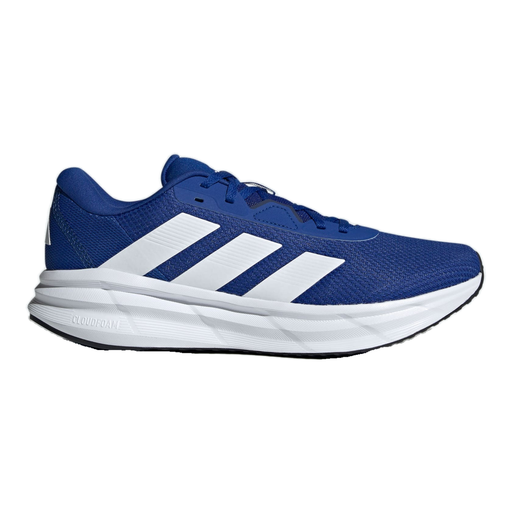
Why it suits this profile: This model is designed for everyday road training and, according to the product description, offers a regular fit, a Cloudfoam midsole and a textile upper. That makes it a practical starting point for beginners running on tarmac.
The product information clearly states that it is intended for long-distance road training. Do not therefore expect aggressive trail grip for mud or loose stones.
Cloudfoam cushioning, a textile upper and TPU outsole according to the product specifications.
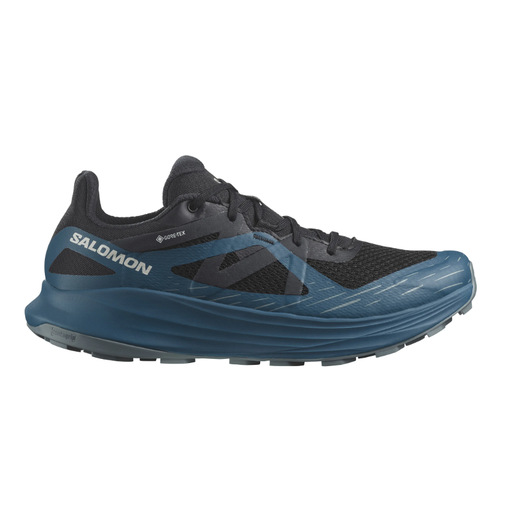
Why it suits this profile: For runners who want to combine road comfort with off-road outings, the product page lists a higher midsole, GORE-TEX membrane and Contagrip outsole for mixed terrain.
The combination of road and off-road functionality makes it clear what this hybrid shoe is designed for: varied routes rather than technical trails exclusively.
GORE-TEX membrane, higher midsole and Contagrip outsole for road and mixed terrain, according to the product information.
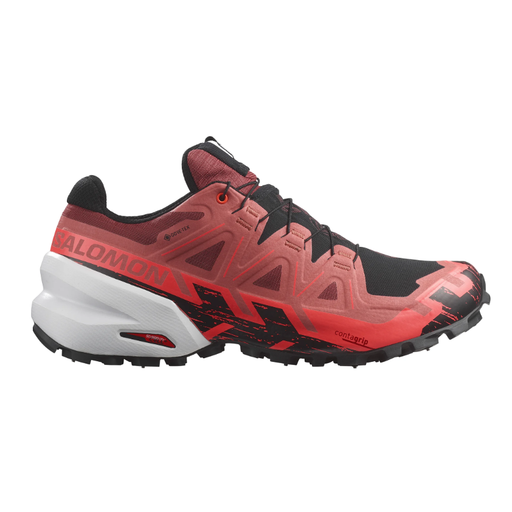
Why it suits this profile: According to the product description, this model is designed for winter trails and outdoor activities. The outsole has 12 tungsten spikes and a GORE-TEX construction for wet and cold conditions.
The spikes make its intended use very specific. This is not the obvious choice for everyday running on tarmac, where metal studs are unnecessary.
12 tungsten spikes and GORE-TEX protection according to the product specifications.
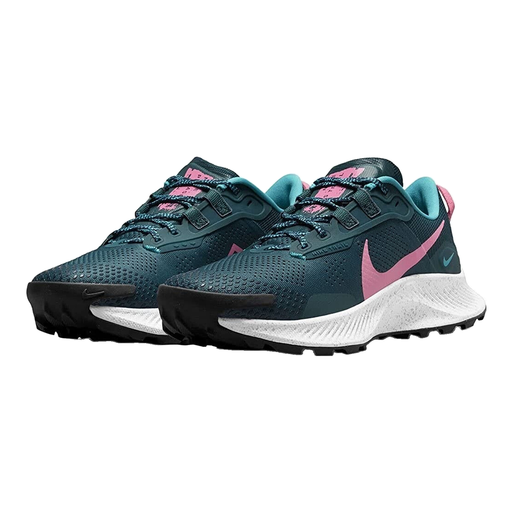
Why it suits this profile: The product information mentions a React midsole, multi-directional lugs and reinforced toe and heel areas. That makes it suitable for runners combining city, park and rougher terrain.
The combination of city and trail use is explicitly described. However, check that the fit and grip suit your chosen terrain.
React foam, mesh upper and multi-directional tread lugs according to the product description.
We have put together a complete, up-to-date list of products that fully meet these strict selection criteria and the applicable European safety regulations.
Lifespan depends on body weight, surface, running frequency and maintenance. There is no universal mileage at which every shoe should be replaced. Look out for visible wear on the outsole, a midsole that has collapsed unevenly or an upper that no longer fits securely.
After a muddy run, clean your shoes with a soft brush and lukewarm water. Leave them to air-dry and avoid radiators, tumble dryers and direct heat. For GORE-TEX models, it is advisable to follow the care instructions on the label. Do not wear the same pair continuously: alternating between pairs gives the materials time to recover and helps moisture evaporate.
Replace them when the cushioning, grip or fit noticeably deteriorates. Do not focus only on the age of the shoes, but above all on their wear and how they have been used. Extensive tarmac mileage puts different demands on the outsole than soft woodland ground.
You can use them for short connecting sections, but comfort and wear depend on the tread. Deep lugs can feel less smooth on tarmac and may wear down faster. If you regularly switch between the city and woodland, consider a hybrid model with an all-terrain outsole instead.
They are practical in rain, on wet grass and in cold conditions. In warm, dry weather, a more breathable mesh model may feel more comfortable. A waterproof membrane also cannot prevent water from entering through the collar or upper of the shoe.
