
Vandaag of morgen in huis

Kwaliteit gegarandeerd

Welkomstaanbiedingen ontgrendelen: GRATIS bezorging | Tot 80% korting | Gratis 30 dagen JoyPlus-proefperiode
Download de app
New running shoes may seem straightforward to choose at first glance. Yet terms such as “maximum cushioning”, “all-terrain” and “waterproof” do not always tell you what you actually need in practice. A shoe for a flat cycle path requires different features from a model for muddy woodland trails. Fit, size and care also affect how long your purchase remains suitable for use.
As a Joybuy Product Recommendation Officer, I filter the most important product specifications, so you can compare marketing terms with tangible features.
Running shoes for roads and trails do exist, but a compromise is still a compromise. An outsole with deep lugs can provide plenty of grip on mud and loose ground, but may feel less smooth on flat tarmac. A flat rubber outsole is comfortable on the street, but does not automatically provide enough traction on wet tree roots or loose stones.
So start by considering how you will use them:
A soft midsole feels pleasant when trying shoes on, but that does not mean the shoe will suit every foot or running style. EVA, React, Cloudfoam, ABZORB and other types of foam have different properties. Check the product description for the material and see whether the shoe is designed for short runs, long distances or mixed use.
Also consider stability. A firm heel construction, a wider base or a supportive element can give your foot more support. This is not a guarantee of a particular running result. It is mainly about the combination of fit, sole construction and personal preference.
A model may be described as “true to size”, but sizing varies between brands and versions. Measure both feet at the end of the day, wear the socks you use for running and compare your foot length with the size chart.
Also check:
On some product pages, the title and size information may be displayed differently. Before ordering, always check the current size options and size chart.
For hard surfaces, cushioned running shoes are comfortable when you spend longer periods running on tarmac. EVA foam is lightweight and is often used to combine shock absorption with responsiveness. The PELLIOT models are listed as featuring a high-elasticity EVA midsole. According to the product description, it is designed to provide rebound and cushioning on different surfaces.
According to the product specifications, the adidas Runfalcon 5 uses a Cloudfoam midsole and Ortholite sockliner. This makes this type of shoe interesting for beginner runners and short distances, but the product description specifically states that the model is intended for road training and distances of 0 to 10 km.
Shoes with good grip have an outsole suited to the terrain. When looking for trail running shoes, consider:
According to the product description, the Nike Pegasus Trail 3 has a rubber outsole with multidirectional lugs. The PELLIOT models list a ROCKYTEC rubber outsole; Vibram Megagrip is specified for selected versions. Check which version you are selecting in the specific listing, as not every variant necessarily has the same outsole.
Breathable running shoes with mesh generally release heat and moisture more easily than fully enclosed materials. This is practical in warm weather and during longer training sessions. However, mesh does not automatically protect against rain.
A model with GORE-TEX, such as the Salomon Speedcross 5 GTX W and Speedcross 6 GTX W, is designed according to the product description with a water-repellent, breathable membrane. A membrane can help keep out rain and splashes, but the level of protection also depends on the seams, tongue construction, how long you run in wet conditions and water entering from above. “Waterproof” therefore does not mean that your feet will stay dry in every situation.
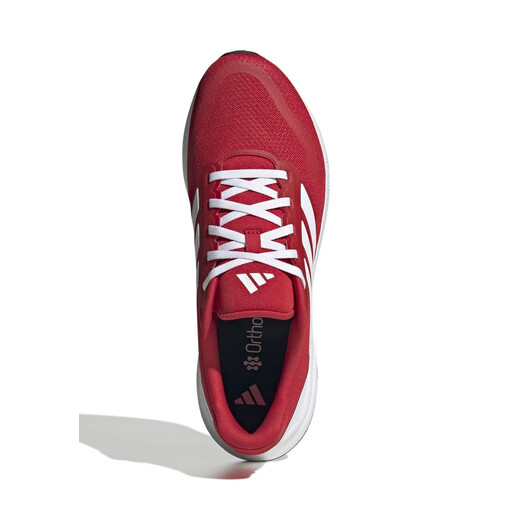
Why it suits this profile: The product description focuses on road training and short distances. The mesh upper and Cloudfoam midsole are well suited to everyday running on tarmac.
The intended use and distance are clearly stated, so you do not need to choose this model for demanding trail use.
Mesh upper, Cloudfoam midsole, Ortholite sockliner and Adiwear rubber outsole.
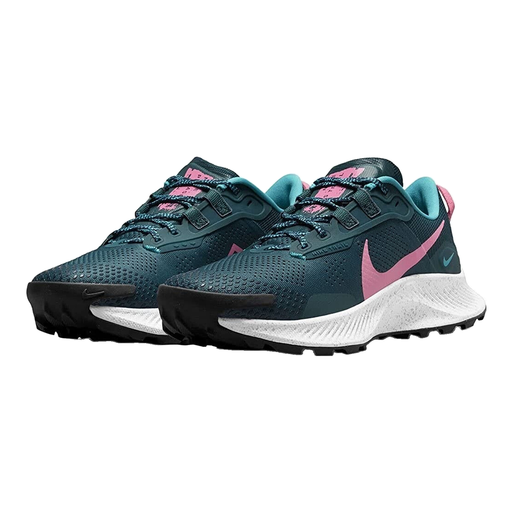
Why it suits this profile: According to the product information, this model is designed for the transition between city and trail, with React foam, mesh and an outsole featuring multidirectional lugs.
The description mentions both city and trail use, so the choice is not based solely on a general “all-terrain” claim.
React midsole, breathable mesh, reinforced toe and heel, rubber outsole with multidirectional lugs.
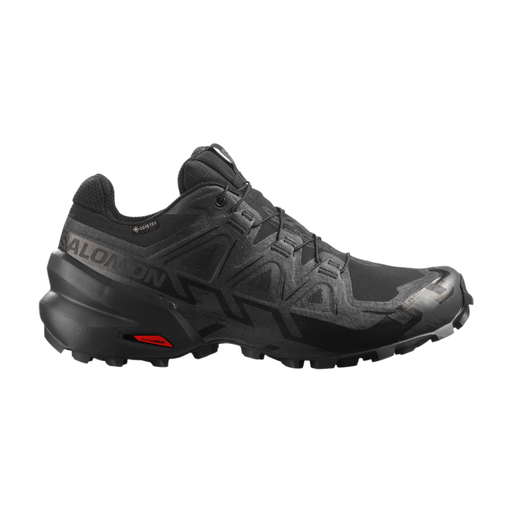
Why it suits this profile: For female trail runners who often run on muddy or uneven paths, the product description mentions a GORE-TEX membrane, Contagrip outsole, Sensifit fit and Quicklace system.
The intended terrain and the membrane provided are mentioned separately. However, check what level of protection you need in prolonged rain.
GORE-TEX according to the product description, deep Contagrip grooves, EVA midsole and adjustable Quicklace system.
We have put together a complete, up-to-date list of products that fully meet these strict selection criteria and the applicable European safety regulations.
Their lifespan depends on body weight, running frequency, surface, storage and care. Do not focus only on mileage. Replace a pair when the outsole shows visibly uneven wear, the tread has become significantly flattened or the midsole feels less responsive. Alternate between pairs if you run several times a week and allow wet shoes to dry naturally.
First look for the right fit and foot length, rather than focusing only on the label “women’s running shoes” or “men’s running shoes”. Some models are specifically shaped for a woman’s foot; others are unisex and offer different widths. Check the size chart, the space around the toes and the width of the heel. A good fit is more important than the name used on the product page.
Yes, many comfortable sports shoes are also suitable for walking or everyday use. A road model with light cushioning and a breathable upper is generally a good choice for walks in town. For wet woodland paths or hilly terrain, trail running shoes with more pronounced tread are more practical. Do not automatically use a lightweight, flexible model on rocky routes; check the outsole and upper protection first.
