
Vandaag of morgen in huis

Kwaliteit gegarandeerd

Welkomstaanbiedingen ontgrendelen: GRATIS bezorging | Tot 80% korting | Gratis 30 dagen JoyPlus-proefperiode
Download de app
A school backpack for children needs to do more than look good. It goes to school, sports, sleepovers and sometimes on holiday. Yet many parents choose a bag mainly for its colour or character design. That can lead to a bag that turns out to be too small, wears out quickly or is awkward to use.
In this buying guide from the Joybuy Product Recommendation Officer, you’ll find out what to look for objectively. Compare an ergonomic school backpack, a girls’ school backpack, a boys’ school backpack or a children’s backpack by the features that make a difference every day.
A Peppa Pig backpack, PAW Patrol backpack or Gabby’s Dollhouse backpack can get children excited about carrying their bag. But an appealing design tells you nothing about the number of compartments, space for A4 folders or room for a water bottle.
So check the following in advance:
A bag with one large compartment may be perfectly suitable for young children who don’t carry much. For older primary school pupils, a backpack with several compartments is often easier to keep organised.
Many school bags are described as water-resistant, water-repellent or waterproof. These terms don’t automatically mean the same thing. A water-resistant school backpack will generally protect against light rain or spilled liquids, but that doesn’t mean it will keep everything dry in prolonged, heavy rain.
Check the exact product description. If it only says the material is water-resistant or splash-proof, consider using a separate rain cover in persistent rain. Also check whether the zips and seams are adequately covered.
A lightweight school bag is handy, but its weight when empty isn’t the only thing to consider. A 420-gram bag may suit a primary school child, while a larger 650-gram backpack offers more space and a laptop compartment. The right choice depends on what needs to go inside.
Fit matters too. Wide, padded, adjustable shoulder straps help the bag sit more comfortably. Treat this as a comfort feature, not a medical benefit: a backpack is no substitute for good carrying advice or a suitable posture.
For young children, a compact bag of around 29 × 22 × 9 cm is often suitable for a few snacks, toys or light school supplies. The VADOBAG Gabby’s Dollhouse Unlimited has these dimensions and a main compartment for everyday use.
For children in Years 2 to 5, a larger backpack may be more practical. Check that it can hold A4 books, folders and a lunchbox. A capacity of 17 to 22 litres usually offers more flexibility, but a larger bag can also become too heavy more quickly when it’s full.
As well as weight, compare:
Reflective strips don’t automatically make a child visible in every situation. They’re still a practical feature to consider when comparing bags, especially on dark mornings.
Polyester, nylon and Oxford fabric are commonly used for school backpacks. Don’t just look at the material name; check the finish too. Product descriptions may mention water-resistant polyester, scratch-resistant Oxford fabric, reinforced seams or double zips.
Also check the care instructions. Some bags can only be cleaned with a damp cloth or washed by hand. This helps avoid disappointment after putting one through the washing machine.
A school backpack with a laptop compartment is especially useful for teenagers or pupils who carry a laptop or tablet. Always check the maximum size. A compartment for laptops up to 15.6 inches doesn’t mean every model will fit with its case.
An integrated USB socket also only works with your own power bank; one isn’t included with the KONO models mentioned here. Think of it as a handy feature, not a built-in battery.
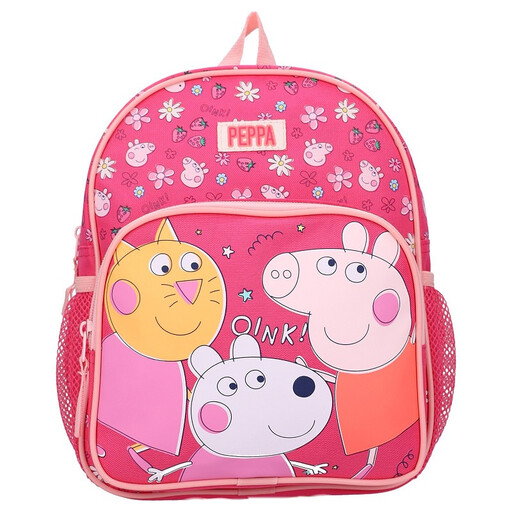
Why it suits this need: A simple children’s backpack for school, outings and everyday use, with a familiar Peppa Pig design and a practical front pocket.
The front pocket stops small items from getting lost in the main compartment. Check in advance, though, whether the bag is large enough for A4 folders.
Adjustable shoulder straps, a front pocket and a child-friendly design.
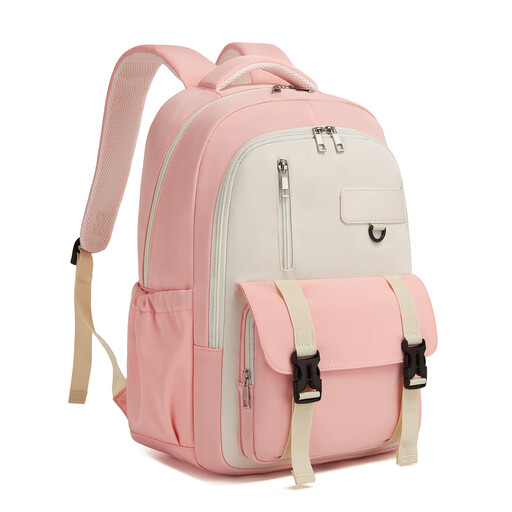
Why it suits this need: For pupils who want to carry A4 books, lunch, a water bottle and electronics in one 22-litre bag.
The compartments make it easier to organise the weight. According to the product description, the water-resistant polyester is designed for light rain and spills, not as a guarantee of complete waterproofing.
22-litre capacity, padded laptop compartment for laptops up to 15.6 inches, several compartments and a weight of 0.65 kg.
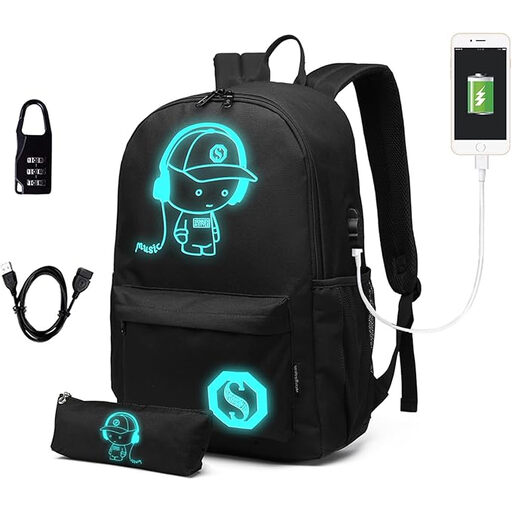
Why it suits this need: Designed for teenagers and pupils who want a laptop compartment, plenty of storage and a stand-out glow-in-the-dark design.
The bag combines a main compartment with laptop storage and side pockets. According to the product description, the luminous effect requires 10–20 minutes of exposure to light.
Laptop compartment for laptops up to 15.6 inches, USB port for your own power bank, two side pockets and a pencil case included.
We’ve put together a complete, up-to-date list of products that meet these strict selection criteria and the applicable European safety regulations.
It depends on the child’s age and build, as well as how much school equipment they need to carry. A compact, lightweight school bag is often enough for young children. From Year 2 or 3 onwards, space for A4 books, a lunchbox and a water bottle becomes more important. If you’re unsure, measure the largest folder or book and compare it with the product dimensions.
Lifespan varies depending on the material, how much the bag carries and how it’s cared for. Look for reinforced seams, sturdy zips and hard-wearing polyester, nylon or Oxford fabric. A bag will generally last longer if you don’t overfill it, clean it with a damp cloth as instructed and avoid forcing the zips.
Not necessarily. In product descriptions, “ergonomic” may refer to padded straps, a breathable back panel or an adjustable fit. Compare these specific features and choose a size that suits the child and what they need to carry. A backpack with reflective strips or several compartments may also be more useful than extra features that are rarely used.
