
Vandaag of morgen in huis

Kwaliteit gegarandeerd

Welkomstaanbiedingen ontgrendelen: GRATIS bezorging | Tot 80% korting | Gratis 30 dagen JoyPlus-proefperiode
Download de app
A laptop backpack needs to do more than just carry your laptop. In the Netherlands, a bag often has to contend with rain, overloaded bike panniers, busy trains and being packed and unpacked every day. Yet many people buy one based on an appealing photo or a vague claim such as “waterproof”, without checking the details.
The main pitfalls are:
First, check your laptop’s dimensions and compare them with those given for the laptop compartment. With a backpack for a 15.6-inch laptop, the screen size is only a guide. A separate padded compartment is useful because it helps prevent your device from knocking against books, keys or a water bottle.
The overall dimensions and capacity also matter for school or your daily commute. A school backpack for A4 books usually needs more height than a compact business bag. A capacity of around 20 to 24 litres often offers a practical balance of space for a laptop, documents and personal belongings, but the layout determines how much of that space is actually usable.
Check the material and the wording used in the product description:
According to the product description, the KONO Water Resistant Laptop Backpack is made from PVC-coated polyester and designed to be water-resistant. That’s useful information, but it doesn’t guarantee that the contents will stay dry in all weather conditions. In heavy rain, consider using a separate rain cover.
A lightweight backpack reduces the weight of the bag itself, but a good fit is still important. Check whether the shoulder straps are adjustable and padded, and whether the back panel offers ventilation. If you’re carrying a heavier load, a chest strap can help keep the bag more stable.
For air travel, the airline’s rules are what matter. A carry-on backpack or underseat backpack must meet the airline’s requirements. Measure the bag when fully packed; even a soft bag can become too large if overfilled. A trolley strap is handy when travelling, but it doesn’t tell you whether the bag meets the permitted size limits.
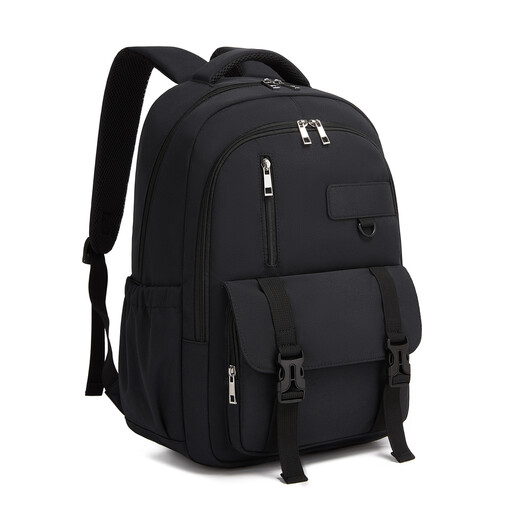
Why it suits this profile: This backpack is aimed at pupils and students who want to carry A4 books, a lunchbox and a laptop in one bag. Its stated capacity is 22 litres and it weighs 0.65 kg.
The product description mentions a separate padded laptop compartment, several pockets and space for A4-sized items. However, read “water-resistant” as protection against light rain and spills, not as fully waterproof.
22-litre capacity, laptop compartment for laptops up to 15.6 inches, padded shoulder straps and a hidden pocket for small valuables.
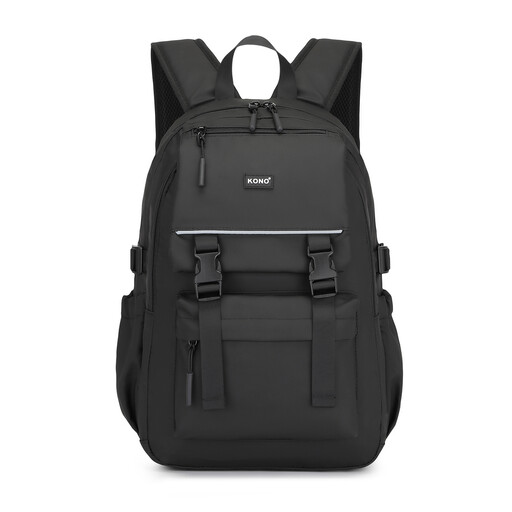
Why it suits this profile: Commuters and business users get a smart backpack with a clear layout, reflective details and a strap for attaching it to a suitcase.
The specifications identify both the laptop compartment and the material: PVC-coated polyester. This makes it easier to assess the level of water protection than when a product is described simply as “waterproof”.
Padded compartment for a laptop up to 15.6 inches, organiser pocket with pen holders, two side pockets, reflective strips and a trolley strap.
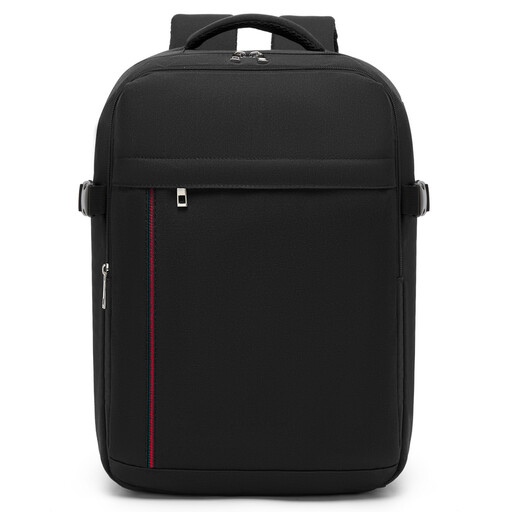
Why it suits this profile: This travel backpack is designed for flyers who want to stow a compact bag under the seat while keeping a laptop and clothes organised.
The stated dimensions of 40 x 30 x 20 cm make it easier to compare the bag with your personal-item allowance. Always check your airline’s current rules before you travel.
24-litre capacity, 180-degree opening, padded compartment for a 15.6-inch laptop, multiple organiser pockets and padded shoulder straps.
We’ve put together a complete, up-to-date list of products that meet these strict selection criteria and the current European safety requirements.
No. The size usually refers to the screen diagonal, and laptops with the same screen size can have different bezels and thicknesses. So measure your laptop and compare those dimensions with the actual laptop compartment. A little extra room can be useful, but a compartment that’s too roomy will offer less support.
It depends on your route and the weather. For short rides in light rain, a water-resistant backpack may be enough. If you cycle in prolonged rain every day, look for a clearly specified waterproof construction or use a separate rain cover. It’s also a good idea to keep important electronics in a protective case.
Its lifespan depends on the material, zips, seams, load and how you use it. Don’t overfill the bag, lift it by the handle if the manufacturer allows this, and follow the care instructions. Many synthetic backpacks can be cleaned with a damp cloth; only machine-wash one if the product information explicitly says that it’s suitable.
