
Vandaag of morgen in huis

Kwaliteit gegarandeerd

Welkomstaanbiedingen ontgrendelen: GRATIS bezorging | Tot 80% korting | Gratis 30 dagen JoyPlus-proefperiode
Download de app
A cracked screen from a single drop, a phone that dies after a rain shower, or a battery that's empty halfway through the workday. Sound familiar? For those who work in construction, logistics, or love the outdoors, a standard smartphone often can't handle the daily grind. A rugged smartphone isn't a luxury—it's a necessity.
This article serves as a practical guide. We'll explain what to look for when buying and highlight several popular choices designed for harsh conditions. This will help you find a model that suits your work or adventures.
The term 'rugged' is used often, but what does it really mean? Pay attention to the following specifications to find a model that can truly take a beating.
These codes are the most important indicators of durability.
A smartphone with a large battery is crucial if you work long days without access to a power outlet. While a standard smartphone often has a battery around 5,000 mAh, rugged models frequently feature 8,000 mAh, 10,000 mAh, or even more. This translates to several days of use under normal conditions. Also, pay attention to the charging speed (expressed in Watts) and whether the phone supports 'reverse charging', which allows you to charge other devices.
An outdoor phone or construction phone often has unique features that make a real difference in the field. Consider:
Based on objective specifications, we have selected several DOOGEE smartphone models that excel in durability and functionality.
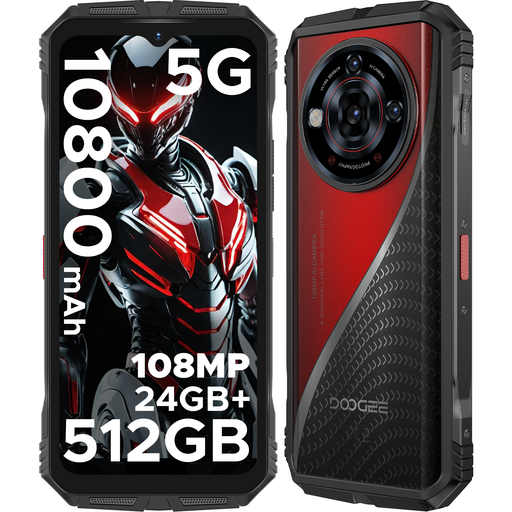
Why it stands out: This model combines ruggedness with specs you'd typically find in a high-end smartphone. The powerful processor, large memory, and 120Hz screen make it suitable for demanding apps and multitasking.
Pros:
Who is this phone for? For the professional or adventurer who doesn't want to compromise. If you need both extreme durability and the speed and features of a premium smartphone, this is a strong contender.
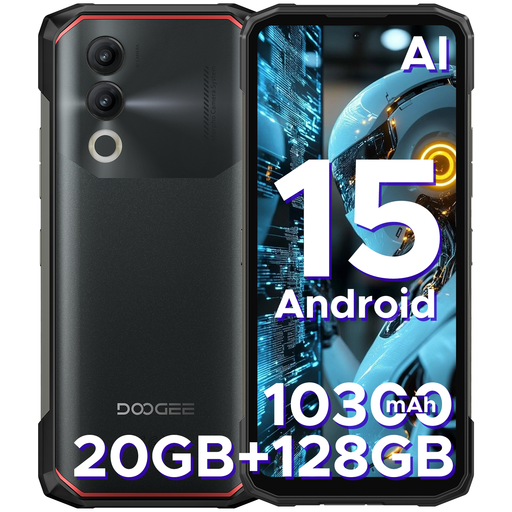
Why it stands out: The Blade 20 focuses on the essentials: a gigantic battery and reliable performance at an accessible price. It is a true workhorse.
Pros:
Who is this phone for? Ideal for users whose absolute priority is battery life. Think long-haul drivers, campers, or anyone who is away from home for days and needs a reliable, durable phone for basic tasks and communication.
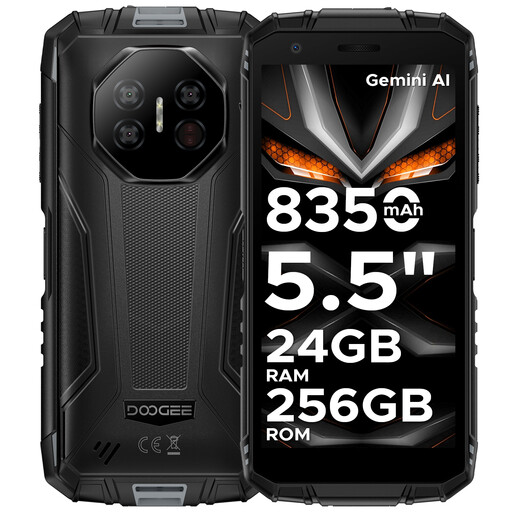
Why it stands out: This model proves that a rugged phone doesn't always have to be big and bulky. The Fire 3 Ultra is relatively compact and lightweight but doesn't compromise on durability or battery life.
Pros:
Who is this phone for? Perfect for those who need the durability of a construction phone but prefer a more compact size that fits easily in a pocket. Suitable for both professional use and daily adventures.
A rugged phone protects your digital life on the go. But what about securing your workshop or home? For those looking for smart security solutions, we also have a selection of electronic smart locks that you can control with your smartphone.
1. What is the difference between IP68 and IP69K? IP68 guarantees that a phone is dustproof and resistant to submersion in water (usually up to 1.5 meters for 30 minutes). IP69K adds protection against high-pressure, high-temperature water jets. This is relevant for environments where equipment is power-washed, such as in industry or agriculture.
2. Are rugged smartphones truly indestructible? No phone is indestructible. A shockproof phone with MIL-STD-810H certification is designed to survive drops from a certain height (often 1.5 to 1.8 meters) onto a hard surface. However, an unlucky drop onto a sharp object or a fall from a great height can still cause damage, especially to the screen or internal components. The protection is significantly better, but not absolute.
3. Are all rugged phones heavy and bulky? Traditionally, yes, but that perception is changing. While models with the largest batteries are still substantial, more compact options are entering the market, like the DOOGEE Fire 3 Ultra. These models offer a good balance between durability and portability for those who don't want an extremely large phone.
