
Evening viewer who values contrast
Usually watches rugby with the lights off and wants to distinguish dark and bright areas of the picture clearly.


OLED is a natural starting point for watching rugby in a dark room: RTINGS describes OLED as well suited to dark viewing conditions. Mini-LED LCD may be a better fit if you also often watch TV in a bright room or want to avoid displaying static images for long periods. Assess motion using match footage, measure your viewing distance and don’t assume a high gaming refresh rate means a broadcast will look smoother.
Usually watches rugby with the lights off and wants to distinguish dark and bright areas of the picture clearly.
Keeps an eye on the ball and players during fast camera movements and wants to assess motion using match footage.
Watches with others from different spots and weighs up screen size, viewing distance and the picture from an angle.
A good fit if: you usually watch in a dark room and value deep blacks and contrast.
Bear in mind: static images displayed for long periods, such as a frequently visible scoreboard, may cause burn-in.
A good fit if: you also regularly use the TV in a bright room or want to avoid displaying static images for long periods.
Bear in mind: black levels and potential blooming vary by model; compare local dimming and viewing angles.
| What to consider | What should you check? | Who is this important to? |
|---|---|---|
| Dark scenes and contrast | Compare dark scenes on the exact models; with Mini-LED, also look out for potential blooming. | If I mainly watch with the lights off, I want to make out details in dark areas of the picture. Around 36% of consumers give contrast in a dark room top priority. |
| Motion and picture source | Watch fast-paced match footage using the source you plan to use, and look for blur and processing artefacts. | If I want to keep track of the ball during fast play, I want to assess the picture on the TV itself. Around 29% of consumers prioritise motion and picture source. |
| Screen size and viewing angle | Measure your viewing distance, available space and the position of the stand or wall bracket. The Consumentenbond suggests dividing viewing distance by around 2.4 as a starting point for the screen diagonal; use the same unit of length for both measurements. | If we watch from different spots, I want a screen size that suits the room and is still practical to view from the seats at the sides. Around 21% of consumers give size and viewing angle top priority. |
| Power consumption and long-term use | Compare the energy label for the exact screen size and consider how often fixed images, such as a scoreboard, will be on screen. | If I use the TV often or watch fixed picture elements for a long time, I also want to take power consumption and the effects of long-term use into account. Around 14% of consumers prioritise these points. |
A stated maximum for compatible gaming or VRR doesn’t prove that a TV will display a broadcast more smoothly.
Watch fast-paced match footage on the exact model and look for both blur and motion-processing artefacts.
Screen size doesn’t tell you whether the TV will fit the available space or be easy to view from every seat. The energy label helps you compare the power consumption of the model you choose, but your viewing hours and settings also play a part.
Measure your viewing distance and available space, and compare the label for the exact screen size.
According to ACM ConsuWijzer, there is no fixed time limit for the statutory guarantee in the Netherlands: it depends on what you can reasonably expect from the product under normal use. A manufacturer’s warranty for a set period does not end that statutory right.
Keep your proof of purchase and contact the retailer if a fault develops unexpectedly.
The OLED evo C6 range is worth considering if you want to compare OLED contrast across different screen sizes.
The S95H OLED range is worth a look if you’re considering a 65-inch OLED with an anti-reflective screen.
BRAVIA 5 is a Mini-LED LCD alternative to consider if you also use the TV with more ambient light.
OLED810 combines OLED with Ambilight, for anyone who wants to factor the glow behind the screen into their choice.
These Joybuy products are OLED TVs in a range of screen sizes, suited to anyone who mainly watches in a dark room. Choose a size that works for your viewing distance and available space.
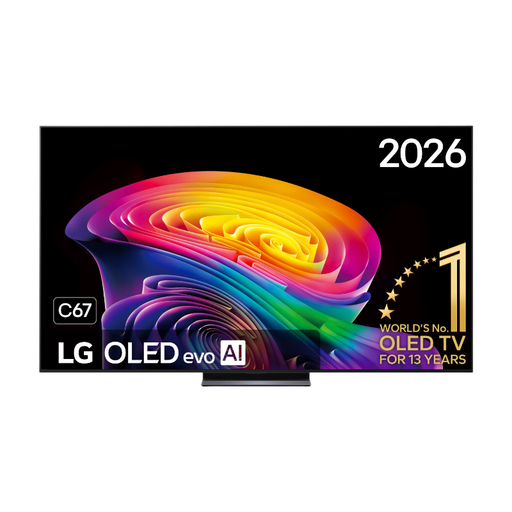 No image available
An OLED option for watching rugby in a dark room; bear in mind the potential for burn-in when displaying static images for long periods.
83 inches, OLED and 4K.
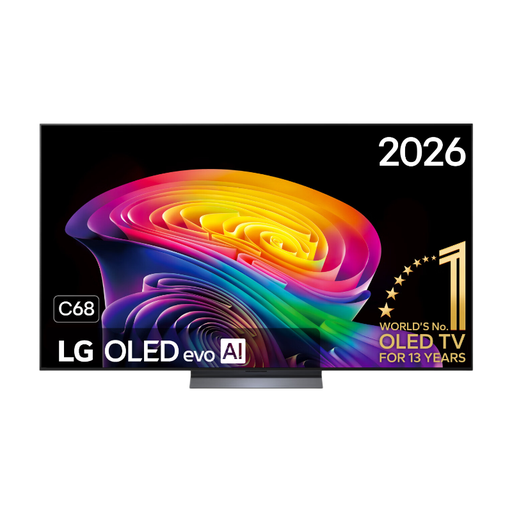 No image available
An OLED option for watching rugby in a dark room; bear in mind the potential for burn-in when displaying static images for long periods.
65 inches, OLED and 4K.
No image availableAn OLED option for watching rugby in a dark room; bear in mind the potential for burn-in when displaying static images for long periods.
55 inches, OLED and 4K.
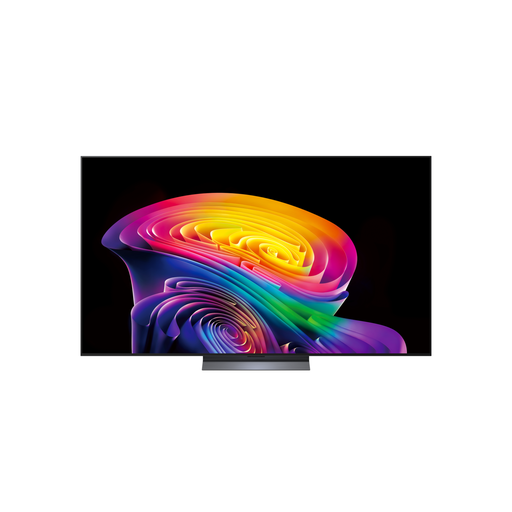 No image available
An OLED option for watching rugby in a dark room; bear in mind the potential for burn-in when displaying static images for long periods.
42 inches, OLED and 4K Ultra HD.
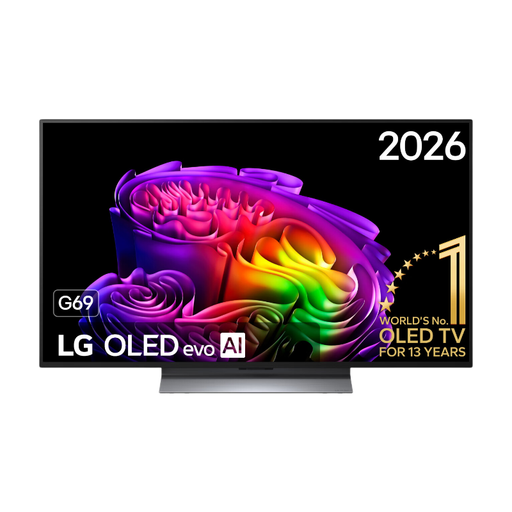 No image available
An OLED option for watching rugby in a dark room; bear in mind the potential for burn-in when displaying static images for long periods.
48 inches, OLED and 4K.
No. A stated maximum in a gaming or VRR context doesn’t prove how a TV displays a broadcast. Assess match footage using your own source and check the motion settings on the exact model.
Measure your viewing distance and available space. The Consumentenbond suggests dividing viewing distance by around 2.4 as a starting point for the screen diagonal, with both measurements in the same unit. Also check the TV and stand dimensions.
Compare the EU energy label for the exact model and screen size; it shows consumption in kWh per 1,000 hours. The European Commission describes this as a standardised measure of consumption. Your own viewing hours and settings also affect actual power use.
Take the potential risk of burn-in into account when displaying static images for long periods. If fixed picture elements are often visible for a long time, compare OLED with a Mini-LED LCD model and assess the features of the exact variants.
No. According to ACM ConsuWijzer, there is no fixed time limit for the statutory guarantee; it depends on what you can reasonably expect from the product under normal use. A two-year manufacturer’s warranty does not end that statutory right.