
Viewers sitting to the side
If guests are spread around the room, the picture from the seats at either end matters too. RTINGS highlights the importance of a wide viewing angle when watching sport as a group.


Start with the seating arrangement: if guests will be sitting at an angle to the TV, a demonstrably wide viewing angle matters more than simply choosing a bigger screen. Then compare reflections and picture quality in your room’s lighting, measure the distance to the furthest seat and check that the TV can play the broadcast you want to watch. OLED and Mini LED are both worth comparing, but features vary by model.
If guests are spread around the room, the picture from the seats at either end matters too. RTINGS highlights the importance of a wide viewing angle when watching sport as a group.
Daylight or lamps can reflect on the screen. So compare how the specific model performs in a bright room.
If some of your guests will be sitting further away, measure the viewing distance and check the space available before choosing a screen size. Philips offers guidance on screen size and viewing distance in relation to the room.
Choose this option if: guests will be sitting in different places and a consistent picture from the side is a priority. RTINGS reviews the Samsung S95H for sport and group viewing; that assessment does not automatically apply to every screen size.
Bear in mind: the OLED label alone doesn’t tell you how a particular version performs in bright daylight or from every seat.
Choose this option if: you want to compare reflections and the features of different models in a bright room. Samsung lists Glare Free for the QN90F.
Bear in mind: a stated brightness level or panel refresh rate doesn’t prove that the viewing angle or rugby broadcast will be better.
Choose this option if: some guests will be sitting further away. Measure the viewing distance from that seat and check that the TV will fit. Philips recommends 65–75 inches for medium to large rooms, with a suggested viewing distance of 2.4–2.7 metres.
Bear in mind: a bigger screen won’t solve distracting reflections or a poor viewing angle.
| What to consider | What to look for | Who is this important for? |
|---|---|---|
| Viewing angle | Assess the specific model from the seats at either end, not just from directly in front. | If guests are sitting beside the central seats, I want a good view of the game from the side too. Around 28% of consumers put side viewing first. |
| Daylight and reflections | Compare reflection handling and picture quality in a bright room; don’t judge suitability based only on whether it’s OLED or Mini LED. | If there are windows or lamps opposite the screen, I want to assess reflections in the lighting we’ll be watching in. Around 22% of consumers prioritise daylight and reflections. |
| Size and viewing distance | Measure the distance to the furthest seat, the space available and any walkways. | If some of the group will be sitting further away, I want to choose a size that works for that seat and the room. Around 22% of consumers start with size and distance. |
| Motion handling | Look for reviews that use sports footage; a stated panel refresh rate isn’t a measure of how a rugby broadcast looks. | For fast-moving action, I want to be able to follow the players and ball clearly. Around 17% of consumers prioritise motion handling. |
| Broadcast and sound | Check the provider and its app, tuner or receiver for the exact model; test whether the commentary is clear from the seats. | Before the match, I want to make sure the broadcast works and the commentary can be heard wherever the group is sitting. Around 11% of consumers start with access and sound. |
A bigger screen can help guests sitting further away, but it doesn’t guarantee a good view from seats at an angle.
Map out the seating and assess both the viewing distance and angle.
The stated panel refresh rate alone doesn’t tell you what a particular sports broadcast will look like.
Compare motion-handling reviews using sports footage, and check the broadcast source you plan to use.
For an overseas Samsung model, Joybuy warns that pre-installed apps and support for Dutch services may differ.
Check the full model number and make sure the Dutch app, tuner or receiver you need will work.
In the Netherlands, the length of a commercial warranty doesn’t automatically mark the end of your statutory rights.
Keep your proof of purchase and contact the retailer if you think a product is faulty. ACM ConsuWijzer explains what to do if a product breaks sooner than you could reasonably expect with normal use.
The S95H OLED and QN90F Mini LED are different models to consider for group viewing and a bright room.
The Dutch 77-inch OLED C5 is a model to assess alongside your seating arrangement and side viewing.
The Dutch 75C7K is a QD Mini LED model to compare by size and stated panel features.
According to Philips, the Dutch 75PML9009/12 combines a 75-inch QD Mini LED screen with Ambilight.
The Dutch K-75XR5 BRAVIA 5 is a 75-inch Mini LED model to compare in terms of placement and connections.
These product picks help you compare screen size, panel type and stated features for watching rugby as a group.
 No image available
The 83-inch size is worth comparing if guests will be sitting further from the screen; measure the viewing distance and available space first.
The product name lists OLED, 4K, 120 Hz and VRR up to 165 Hz.
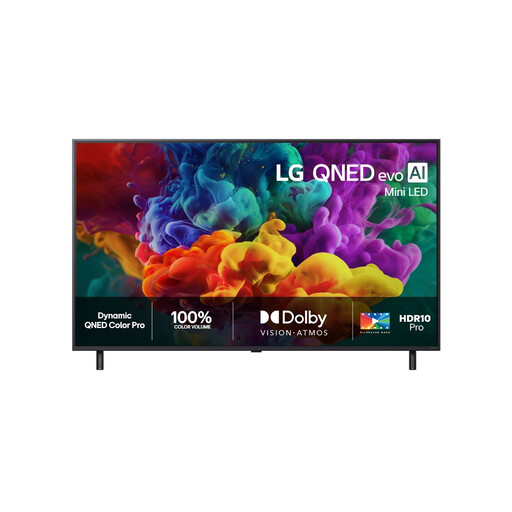 No image available
Compare this Mini LED model with OLED options based on the features that matter for your room and seating.
Allow for the stated weight of 51,0 kg with stand when planning where to place it.
 No image available
The 75-inch size is an option to compare for a group; check that the viewing distance and placement work in your room.
The product name lists 144 Hz VRR. This is a panel specification, not an assessment of picture quality during a rugby broadcast.
 No image available
This 86-inch model is worth considering if you’re looking at a large screen; measure the room and viewing distance first.
The product name lists 4K, 144 Hz and an integrated 2.1.2 sound system. These specifications don’t guarantee that commentary will be clear in a crowded room.
 No image available
Compare this 75-inch Mini LED model with other screen sizes and panel types to suit your seating arrangement.
The product name lists 144 Hz; this stated refresh rate alone isn’t an assessment of sports picture quality.
No, it depends partly on the distance to the furthest seat and the layout of the room. Philips links its size guidance to viewing distance and room layout; use it as a guide and measure your own space.
Not on the basis of that figure alone. TCL specifies 144 Hz for the 75C7K and Sony specifies 120 Hz for the K-75XR5, but panel refresh rate isn’t the same as the picture quality of a particular broadcast. Also compare motion-handling reviews using sports footage.
First, check which provider is showing the match and whether the service works through the TV, tuner or external receiver you plan to use. Test the picture, internet connection and sound before your guests arrive; the options for watching vary by service and device.
European rules on energy labels and ecodesign apply to televisions. Among other details, compare the energy label’s consumption in kWh per 1,000 hours and its HDR consumption; Energielabel.nl explains these figures. In the Netherlands, the statutory guarantee doesn’t have a fixed two-year time limit: if a product breaks sooner than you could reasonably expect with normal use, the retailer is responsible for providing an appropriate solution. ACM ConsuWijzer provides information about guarantees.