
Vandaag of morgen in huis

Kwaliteit gegarandeerd

Welkomstaanbiedingen ontgrendelen: GRATIS bezorging | Tot 80% korting | Gratis 30 dagen JoyPlus-proefperiode
Download de app
Buying a new rubbish bin seems like a simple task. Yet, many people end up with a wobbly pedal, a lid that doesn't seal properly, or a bin that's covered in dents and fingerprints after just a few months. Marketing makes big promises, but reality is often different. Before you make a choice, it's wise to know the common pitfalls.
Common problems can often be traced back to a few key issues:
This guide will help you look past the marketing hype and choose a bin that truly fits your household, budget, and style.
To avoid buyer's remorse, focus on a few objective specifications. These determine how practical the bin will be in daily use.
The required capacity depends directly on the size of your household and how much waste you produce. A bin that's too small is inconvenient; one that's too large just gets in the way.
Also, consider waste separation. If you separate organic waste, plastic, and paper, you might need less volume for general waste but could benefit from a dual-compartment bin or a dedicated recycling bin.
The opening mechanism determines ease of use and hygiene.
The material affects not only the look but also the maintenance.
Based on functionality, durability, and user profiles, we have selected several models that cleverly bypass common problems.
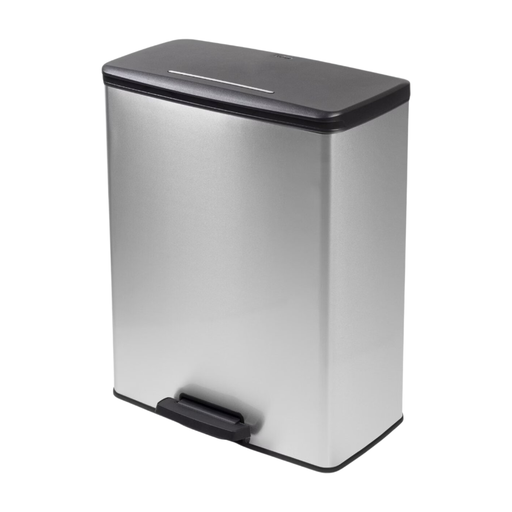
Why This Fits Their Persona: With a 65-litre capacity, this bin is large enough for a family of four or more. The hands-free operation is hygienic, and the soft-close mechanism prevents loud slamming, which is a plus in a lively home.
The wide, comfortable pedal is designed for heavy use. The material (70% recycled plastic) with a stainless steel look is dent- and fingerprint-resistant, keeping it looking pristine.
Very generous 65L capacity and a lid that effectively seals in odours. The soft-close mechanism ensures a quiet closure.
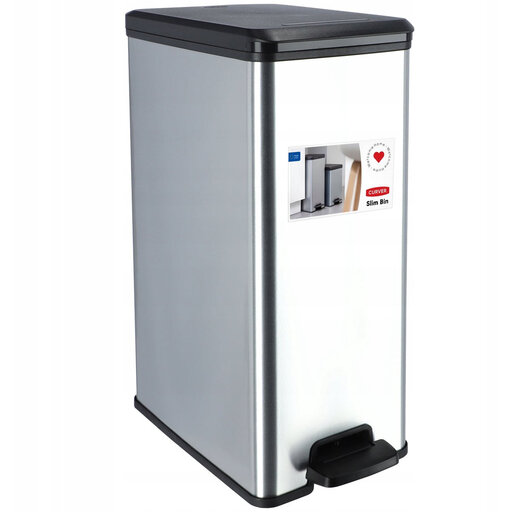
Why This Fits Their Persona: This slim bin fits perfectly in a smaller kitchen or a nook. Its slender, rectangular design and metallic finish provide a modern look without taking up much floor space.
Instead of a small, impractical bin, this model offers a full 40L capacity in a compact footprint. It's made from 90% recycled plastic that resists fingerprints and dents.
Space-saving design with a quiet soft-close mechanism. The anti-vacuum system makes removing a full bag easier.
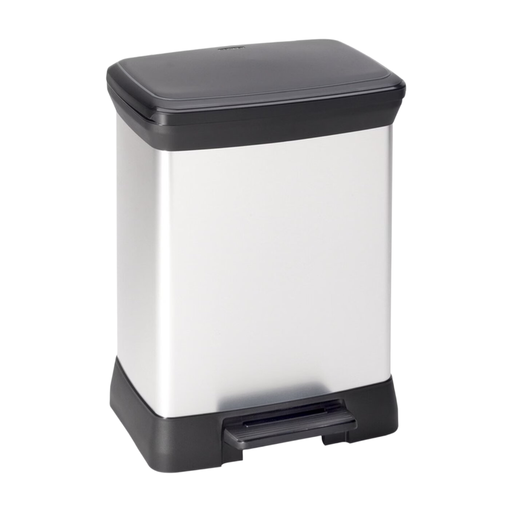
Why This Fits Their Persona: This dual-compartment bin is perfect for one or two-person households looking to start separating waste immediately. It's an affordable and compact all-in-one solution.
No need to buy separate containers that take up space. This recycling bin integrates two buckets (10L and 18L) into one sleek design. The buckets are removable for easy emptying.
Instant waste separation in a compact housing. Made from 70% recycled plastic and features a soft-close lid.
We have compiled a complete, real-time list of products that fully satisfy these strict selection criteria and UK safety regulations.
A good rule of thumb is: 25-40 litres for 1-2 people, 40-60 litres for 3-4 people, and 60+ litres for larger households. Keep in mind that if you actively separate waste, you may need a smaller bin for general waste.
This is a personal choice. A pedal bin is generally more hygienic because you operate it with your foot, keeping your hands clean. A touch bin often has a sleeker design and opens with a light touch but requires hand contact. Both can be durable, provided you choose a model with a solid mechanism.
Start by emptying the bin regularly, especially if it contains organic waste. Choose a model with a well-sealing lid; many modern bins have a special rim that traps odours. Periodically clean the inside of the bin and the lid with a solution of water and baking soda or vinegar to neutralise bacteria and smells.
