
Vandaag of morgen in huis

Kwaliteit gegarandeerd

Welkomstaanbiedingen ontgrendelen: GRATIS bezorging | Tot 80% korting | Gratis 30 dagen JoyPlus-proefperiode
Download de app
A rubber basketball seems like a simple purchase – until you’re playing with it on a wet playground, a rough driveway or in a sports hall. The wrong size, a slippery surface or a ball that quickly loses air can really take the fun out of the game. Parents, casual players and beginners often focus on colour and price, when the technical details matter more.
Three common buying pitfalls:
Below, I’ll explain what to look for and which styles suit different players.
The circumference and weight affect how easily a player can dribble, pass and shoot. The guide below is a useful starting point:
| Size | Circumference | Typical player | |---|---:|---| | Size 3 basketball | about 57 cm | Young children, around 4–8 years old | | Size 4 basketball | about 65 cm | Younger children, around 5–8 years old | | Size 5 basketball | about 70 cm | Juniors, around 9–12 years old | | Size 7 basketball | about 75 cm | Teenagers and adults, often aged 12 or 13 and over |
Age recommendations can vary between clubs, competitions and training groups. Always check the coach’s or competition’s requirements. For casual play in the garden, on the playground or in the park, hand size and control are just as important as age.
An official basketball size mainly refers to standardised dimensions. That doesn’t automatically mean every ball is suitable for official matches. Check the requirements of the relevant governing body or competition too.
Rubber basketballs are generally suitable for outdoor use, as rubber can withstand contact with asphalt, concrete and other rough surfaces. Look out for these features:
According to the product descriptions for the selected Longsail models, several styles have a rubber outer layer, textured surface, butyl bladder and reinforced nylon winding. Claims about extra bounce or puncture resistance come from the manufacturer’s product information and shouldn’t be treated as a universal guarantee for every playing situation.
Many basketballs are delivered deflated for transport. This isn’t a fault, but it does mean you’ll need to inflate the ball before its first use. Some models come as a basketball with pump, two needles and a carry bag.
The product information for several selected models recommends a pressure of 7–9 psi. Ideally, use a pump with a pressure gauge and check the pressure regularly. An overinflated ball feels stiff, while low pressure affects the bounce and makes passing less predictable.
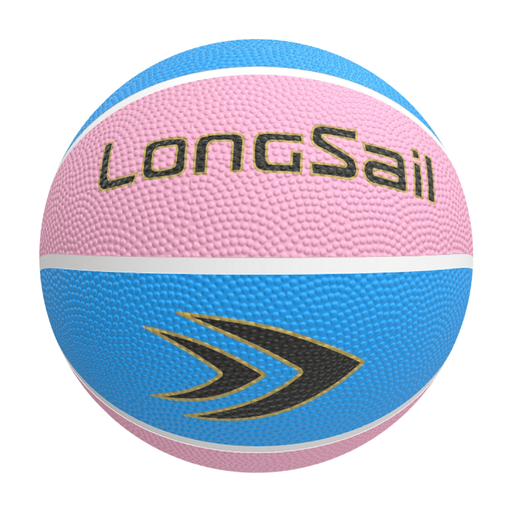
Why it suits this type of player: Size 4 is compact enough for younger players and beginners practising their ball control. According to the product information, the set includes a hand pump, two needles and a carry bag.
The size is clearly stated, and the ball comes as a complete set. You won’t need to look for a pump and needles separately.
Rubber outer layer, textured surface and butyl bladder. The product description says it’s suitable for indoor and outdoor use.
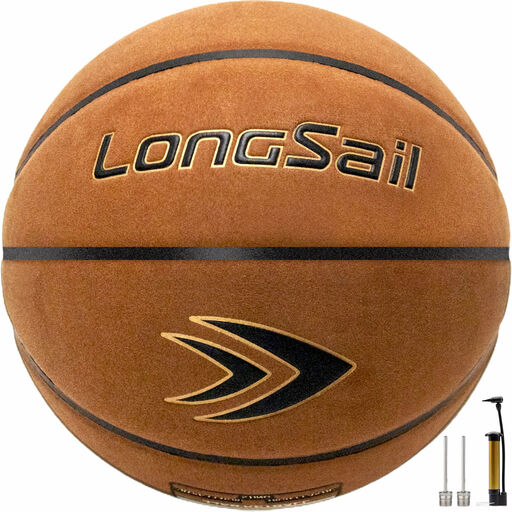
Why it suits this type of player: This version is designed for adult players and teenagers looking for a softer feel and a size 7 ball for training and casual play.
The product description specifies the material, size and suitability for indoor and outdoor use. This makes it easier to decide whether the ball is right for your playing surface.
PU or microfibre finish, deep grooves and a durable rubber inner ball, according to the product information.

Why it suits this type of player: This size 7 ball is aimed at adult players and teenagers aged around 13 and over who regularly train or play outdoors.
The product page specifies a rubber, water-resistant outer layer, deep grooves and suitability for asphalt, concrete, grass and wet surfaces.
Size 7, butyl bladder, reinforced nylon winding and a set with pump, needles and carry bag, according to the product description.
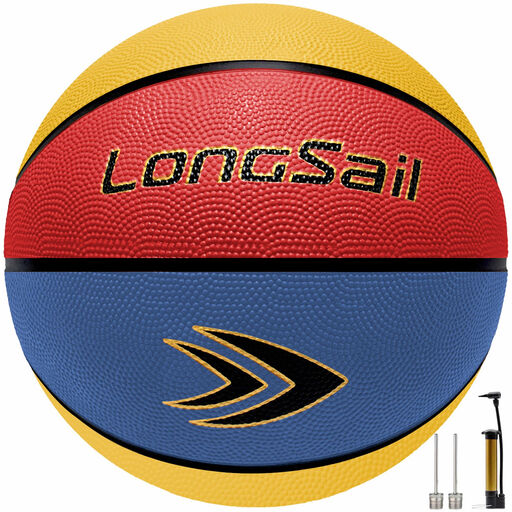
Why it suits this type of player: A size 3 basketball has a smaller circumference and is often easier for young children to handle when dribbling and throwing.
The smaller size means a child won’t have to practise with a ball that’s too big straight away. The product information also mentions a textured surface and deep grooves.
A circumference of about 57 cm, rubber construction and, according to the product page, suitability for indoor and outdoor use.
We’ve put together a complete, up-to-date list of products that meet these strict selection criteria and the applicable European safety regulations.
A durable basketball needs proper care too. Wipe away dirt and mud with a damp cloth after use, then leave the ball to dry. Don’t store it in direct sunlight, next to a radiator or in a car for extended periods. Heat can affect the material and air pressure.
Ideally, use a rubber ball on the surfaces it’s designed for. An outdoor model can be used on an indoor court, but an indoor ball with a soft finish may wear out more quickly on asphalt. Also check the air pressure regularly and make sure the valve is properly sealed after inflation.
Often, yes, if the product description says so explicitly. Rubber is practical for asphalt, concrete and other outdoor surfaces. For intensive use in a sports hall, a PU or microfibre finish may offer a softer feel.
Size 3 is usually a good starting point for young children. Size 4 is often used for younger players. Alongside age, consider hand size, ball control and your club’s requirements. A ball that’s too big can make learning the right technique unnecessarily difficult.
It depends on how often you use it, the temperature, how it’s stored and the valve. Check the pressure before a training session or match. The product information for the selected models often recommends 7–9 psi; always follow the instructions for the specific product.
